
What Is Single-Phase Power?
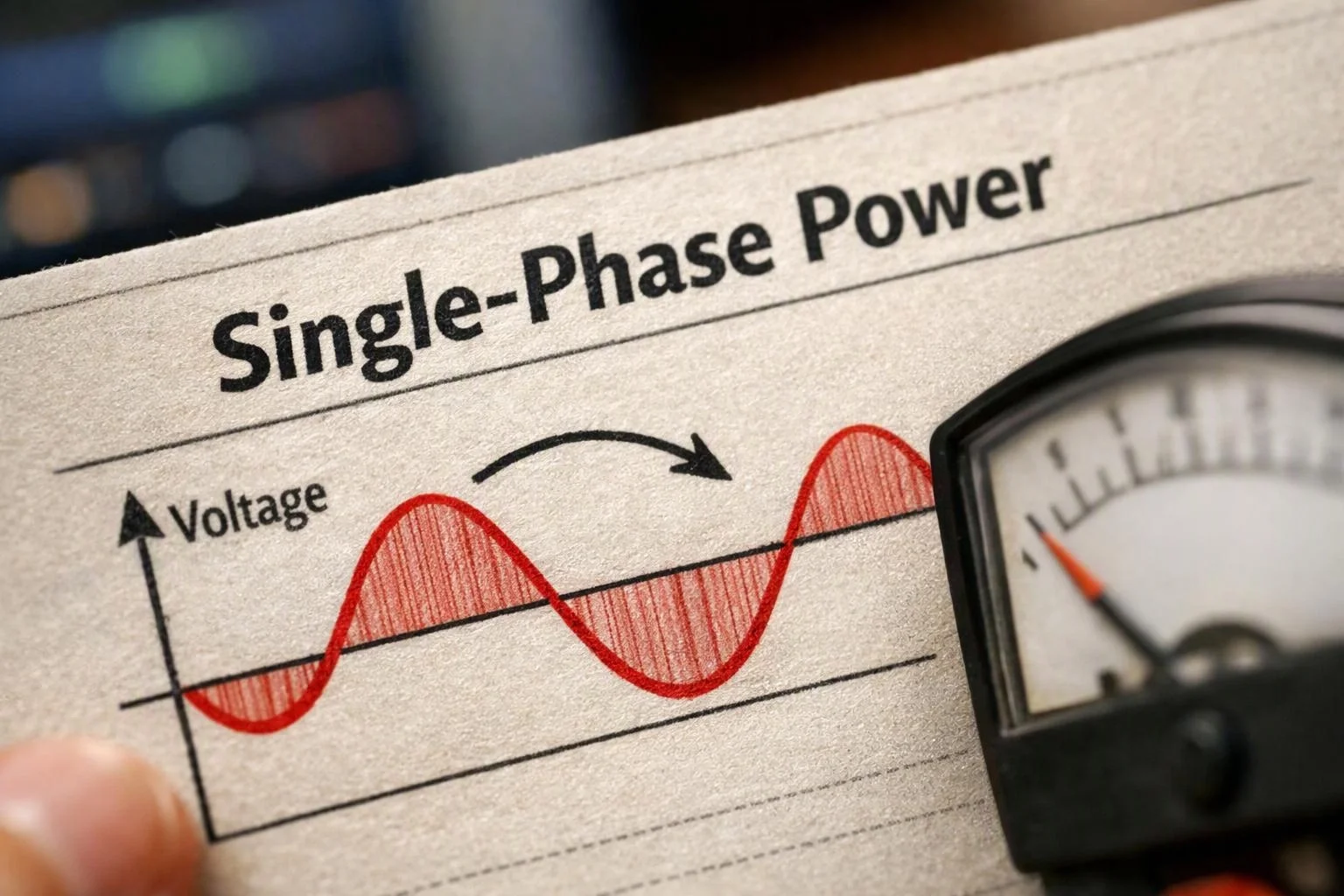
Single-Phase Power is an alternating-current electrical supply in which voltage rises and falls in one repeating waveform. This arrangement serves many homes and small properties because it supports ordinary lighting, receptacles, appliances, and smaller mechanical equipment. The system typically includes energized conductors, a neutral path, and an equipment grounding path.
Quick Facts About Single-Phase Power
Category
Electrical power system
Used for
Residential circuits and smaller equipment
Common confusion
It does not mean one conductor
Also called
Single-Phase Electricity, Single-phase AC
Often discussed with
Electrical Service Upgrade
Key Takeaways About Single-Phase Power
- Its voltage follows one repeating alternating-current waveform.
- It commonly supplies residential lighting, receptacles, and appliances.
- Single-phase does not mean a single wire or a single circuit.
How Single-Phase Power Works
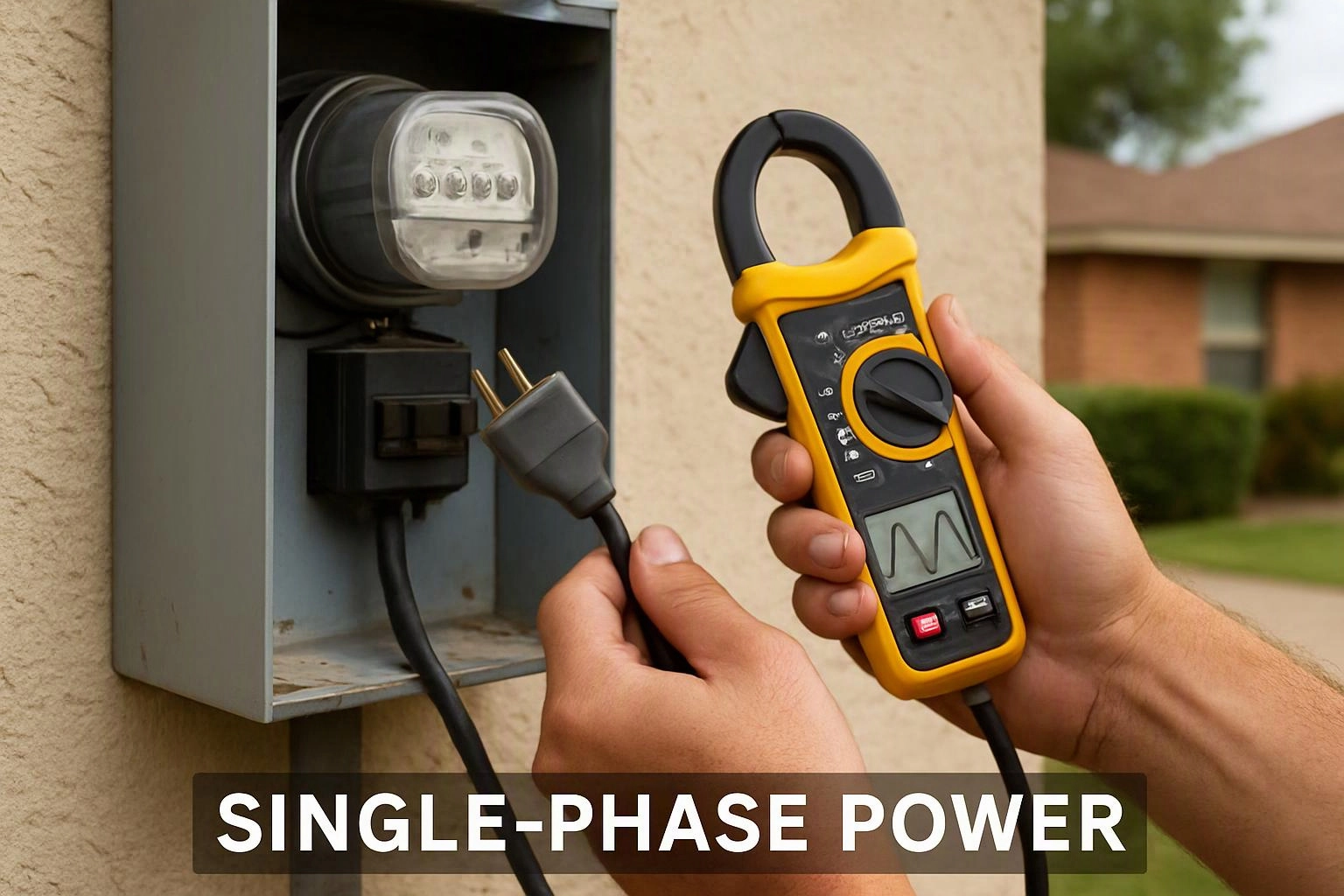
Single-Phase Power delivers alternating current through a repeating voltage cycle. The energized conductor supplies voltage to a circuit, while the neutral conductor provides the normal return path. The equipment grounding path supports fault clearing and connects exposed metal parts to the grounding system.
Related glossary terms: Electrical Load, Electrical Meter, Line Voltage.
A service panel divides the incoming supply into branch circuits for lights, receptacles, appliances, and other loads. Each circuit must match the connected equipment and the conductors serving it. During an electrical service upgrade, the available supply, service conductors, panel connections, and connected loads are reviewed together. That review shows whether the existing arrangement can support the property's electrical demand.
From the Toledo Electrician team
When we assess single-phase power during an Electrical Service Upgrade, we trace the service conductors into the panel and identify the connected loads. We also check panel terminations, neutral connections, grounding paths, and the condition of equipment serving the property. These checks help us plan work around the actual installation.
Single-Phase Power in Practice: A Real-World Example
A typical Toledo home may use single-phase power for lighting, receptacles, kitchen appliances, and heating equipment. During an Electrical Service Upgrade, the service equipment and connected loads are reviewed to confirm that the installation supports the home's electrical use.
Related Services
Related Terms
Electrical Load
Electrical load is the amount of electrical power that connected devices draw from a circuit or…
Electrical Meter
An Electrical Meter is a device that measures the electrical energy supplied to a property. The…
Line Voltage
Line Voltage is the electrical potential supplied directly by a building’s branch circuit or service conductors…
Load Center
A load center is an electrical distribution enclosure that receives power from the service and routes…
Toledo Electrician
Have Questions About Single-Phase Power?
Contact Toledo Electrician for practical guidance on Single-Phase Power and related 24 hour electrician work in Toledo.