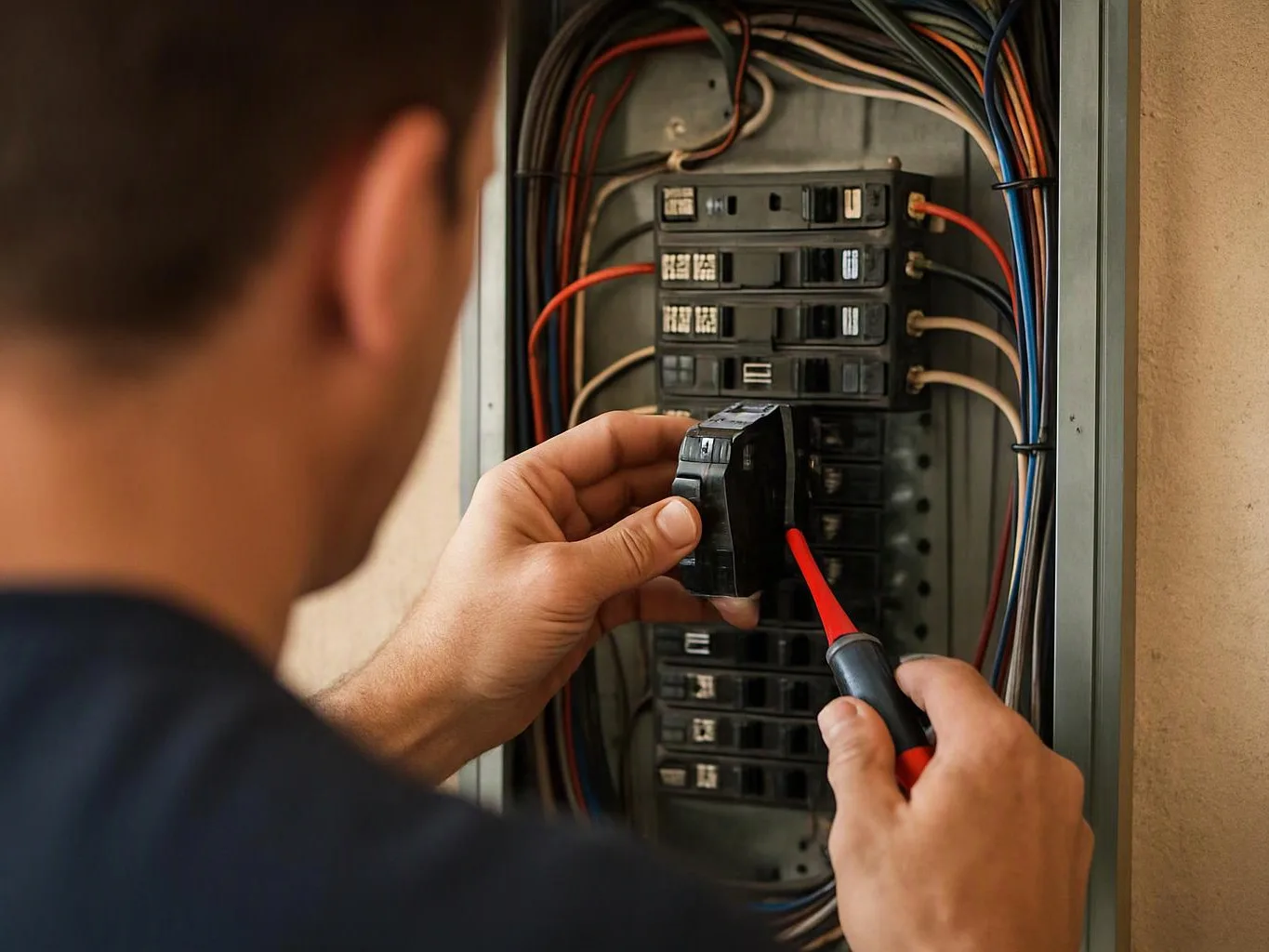
Planning Recessed, Indoor, Landscape, and Security Lighting
Lighting installation planning compares and guides recessed, indoor, landscape, security, and LED retrofit lighting decisions. Toledo Electrician plans and installs these systems by reviewing the property, electrical capacity, illumination needs, and preferred controls before preparing the project scope.
Get a Free EstimateHow Should You Plan a Lighting Installation?
Lighting installation planning should begin with the space, the intended use, the available electrical capacity, and the control method. We review those factors before deciding where fixtures, wiring, switches, sensors, and control points belong.
The lighting layout should support how people move through and use each room or outdoor area. We also review the electrical load, circuit capacity, ceiling or wall access, fixture placement, and maintenance access before finalizing the plan.
Switches, dimmers, motion sensors, photocells, and other lighting controls affect both convenience and wiring routes. Building use also matters because task areas, living spaces, entry points, and landscape features need different levels of control.
How Do Recessed and Other Lighting Options Compare?
Recessed lighting suits a clean integrated ceiling, indoor lighting supports room-specific tasks and ambience, landscape lighting shapes outdoor visibility, and security lighting prioritizes detection and coverage. LED retrofits focus on improving existing fixtures and controls.
Each system has different wiring routes, access needs, control methods, and maintenance concerns. We compare the intended use with the existing electrical system before selecting a fixture type.
| Option / System | Best For | Cost and Timeline Drivers | Maintenance and Trade-Offs |
|---|---|---|---|
| Recessed lighting | Integrated ceiling illumination | Ceiling access, housing, wiring route, and trim selection | Clean appearance with access and insulation requirements |
| Indoor lighting | Room tasks, ambience, and accents | Fixture placement, wall access, switches, and dimmers | Flexible room design with glare and control considerations |
| Landscape lighting | Paths, trees, features, and outdoor living | Outdoor wiring, transformer, trenching, and weather exposure | Weather-resistant fixtures need inspection and adjustment |
| Security lighting | Entries, driveways, walkways, and concealed approaches | Mounting access, sensors, camera visibility, and circuit capacity | Coverage must be balanced with glare and light trespass |
| LED lighting retrofit | Existing fixtures needing improved efficiency or control | Lamp, driver, ballast, socket, dimmer, and fixture compatibility | Can simplify maintenance when compatibility is confirmed |
What Makes Recessed Lighting Installation Successful?
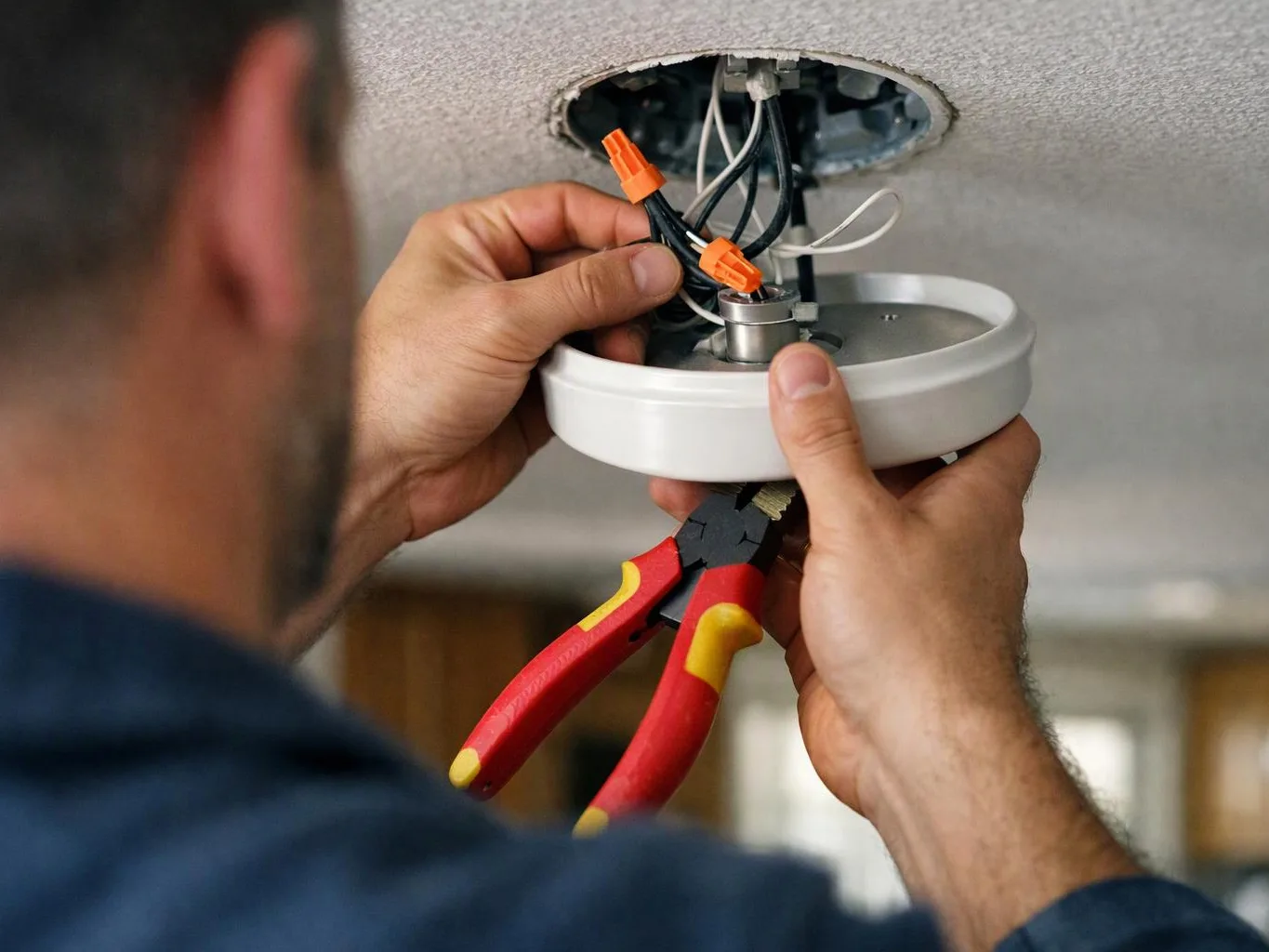
Recessed lighting installation succeeds when fixture locations, housing type, ceiling construction, insulation conditions, beam spread, and controls are planned together. We check the ceiling structure and wiring route before setting the final layout.
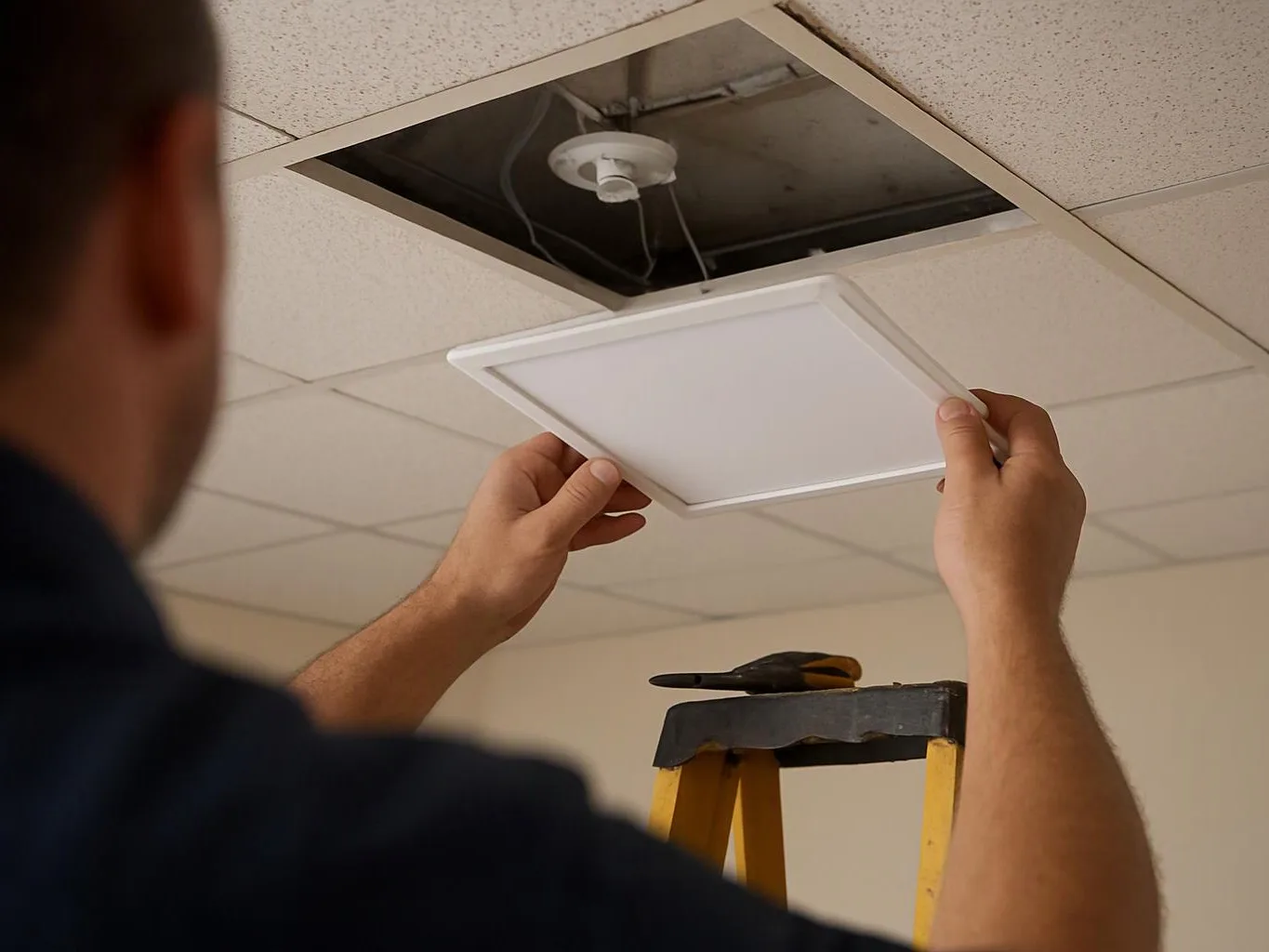
A recessed light may use a housing or a canless light design. We review ceiling joists, insulation clearance, junction boxes, and ceiling access so the selected downlight fits the space and can be serviced safely.
Beam angle affects how light spreads across floors, counters, walls, and artwork. We coordinate trim, lamp or module selection, and dimmer compatibility to support the intended light quality.
Our team can also coordinate Recessed Lighting Installation with the room layout and electrical capacity.
What Are the Advantages of Recessed Lighting?
Recessed lighting provides a low-profile way to shape ambient lighting, task lighting, and focused accents. The best result comes from matching fixture placement and beam angle to the ceiling design.
Best for: rooms where integrated fixtures and controlled light distribution support the design.
How Should Indoor Lighting Be Planned for Each Room?
Indoor lighting should be planned around each room's tasks, surfaces, sightlines, and desired atmosphere. We coordinate ambient, task, and accent lighting with switch locations, dimming, fixture appearance, and glare control.
Kitchen lighting should cover work surfaces while limiting shadows and reflections. Bathroom lighting should support face visibility and safe movement. Living room lighting should combine comfortable ambient light with task or accent sources.
Color temperature affects the feel of a room and how surfaces appear. We also review glare from polished counters, mirrors, screens, windows, and exposed lamps before setting fixture placement.
Our team can coordinate Indoor Lighting Installation with room function and the existing wiring.
What Are the Advantages of Indoor Lighting Installation?
Indoor lighting installation helps each room support its intended function while giving occupants control over comfort and visibility. We plan fixture locations and controls as one system.
Best for: homes and rooms that need separate lighting layers for work, comfort, and visual appeal.
How Should Landscape Lighting Installation Be Planned?
Landscape lighting should be planned around paths, steps, entry points, trees, architectural features, visibility, and glare control. We assess outdoor wiring routes, weather exposure, fixture placement, controls, and the relationship between safety lighting and decorative lighting.
Low-voltage landscape lighting commonly uses a transformer and outdoor wiring that must suit the planned fixture load and route. We check outdoor receptacles, connections, weather-resistant fixtures, and maintenance access before installation.
Path lighting should support walking routes without creating bright spots or dark transition zones. Tree lighting and accent lighting should shape views without causing light trespass into nearby rooms or properties.
What Are the Advantages of Landscape Lighting?
Landscape lighting improves outdoor visibility while adding controlled accents to the property. We plan the system so safety lighting and decorative lighting work together.
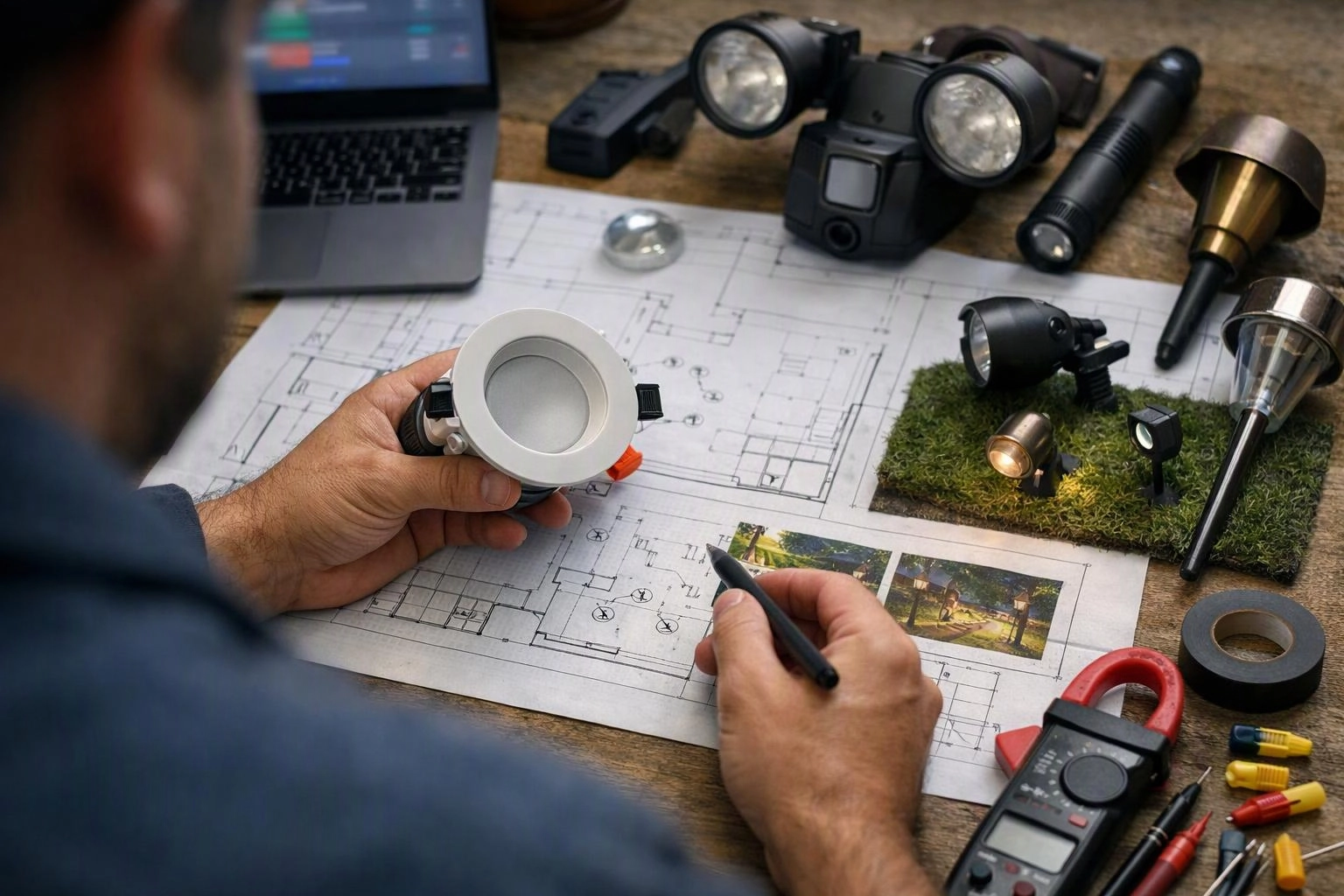
Best for: properties that need practical outdoor visibility with controlled architectural or landscape accents.
What Should Security Lighting Cover?
Security lighting should cover access points, walkways, driveways, and concealed approaches without creating glare or dark transition zones. We position fixtures and sensors to support visibility while coordinating lighting with cameras and nearby properties.
Entry doors, side yards, gates, and driveways may need different fixture positions and control settings. We review motion sensors and photocells so activation patterns match the area being monitored.
Glare can reduce visibility and affect camera images. Our team aims fixtures away from direct sightlines and checks how light moves across the property and surrounding areas.
What Are the Advantages of Security Lighting?
Security lighting supports clear visibility around access points and property edges when fixture placement and controls are coordinated. We match the control method to the area and the way the property is used.
Best for: properties that need targeted visibility at entries, approaches, and perimeter areas.
When Does an LED Lighting Retrofit Make Sense?
LED lighting retrofit makes sense when existing fixtures can support compatible LED lamps or when replacing the fixture improves light quality, controls, safety, and maintainability. We inspect the existing wiring, sockets, drivers, ballasts, dimmers, and fixture condition before recommending a retrofit path.
An LED lamp must match the fixture, socket, enclosure, and control system. We check ballast compatibility, LED drivers, heat management, and color temperature before selecting replacement components.
Some fixtures are better suited to a lamp replacement, while others need a new LED module or complete fixture. We use the existing lighting infrastructure as a starting point and confirm that the finished system will operate safely.
What Are the Advantages of an LED Lighting Retrofit?
LED retrofits can improve an existing lighting system when fixture compatibility, dimming, heat management, and maintenance needs are addressed together. We select the retrofit path after checking the existing equipment.
Best for: properties with usable fixtures that need improved light quality, controls, or maintainability.
What Changes the Cost and Time of a Lighting Project?
Lighting project scope and site conditions change the cost and time of the work. We use the planned layout and property conditions to prepare a scope and provide a Free Estimates Available estimate.
Fixture count, ceiling access, wall access, wiring routes, new circuits, and panel capacity all affect the installation. We review the electrical panel and load calculation when the planned system adds demand.
Outdoor work may require trenching, landscape wiring, weather-resistant connections, or transformer adjustments. Controls, finish repairs, and access conditions can also change the work involved.
The estimate should identify fixture locations, equipment, wiring, controls, access work, testing, and finish expectations. Requesting an estimate after the layout review gives us the information needed to define the project accurately.
How We Plan and Install the Lighting
Our lighting installation process connects the design, electrical system, wiring, controls, and final testing. We use the site conditions and the intended use of each area to guide the work.
What Should You Confirm Before Work Begins?
Fixture locations and control points should be confirmed before work begins. We use those decisions to finalize the installation scope and coordinate the work.
Confirm switch locations, dimmer controls, sensor settings, finish expectations, access requirements, and maintenance access. Also confirm which areas need ambient, task, accent, landscape, or security lighting.
Clear decisions about trim appearance, color temperature, glare control, and future LED needs help prevent changes during installation. Our team can then follow a defined wiring plan and test the completed system against the intended use.
Plan Your Lighting Installation With Toledo Electrician
Toledo Electrician plans and installs recessed, indoor, landscape, security, and LED retrofit lighting around the property's layout, electrical system, controls, and lighting goals.
We review the lighting layout, electrical load, fixture placement, wiring, switches, dimmers, motion sensors, photocells, lighting controls, maintenance access, and glare control before preparing the project scope.
For a project estimate, contact our team to discuss the spaces, existing fixtures, access conditions, and lighting goals.
Questions About Planning Recessed, Indoor, Landscape, and Security Lighting
Can recessed lighting be installed in an existing ceiling?
Yes, recessed lighting can be installed in an existing ceiling when the ceiling structure, insulation, housing type, wiring route, and access conditions support the layout. Toledo Electrician checks joists, junction boxes, ceiling access, and dimmer compatibility before installation.
Should landscape lighting and security lighting use separate controls?
Landscape lighting and security lighting often benefit from separate controls because decorative accents, path visibility, motion response, and dusk-to-dawn operation serve different purposes. We review the outdoor layout and desired operating patterns before assigning controls.
Can LED bulbs be used in existing recessed fixtures?
Yes, LED bulbs can be used in some existing recessed fixtures when the lamp, socket, enclosure, dimmer, and heat conditions are compatible. We inspect the fixture, ballast or driver, wiring, and control before recommending an LED retrofit.
Where should motion-sensor security lights be placed?
Motion-sensor security lights should be placed to cover entry doors, driveways, walkways, side yards, and concealed approaches without aiming glare toward occupants, cameras, or nearby properties. We position fixtures and sensors around movement patterns and camera visibility.
What should an electrical lighting estimate include?
An electrical lighting estimate should identify the fixture layout, equipment, wiring, circuit work, controls, access conditions, testing, and finish expectations. We review the property and planned lighting goals before preparing a Free Estimates Available estimate.