Generator Installation and Transfer Switch Options in Toledo
Generator installation and transfer switch options are compared by cost drivers, operating method, installation requirements, maintenance needs, and intended use. Generator installation and transfer switch cost in Toledo depends on generator capacity, switch type, electrical panel work, wiring distance, and site conditions; Toledo Electrician evaluates those factors and provides Free Estimates Available.
Get a Free EstimateWhat Changes Generator Installation and Transfer Switch Cost in Toledo?
Generator installation and transfer switch cost changes with the generator size, transfer switch type, panel compatibility, wiring route, grounding needs, and preparation required at the property.
Generator capacity affects how many essential circuits or home systems the backup power can support. We review the electrical load and panel connection before selecting equipment.
A transfer switch may need new wiring, breaker work, or changes at the electrical panel. We also check wiring distance, grounding, generator placement, and outdoor connections.
A portable generator hookup can require a generator inlet and a properly sized connection. Seasonal freezing and thawing can affect exposed electrical equipment and outdoor connections, so we consider equipment protection during the site review.
Recurring thunderstorms and strong winds can cause outages, surges, and equipment damage. We can discuss whole-home surge protection when planning backup power and outage readiness.
Manual and Automatic Transfer Switches Compared
Manual and automatic transfer switches differ in switching method, installation complexity, maintenance needs, and suitability for portable or standby generator systems.
| Factor | Manual Transfer Switch | Automatic Transfer Switch |
|---|---|---|
| Cost drivers | Often involves a simpler portable generator connection and selected circuits. | Can involve more equipment, controls, wiring, and standby generator work. |
| Operating method | You start the portable generator and operate the switch when utility power fails. | The system detects an outage and manages the transfer through generator controls. |
| Installation requirements | Usually centers on an inlet, panel connection, grounding, and essential circuits. | Requires compatibility between the standby generator, switch, panel, controls, and wiring. |
| Maintenance | The portable generator and connection need inspection before use. | The generator, battery, fuel system, controls, switch, and connections need scheduled checks. |
| Best for | Portable generator backup for selected essential loads. | Standby generator backup where automatic operation or broader coverage matters. |
Manual systems place more control with the homeowner during an outage. Automatic systems add control equipment and coordination, but they reduce the need for manual switching.
Why Choose a Manual Transfer Switch?
A manual transfer switch suits a portable generator hookup when you want to choose when backup power starts and which circuits receive power.
Best for: a homeowner who can safely start the portable generator and operate the switch during a power outage.
Why Choose an Automatic Transfer Switch?
An automatic transfer switch suits a standby generator when backup power must transfer without manual switching.
Best for: a homeowner who wants automatic operation and does not want to manage the changeover during an outage.
Which Transfer Switch Fits Your Generator Setup?
A manual transfer switch fits a portable generator that you start and connect when needed, while an automatic transfer switch fits a standby generator that must transfer backup power without manual switching.
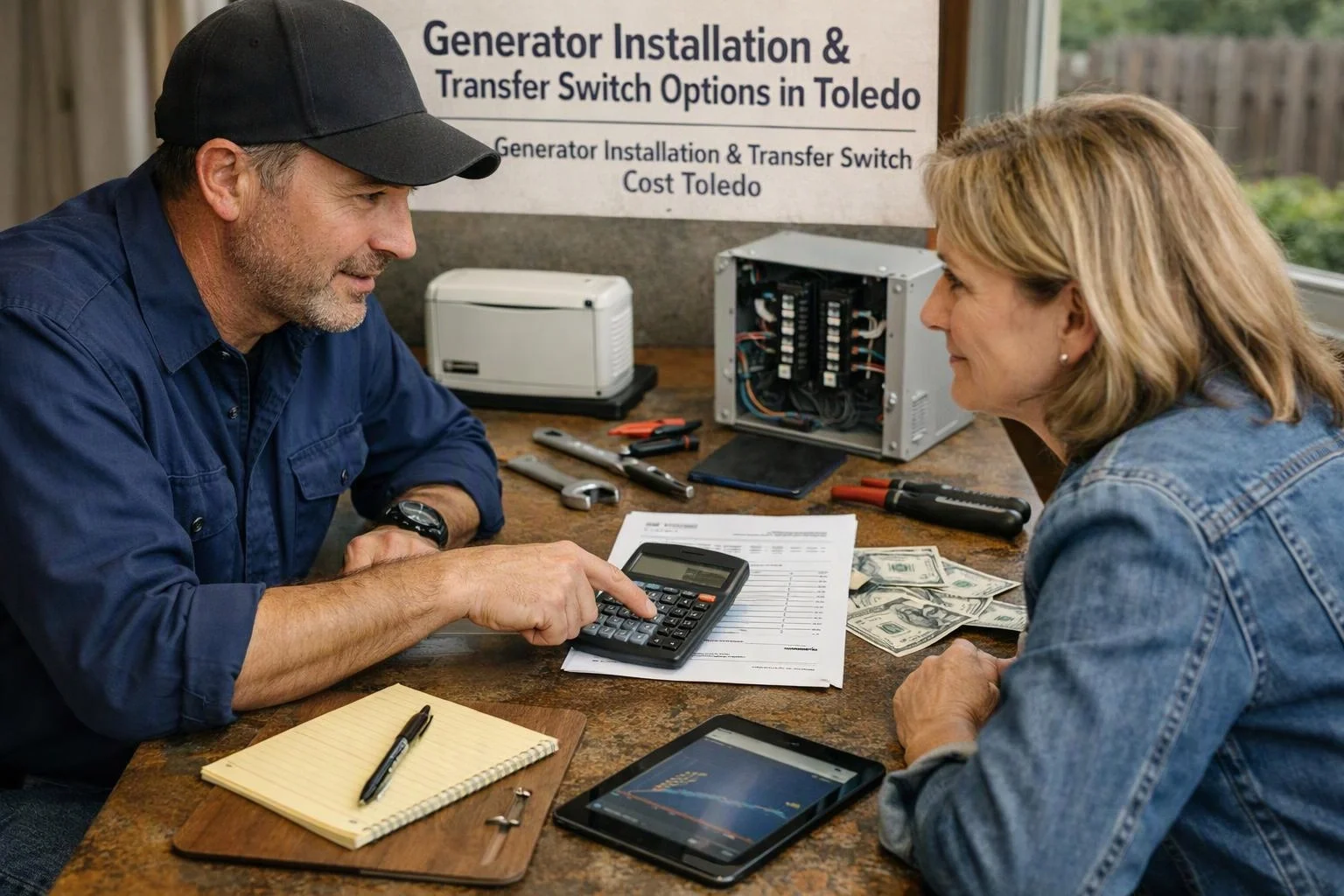
Essential loads can work well with a manual system when selected circuits meet your needs. Whole-home backup requires a careful electrical load calculation, suitable generator capacity, and compatible panel and transfer equipment.
We check utility power connections, panel compatibility, wiring route, grounding connection, and the intended operating method before recommending a changeover switch.
What Does Our Generator Installation Process Check?
Our generator installation process checks the property, electrical load, equipment compatibility, connection method, grounding, and final operation.
The work time depends on equipment selection, wiring distance, panel work, access, and site preparation. We explain the expected work sequence after the assessment instead of guessing from the generator type alone.
How We Prepare Your Quote
Toledo Electrician prepares the quote after reviewing the generator and transfer switch requirements, the existing electrical system, the wiring route, and the work needed for safe operation.
Our quote review covers equipment selection, generator capacity, panel compatibility, grounding, wiring, connection points, and site conditions. We also identify whether the plan supports essential circuits or whole-home backup.
Generator installation may involve panel work that is also explained in our guide, Electrical Panel Repair, Replacement, or Upgrade: Which Is Right?
We provide Free Estimates Available for the work after reviewing the property and requested backup coverage. Request a quote through our Generator Installation service page.
How Generator Maintenance Supports Backup Readiness
Generator maintenance supports outage readiness by checking the equipment that must start, transfer power, and carry the intended electrical load.
We inspect the transfer switch, battery, fuel system, generator connections, wiring, and visible signs of damage. We also review operation after maintenance so problems can be addressed before a weather-related outage.
Thunderstorms and strong winds can cause electrical surges, outages, and equipment damage. Whole-home surge protection may be a relevant part of a backup power plan when the property and equipment make it suitable.
Can We Help With Portable Generator Hookup or Repairs?
Yes, Toledo Electrician handles portable generator hookup, generator repair, generator maintenance, and transfer switch installation after checking the equipment and electrical connection.
Our team can investigate failed starts, improper transfer, damaged connections, panel concerns, grounding issues, and other electrical troubleshooting needs. We explain the repair or installation work based on the equipment condition and intended backup use.
We also review outdoor generator connections because freezing and thawing can affect exposed electrical equipment. Safe operation depends on matching the generator, transfer switch, electrical panel, wiring, and grounding.
Questions About Generator and Transfer Switch Choices
Can a portable generator use a transfer switch?
Yes, a portable generator can use a manual transfer switch when the generator inlet, panel connection, grounding, wiring, and selected circuits are compatible. Toledo Electrician checks the equipment and electrical connection before completing the portable generator hookup.
What electrical panel details should be checked before installing a generator?
Electrical panel details include available space, breaker arrangement, panel compatibility, grounding, wiring route, and the circuits that need backup power. We also compare the panel connection with the generator capacity and transfer switch type.
Does a transfer switch power every circuit in a home?
A transfer switch powers only the circuits supported by the generator capacity, switch design, panel connection, and installation plan. We determine whether the setup is intended for essential circuits or whole-home backup.
What should generator maintenance include after installation?
Generator maintenance should include inspection of the transfer switch, battery, fuel system, connections, grounding, controls, and visible equipment condition. We also check system operation to support reliable backup power during an outage.
Toledo Electrician reviews your generator setup, transfer switch needs, electrical panel, wiring, grounding, and intended backup coverage. Request a clear quote for generator installation, hookup, repair, or maintenance.
Get a Free Estimate