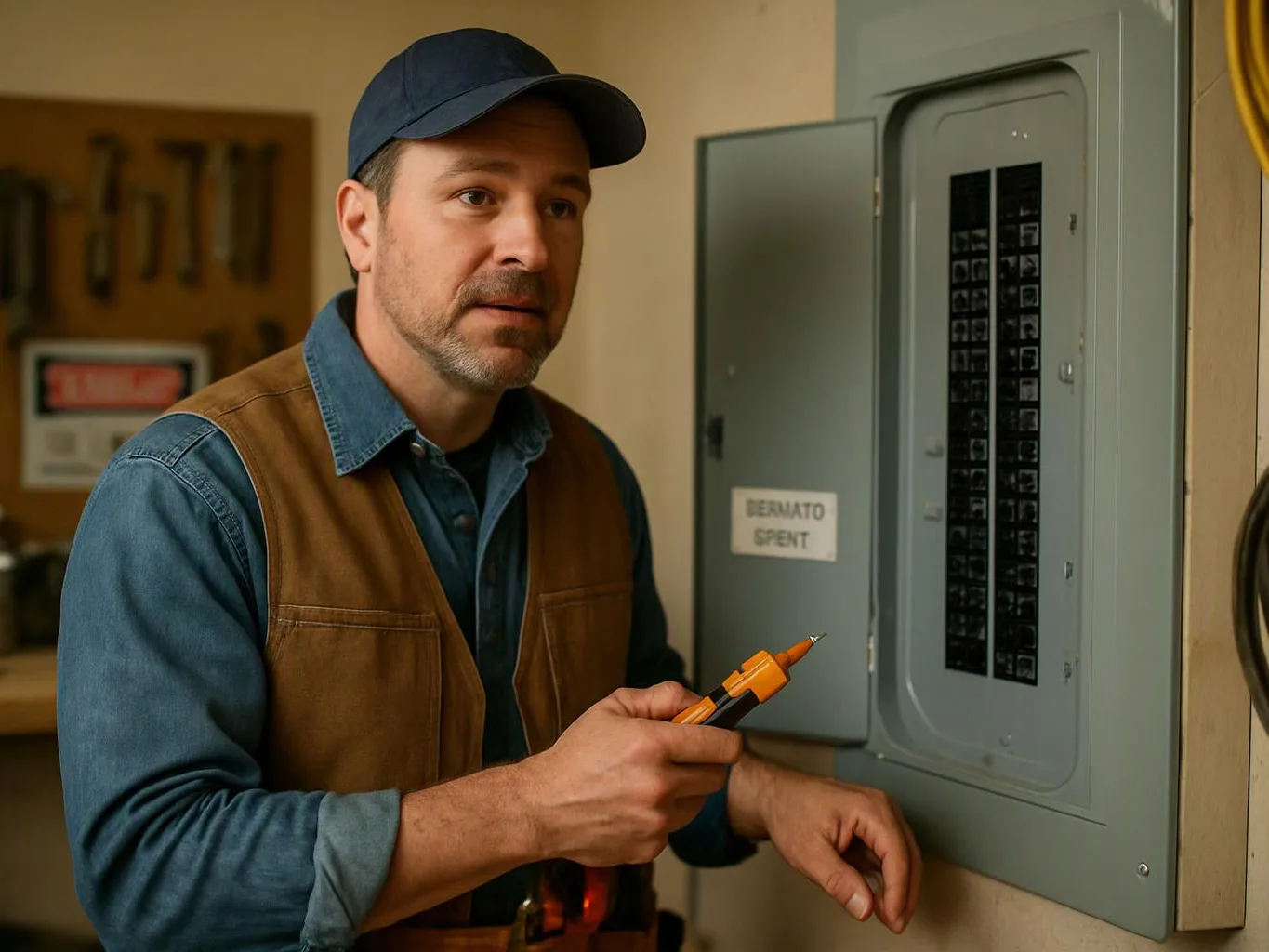
What Happens During an Emergency Electrical Troubleshooting Visit?
Emergency electrical troubleshooting is a structured safety and diagnosis process. Toledo Electrician reviews the reported fault, checks for immediate hazards, tests the electrical system, explains the repair options, and completes the agreed emergency electrical repair when the issue can be safely addressed.
Get a Free EstimateWhat Happens Before We Begin Troubleshooting?

Emergency electrical troubleshooting begins with our review of the reported symptoms, affected areas, recent changes, and any visible safety concern. We use your description to focus our first inspection on the likely affected circuit.
We also confirm property access and ask whether the issue involves an electrical hazard, power outage, tripped breaker, burning odor, smoke, or water exposure. Our team keeps people away from unsafe equipment while we prepare for the inspection.
How Should You Prepare for an Emergency Electrical Visit?
Electrical safety starts before our crew begins testing. Give us a clear description of what happened, and do not handle damaged equipment while waiting for service.
Use this preparation checklist when the area can be approached safely:
How We Troubleshoot the Electrical Problem
Our emergency electrical diagnosis follows a safety-first sequence. We stop or isolate unsafe conditions before moving to detailed testing.
What We Check During the Electrical Diagnosis
Electrical diagnosis connects the reported symptom to a safe testing plan. The inspection area and diagnostic action can change when the fault involves weather exposure, equipment damage, or hidden wiring.
Our team documents the findings so the repair path is based on the condition we can identify.
| Symptom | Inspection area | Diagnostic action | Possible repair path |
|---|---|---|---|
| Power loss or a tripped breaker | Panel, breaker, and affected branch circuit | Visual inspection, voltage testing, and fault isolation | Circuit repair, breaker replacement, or further wiring diagnosis |
| Sparking or heat at an outlet | Outlet, switch, box, and nearby wire connections | Power verification and inspection for damage or a loose connection | Outlet repair, connection repair, or electrical code correction |
| Flickering lights or unusual voltage | Lighting circuit, panel connections, and accessible wiring | Voltage testing and circuit evaluation | Connection repair, circuit work, or panel diagnosis |
| Storm-related equipment damage | Service equipment, exposed connections, and connected devices | Safety inspection, voltage testing, and surge-related fault isolation | Replacement, electrical repair, or surge protection planning |
How We Explain the Repair Options and Quote
The cost of an emergency electrical repair depends on the fault location, required testing, parts, accessibility, and repair scope, so we explain the findings and provide a quote for the defined work.
Our repair quote identifies the work we recommend, the replacement parts involved, and any electrical code correction needed for safe operation. Free Estimates Available applies to the estimate service supplied by the owner.
We explain whether the issue can be handled as an outlet repair, circuit breaker replacement, wiring repair, electrical panel repair, or another defined emergency electrical repair. You can ask questions before approving the scope.
When Can the Electrical Repair Be Completed During the Visit?
Emergency electrical repair can proceed during the visit when our findings identify a safe, defined repair that matches the agreed scope and available materials.
Fault isolation may lead to a circuit breaker replacement, outlet repair, or accessible wiring repair. A larger electrical panel repair may require additional planning when the damage extends beyond the defined service scope.
Whole-home rewiring is a broader project that needs a separate repair plan. We explain any remaining fault and the next safe step when the full repair cannot be completed during the visit.
What You Receive Before the Visit Ends
Our team provides a repair summary that states what we found, what work was completed, and what electrical safety recommendations still apply.
Service documentation also identifies any remaining electrical fault and follow-up work. We explain whether the system can return to safe operation or whether the affected equipment should remain out of service.
Which Electrical Problems Need Urgent Troubleshooting?
Urgent troubleshooting is appropriate when an electrical problem may threaten people, property, or safe system operation.
Power loss, repeated circuit breaker trips, a burning smell, a sparking outlet, flickering lights, electrical shock risk, and surge damage all need careful diagnosis. We use fault isolation to determine whether the cause is a short circuit, overloaded circuit, loose connection, damaged equipment, or another fault.
Recurring thunderstorms and strong winds in Lucas County can contribute to surges, outages, and electrical equipment damage. Seasonal freezing and thawing can also affect exposed electrical equipment and outdoor connections, which may change our inspection focus during an urgent repair.
What Should You Do If the Electrical Hazard Continues?
If smoke, fire, active arcing, or immediate danger continues, leave the affected area, contact emergency services when necessary, and do not touch damaged electrical equipment.
Smoke and fire risk require immediate separation from the hazard. Water near electricity can also make the area unsafe, so avoid wet equipment and do not enter a dangerous space to reach the main disconnect.
When the area is safe to approach, tell us what happened and identify the affected equipment from a safe location. We can then plan emergency electrical troubleshooting around the known hazard.
How Can You Arrange Electrical Troubleshooting in Toledo?
Toledo Electrician can review the electrical symptoms, identify the troubleshooting need, and arrange the next step for an emergency electrical repair in Toledo.
Our team can discuss Electrical Troubleshooting, emergency electrical repairs, the affected equipment, and the information needed for the service request. Tell us whether the issue involves power loss, a tripped breaker, burning odor, sparking, flickering, water exposure, or storm-related damage.
Contact us to describe the fault and request the next step for your property in Toledo, Ohio.
Questions About Emergency Electrical Troubleshooting
What should I do before an electrician arrives for an electrical emergency?
Toledo Electrician recommends keeping people away from the hazard, avoiding damaged equipment, and sharing details about smoke, burning odor, water, sparks, or breaker activity. Contact emergency services when smoke, fire, active arcing, or immediate danger continues.
Can a tripped breaker indicate a larger electrical problem?
Yes, a tripped breaker can indicate a short circuit, overloaded circuit, damaged equipment, or another electrical fault. We inspect the circuit and use voltage testing and fault isolation before deciding whether the breaker or another part needs repair.
What happens if the electrical fault cannot be repaired during the visit?
We explain the remaining electrical fault, document the diagnosis, and outline the follow-up work needed for safe operation. A larger repair scope, unavailable replacement part, or whole-home rewiring need may require a separate plan.
Can storm-related surges cause electrical troubleshooting problems in Toledo?
Yes, recurring thunderstorms and strong winds in Lucas County can contribute to surges, outages, and electrical equipment damage. We include surge-related diagnosis when the reported symptoms follow a storm or involve exposed outdoor connections.