Skip to content
Glossary

What is Arc Flash?

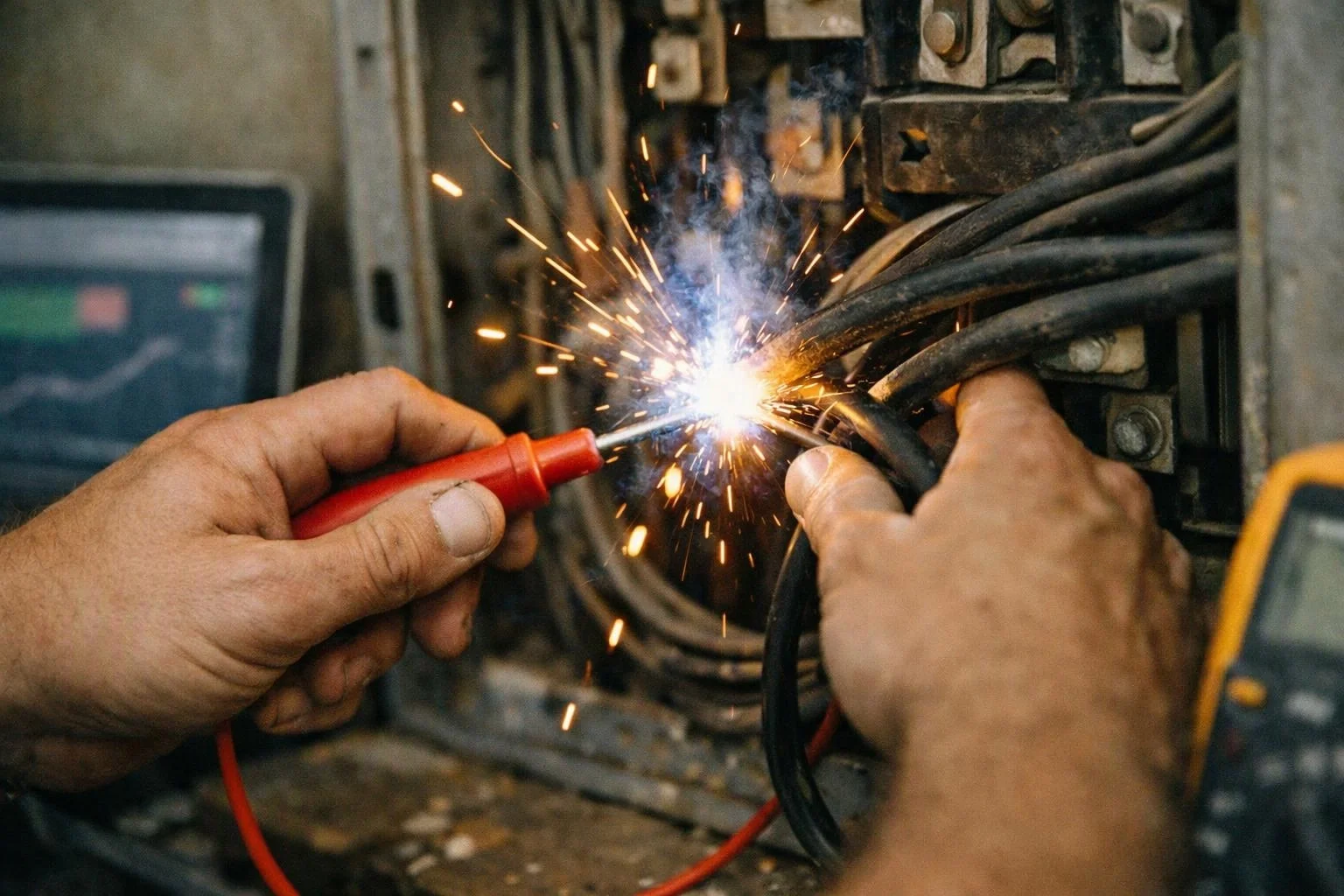
Arc Flash is a sudden release of electrical energy through the air between energized conductors or between a conductor and ground. The event produces intense heat, bright light, pressure, molten metal, and sound. Arc flash injuries can include severe burns, hearing damage, eye injuries, and trauma from an explosive pressure wave.

Quick Facts About Arc Flash

Category

Electrical safety hazard

Measured by

Incident energy in calories per square centimeter

Used for

Electrical hazard analysis and protective equipment selection

Common confusion

An arc flash is not the same as an arc fault.

Relevant standard

NFPA 70E

Also called

Arc-flash hazard, Electrical arc flash

Key Takeaways About Arc Flash

  • Arc flash energy can cause severe burns, blindness, hearing loss, and pressure-related injuries.
  • Loose connections, damaged insulation, tools, moisture, and wrong work practices can trigger an arc flash.
  • Arc-flash labels show incident energy, way boundaries, and needed personal protective equipment.
  • Qualified workers check electrical hazards before opening panels or working near energized equipment.

Understanding Arc Flash

Toledo Electrician — detail view — Understanding Arc Flash

Arc Flash occurs when current leaves its planned path. It travels through ionized air between conductors or to ground. The air becomes conductive after the first fault. This lets the current form a lasting arc. An arc can release heat, light, pressure, molten metal, and sound quickly.

Related glossary terms: Arc-Fault Circuit Interrupter, Short Circuit, Electrical Grounding.

Severity depends on fault current, system voltage, clearing time, working distance, and equipment design. A nearby worker may suffer deep burns, eye injuries, hearing damage, or impact injuries. These injuries can come from the pressure wave.arc flash boundary marks the distance for possible second-degree burns.

How Arc Flash Works, Is Measured, or Is Used?

A fault can start when a tool bridges energized parts. Insulation can fail. Dust can create a conductive path. A loose connection can also overheat. The resulting arc may continue until a circuit breaker or fuse stops the current. Faster clearing usually reduces released energy. Equipment settings and system conditions determine actual speed.

Engineers perform an arc-flash hazard analysisusing electrical system voltage and fault current. They also review conductor lengths, transformer data, protective-device settings, and equipment layout. The analysis calculates incident energy at a set working distance. This energy uses calories per square centimeter. Results support equipment labels and approach boundaries. They also guide the choice.arc-rated clothing, face protection, gloves, and other personal protective equipment.

NFPA 70E describes safe work practices for electrical hazards. OSHA rules address employee safety in many workplaces. A typical workflow starts with collecting system information. Engineers then review the design and protective-device settings. They calculate incident energy and label equipment. They also train qualified workers. De-energizing equipment remains the preferred control when the task allows it. Workers must verify the absence of voltage.

Why Arc Flash Matters?

Toledo Electrician — service highlight — Why Arc Flash Matters?

Arc flash risk affects how workers plan inspections, testing, maintenance, and repairs. A normal-looking panel can still hold enough energy to cause life-changing injuries. This can happen when workers remove its cover. Incident energy values help separate lower-energy tasks from work needing strict controls. They also show when specialized protective equipment is needed.

Labels provide useful information. But labels don't replace safe procedures or current system data. Changes to transformers, generators, utility service, breakers, or protective settings can change the hazard level. Damaged enclosures, missing covers, and overheating signs need attention. Incorrect labels also need attention before electrical work starts.

When Arc Flash Matters Most?

Arc flash matters most during work near energized panelboards, switchgear, motor-control centers, service equipment, and industrial machinery. Risk rises when workers open covers or rack breakers. It also rises when workers test circuits or reset equipment after a fault. Troubleshooting with power on also raises risk. Moisture, contamination, cramped areas, and poor lighting can increase accidental contact.

Property owners and facility managers should review arc-flash information after service upgrades. They should also review it after major equipment changes or generator installations. Fault-current changes also require a review. Workers should check that labels remain readable. They should confirm the labels match the equipment ahead of them. If conditions differ from the study, stop the task. Get updated hazard information before continuing.

How to Evaluate Arc Flash?

  • Check whether each applicable panel, switchboard, and switchgear section has a readable arc-flash label.
  • Review the incident-energy value and confirm that listed personal protective equipment matches the task.
  • Ask whether the electrical study reflects current transformers, breakers, generators, and protective-device settings.
  • Look for overheating, loose connections, damaged insulation, contamination, missing covers, or unusual odors.
  • Confirm that workers know the limited approach boundary, arc-flash boundary, and equipment shutdown procedure.

Related Concepts Compared

Arc Flash vs. Arc Fault

An arc fault is a unintended electrical connection that can produce an arc. Arc flash describes the resulting hazardous release of heat, pressure, light, and molten material.

Arc Flash vs. Short Circuit

A short circuit creates a low-resistance path for current between conductors or to ground. A short circuit can trigger an arc flash, but not every short circuit produces a damaging arc flash.

Arc Flash vs. Ground-Fault Circuit Interrupter

A ground-fault circuit interrupter disconnects power when it detects a small imbalance between outgoing and returning current. It helps prevent shock and some faults, but it does not replace arc-flash analysis or protective work practices.

Arc Flash vs. Arc-Fault Circuit Interrupter

An arc-fault circuit interrupter detects certain unwanted arcing patterns in branch circuits and disconnects power. It is a protective device, while arc flash is the hazardous event itself.

Expert Note

An arc-flash label is only as reliable as the system information behind it. A service change, transformer replacement, generator addition, or breaker-setting change can make an older study inaccurate, even when the equipment enclosure has not changed.

Common Mistakes or Myths About Arc Flash

  • Treating a visible arc-flash label as current after major electrical system changes.
  • Assuming a circuit is safe because a breaker has not tripped recently.
  • Wearing ordinary work clothes instead of clothing rated for the calculated incident energy.
  • Opening energized equipment without checking boundaries, tools, lighting, and the shutdown plan.
  • Confusing an arc-fault circuit interrupter with complete arc-flash protection.

Arc Flash in Practice: A Real-World Example

A technician opens a commercial panel to find why breakers trip again and again. A loose connection arcs between energized bus sections. The arc releases heat, pressure, and molten metal before the upstream breaker clears the fault.

Related Terms

Arc-Fault Circuit Interrupter

Arc-Fault Circuit Interrupter is a circuit protection device that detects dangerous electrical arcing and disconnects power…

Short Circuit

Short Circuit is a unintended connection between points with different electrical potential that creates a low-resistance…

Electrical Grounding

Electrical Grounding is a safety system that connects electrical equipment and circuits to the earth or…

Panelboard

Panelboard is an enclosed electrical distribution assembly that receives power from a service or feeder and…

Toledo Electrician

Have Questions About Arc Flash?

Contact Toledo Electrician for practical guidance on Arc Flash and related 24 hour electrician work in Toledo.

+1 (419) 574-6561