
What Is Ballast?
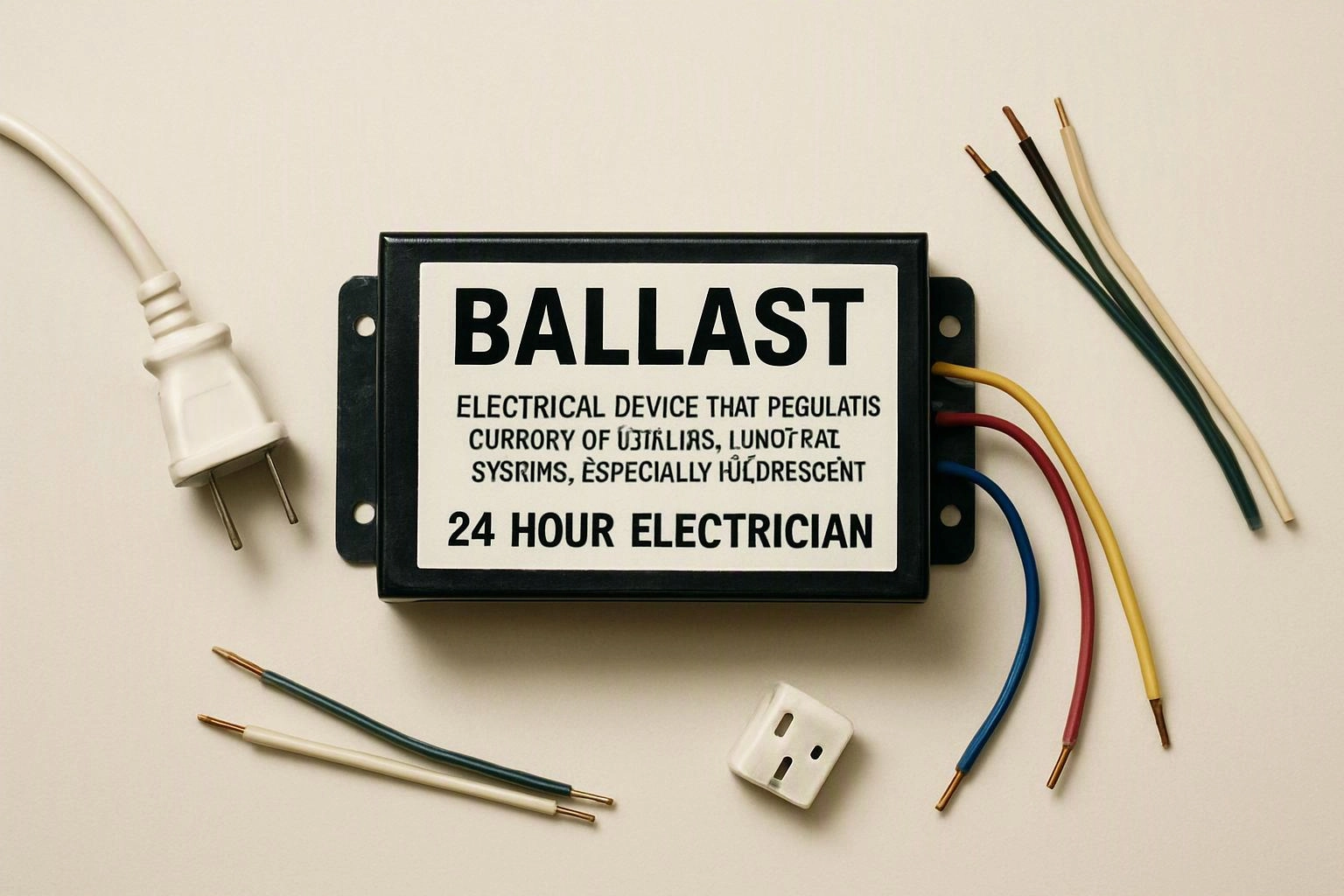
Ballast is an electrical device that regulates current in certain lighting systems, especially fluorescent lamps. The ballast helps the lamp start and keeps its electrical output stable during operation. Without a compatible ballast, a fluorescent fixture may flicker, fail to start, produce uneven light, or damage the lamp and related components.
Quick Facts About Ballast
Category
Lighting control component
Used for
Fluorescent lamp operation
Common confusion
Often confused with an LED driver
Also called
fluorescent ballast, lighting ballast
Often discussed with
Indoor Lighting Installation, LED Lighting Retrofit
Key Takeaways About Ballast
- Ballasts regulate current in compatible lighting fixtures.
- A failed ballast may cause flickering or delayed starting.
- A ballast is not the same as an LED driver.
How Ballast Works
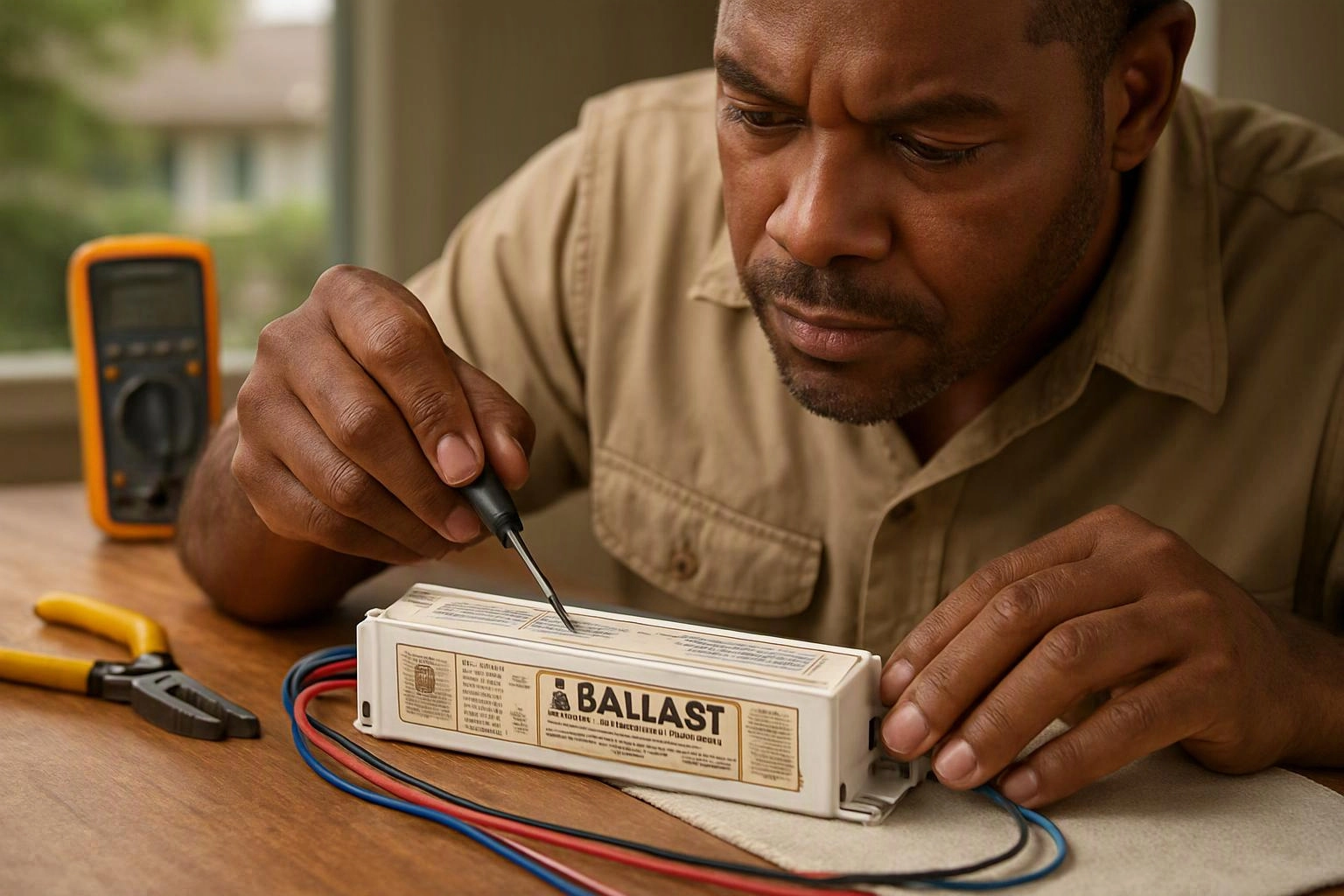
A ballast controls the electrical current that reaches a compatible fluorescent lamp. Starting the lamp requires a controlled electrical surge, while continued operation needs steady current. The ballast manages both functions through an electromagnetic or electronic design.
Related glossary terms: Capacitor, Circuit, Current.
Electromagnetic ballasts use coils and may operate with a separate starter. Electronic ballasts control current through electronic circuitry and can provide quieter operation with less visible flicker. A fixture must have a ballast that matches the lamp type and wiring arrangement. A damaged ballast may produce humming, flickering, darkened lamp ends, or repeated starting attempts.
An LED driver serves a related control role in many LED fixtures, but the components are not interchangeable. A lighting retrofit may remove the existing ballast, bypass it, or use an LED lamp designed to work with it. The correct choice depends on the lamp, fixture, and wiring configuration.
From the Toledo Electrician team
When we inspect indoor lighting, we check the lamp type, ballast condition, wiring, and fixture compatibility together. We look for signs such as humming, flicker, heat damage, or repeated starting. Our team also verifies whether an LED retrofit keeps the ballast in service or changes the wiring arrangement.
Ballast in Practice: A Real-World Example
A fluorescent ceiling fixture in a Toledo home begins flickering and takes time to start. An electrician checks the lamp and wiring, then tests the ballast to determine whether the fixture needs a compatible replacement or a suitable LED conversion.
Related Terms
Capacitor
A capacitor is an electrical component that stores and releases charge to control voltage or support…
Circuit
Circuit is a complete electrical path that carries current from a source through conductors and connected…
Current
Current is the flow of electric charge through a conductor, such as a wire or a…
Voltage
Voltage is the electrical potential difference that creates pressure for current to move through a circuit…
Toledo Electrician
Have Questions About Ballast?
Contact Toledo Electrician for practical guidance on Ballast and related 24 hour electrician work in Toledo.