
What Is Current?
Current is the flow of electric charge through a conductor, such as a wire or a circuit path. Electrical current moves when a voltage difference creates an electric field that pushes charged particles. The amount of current depends on the circuit’s voltage and resistance, and it is measured in amperes.
Quick Facts About Current
Category
Electrical measurement
Used for
Circuit testing and troubleshooting
Common confusion
Often confused with voltage
Also called
Amperage, Electric current
Often discussed with
Electrical Troubleshooting
Key Takeaways About Current
- Current describes charge flow, while voltage provides the electrical pressure.
- A circuit carries current only when a complete path exists.
- Current is not the same as electrical load or power.
How Current Works
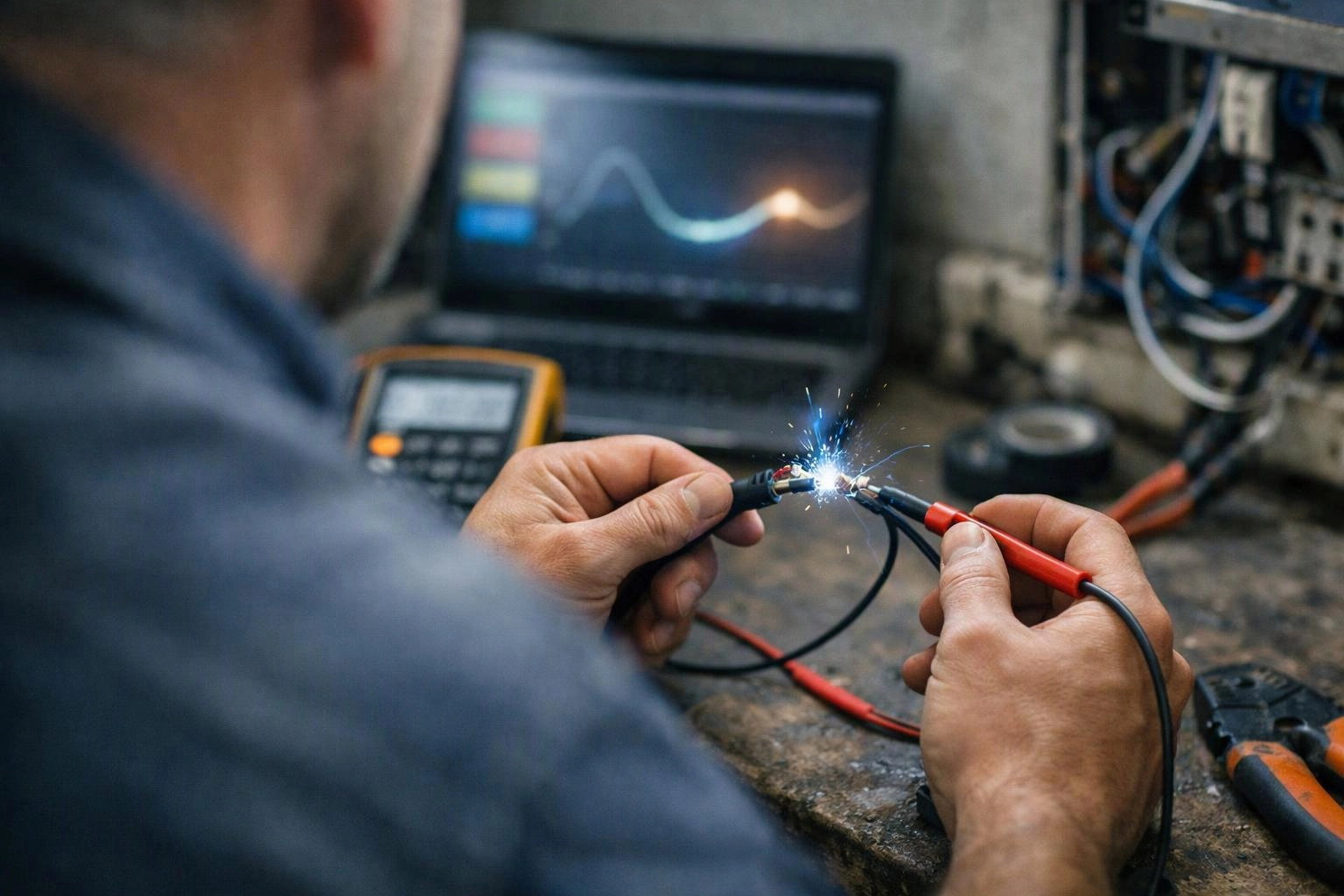
Current moves through a circuit when a voltage difference pushes electric charge along a complete conductive path. The path may include wiring, switches, receptacles, fixtures, and connected equipment. Resistance in that path limits the flow, while a change in voltage or resistance changes the current.
Related glossary terms: Circuit, Voltage, Ohm.
An electrical meter measures current through a circuit, depending on the meter type and test method. A clamp meter can sense current around a conductor without disconnecting the conductor. An electrician may compare current readings with the expected operation of a circuit to identify overloads, open paths, loose connections, or equipment faults. Voltage and resistance help explain why the reading changes.
From the Toledo Electrician team
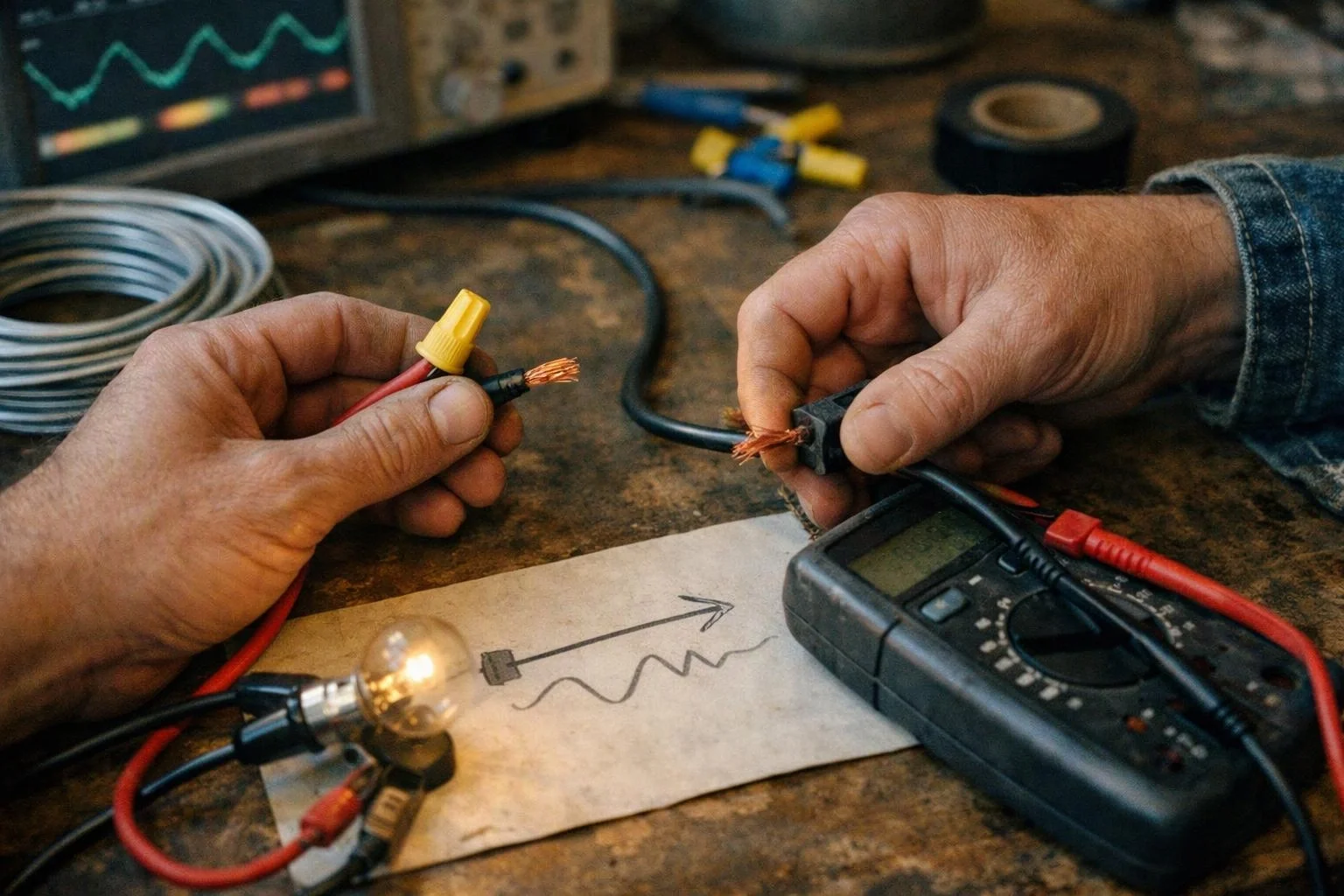
When we troubleshoot a circuit, we check current alongside voltage and continuity. We look for readings that change unexpectedly under load, then inspect connections, conductors, and connected equipment. A current reading helps our team narrow the fault, but the reading must match the circuit condition and the test method.
Current in Practice: A Real-World Example
A receptacle circuit may show normal voltage with no device connected, then develop an unusual current reading when a load operates. An electrician can use that change to investigate a damaged conductor, loose connection, or faulty appliance.
Related Services
Related Terms
Circuit
Circuit is a complete electrical path that carries current from a source through conductors and connected…
Voltage
Voltage is the electrical potential difference that creates pressure for current to move through a circuit…
Ohm
Ohm is the standard unit of electrical resistance, which describes how strongly a material or component…
Electrical Meter
An Electrical Meter is a device that measures the electrical energy supplied to a property. The…
Toledo Electrician
Have Questions About Current?
Contact Toledo Electrician for practical guidance on Current and related 24 hour electrician work in Toledo.