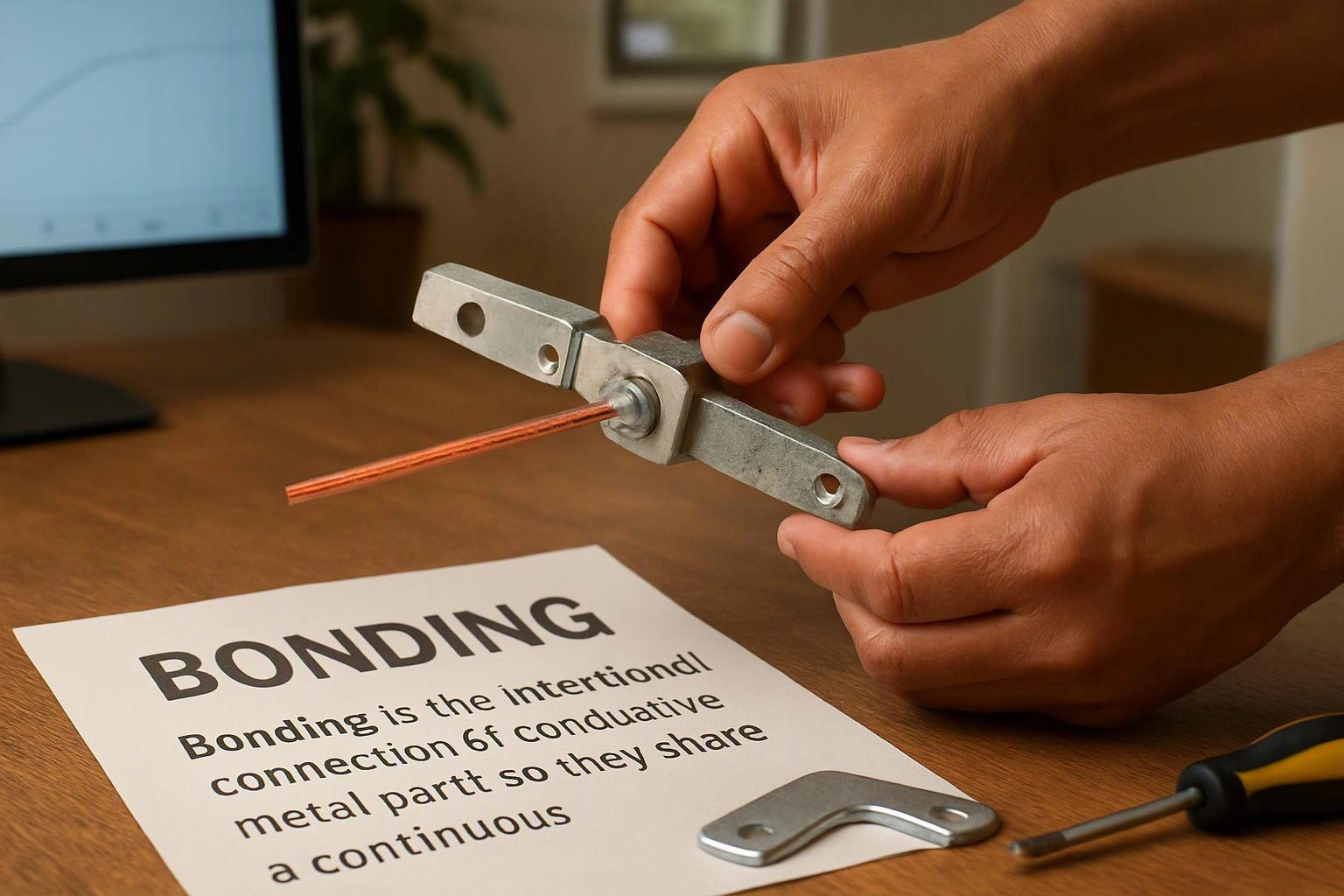
What is a Bonding?
Bonding is the intentional connection of metal electrical parts to create a continuous path for fault current. This connection may join equipment enclosures, metal raceways, grounding conductors, water piping, and other conductive parts. Bonding helps protective devices operate during a fault and reduces dangerous voltage differences between accessible metal surfaces.
Quick Facts About Bonding
Category
Electrical safety and fault protection
Used for
Connecting conductive equipment and enclosures
Common confusion
Bonding is not the same as grounding
Relevant standard
National Electrical Code Article 250
Also called
Electrical bonding, Equipment bonding
Often discussed with
Electrical Inspection, Electrical Troubleshooting
Key Takeaways About Bonding
- Bonding joins conductive metal parts, so they stay at nearly the same electrical potential.
- A low-impedance bonding path helps breakers or fuses clear faults quickly.
- Bonding differs from grounding. But both systems work together for electrical safety.
- Loose, corroded, painted, or missing connections can weaken the bonding path.
- Electrical codes set bonding methods for panels, raceways, equipment, and services.
Understanding Bonding

Bonding is the intentional connection of conductive electrical parts. These parts can include metal enclosures, racewaysservice equipment, and other accessible metal components. The connections create a continuous path that helps fault current return to its source.
Related glossary terms: Electrical Grounding, National Electrical Code, Electrical Code.
Under normal conditions, little or no current should flow on a bonding path. If a hot conductor touches a metal panel or conduit. The path carries fault current back to the source. A properly sized equipment bonding conductor helps the circuit breaker or fuse open the circuit. This action happens before the metal stays energized too long.
How Bonding Works, Is Measured, or Is Used?
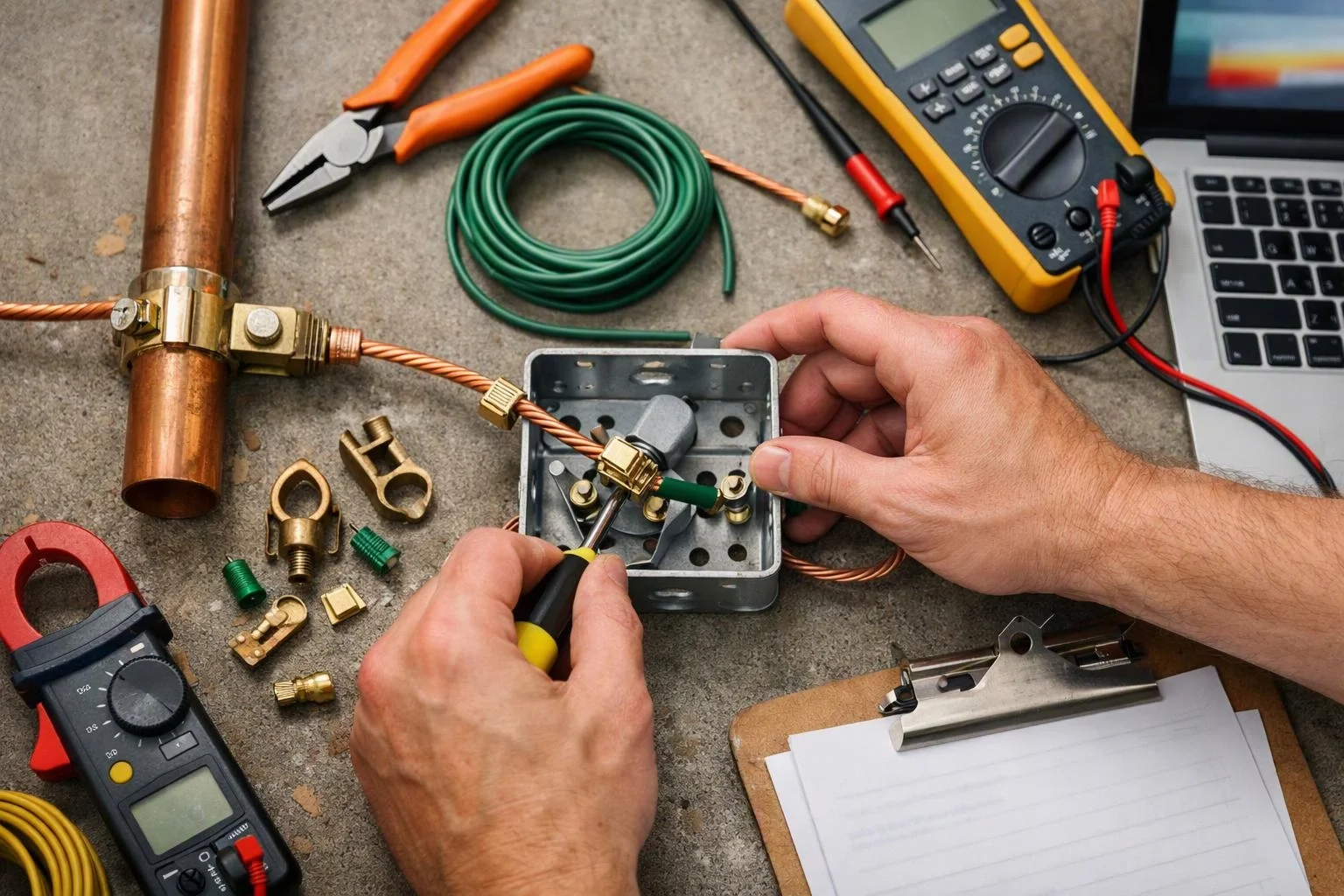
Electricians make bonding connections with approved conductors, bonding jumpers, listed fittings, and grounding terminals. A panelboard, metal conduit, junction box, and appliance frame may all need connections. These connections must remain electrically continuous. The connection must be tight, secure, and free of paint, rust, or other material that increases resistance.
Testing focuses on continuity and the quality of the fault-current path. A meter can show whether two metal points have an electrical connection. A low resistance reading alone doesn't prove code compliance. The conductor size, connection method, overcurrent device, service arrangement, and equipment listing also matter. An electrician may inspect terminations and test continuity after de-energizing the circuit.
Why Bonding Matters?

Bonding reduces the chance that two reachable metal surfaces will sit at different voltages. That difference can create a shock hazard when a person touches both surfaces. A sound bonding path also supports the operation.circuit breakers and fuses during a line-to-metal fault.
Bonding doesn't prevent every electrical hazard. It doesn't replace overcurrent protection or ground-fault protection. Its value depends on a complete path from the faulted equipment back to the source. Damaged conduit, loose lugs, missing jumpers, and improper panel connections can interrupt that path. This can happen even when the circuit appears to work normally.
When Bonding Matters Most?
Bonding deserves close attention during service changes, panel replacements, remodeling, and repairs. This includes work involving metal raceways or equipment. It also matters when a building has older wiring, mixed metal systems, corrosion, or signs of overheating. Work.service bonding connection requires care. The service disconnect and grounded conductor arrangement affect the entire electrical system.
Warning signs include tingling from an appliance, sparks when equipment connects, warm panel connections, visible corrosion, and repeated breaker trips. Don't remove a bonding jumper or treat a neutral wire as a substitute. Check the complete system design first.National Electrical Code sets detailed rules for bonding. Local inspection requirements determine which work needs a permit or approval.
How to Evaluate Bonding?
- Check whether metal enclosures, raceways, and equipment frames have approved, tight bonding connections.
- Confirm that bonding jumpers and conductors have the size and type required for the circuit and service.
- Look for paint, rust, corrosion, loose lugs, damaged fittings, or missing locknuts at metal connections.
- Ask whether continuity testing covered the full fault-current path, not just one visible connection.
- Compare the installation with National Electrical Code Article 250 and applicable local requirements.
Related Concepts Compared
Bonding vs. Electrical Grounding
Grounding connects an electrical system or equipment to earth or a grounding reference. Bonding connects conductive parts together so fault current has a dependable return path.
Bonding vs. Neutral Wire
A neutral wire normally carries return current from loads. A bonding path should not carry normal load current. Except where specific service rules permit a connection between neutral and equipment grounding conductors.
Bonding vs. Grounding Electrode
A grounding electrode, such as a ground rod or metal water pipe, connects the electrical system to earth. It is one part of the grounding system and does not replace equipment bonding.
Bonding vs. Ground-Fault Circuit Interrupter
A ground-fault circuit interrupter detects an imbalance between outgoing and returning current and opens the circuit quickly. Bonding provides a fault-current path, while a GFCI provides additional shock protection.
Expert Note
A continuity reading can look acceptable while a connection still fails under fault current. Inspectors also check conductor size, listed fittings, termination torque, corrosion, and the system’s neutral-to-ground arrangement. Service equipment and downstream panels may have different bonding requirements.
Common Mistakes or Myths About Bonding
- Assuming a ground rod alone bonds metal equipment safely.
- Painting over a metal bonding contact or leaving corrosion between connection surfaces.
- Using a neutral conductor as an equipment bonding path in a downstream panel.
- Installing a bonding jumper without checking its required size and listed connection method.
- Treating a continuity beep as proof that the entire installation meets code.
Bonding in Practice: A Real-World Example
A metal junction box has a damaged hot conductor touching the box. Proper bonding lets fault current return to the source through the grounding path and trip the breaker. Without that path, the box can stay live while the breaker stays closed.
Related Services
Related Terms
Electrical Grounding
Electrical Grounding is a safety system that connects electrical equipment and circuits to the earth or…
National Electrical Code
National Electrical Code is a model safety standard for designing, installing, and inspecting electrical systems in…
Electrical Code
Electrical Code is a set of safety rules for designing, installing, inspecting, and maintaining electrical systems…
Neutral Wire
Neutral Wire is a current-carrying conductor that normally completes an alternating-current circuit from a connected load…
Toledo Electrician
Have Questions About Bonding?
Contact Toledo Electrician for practical guidance on Bonding and related 24 hour electrician work in Toledo.