
What Is Grounding?
Grounding is a connection between an electrical system and the earth or another conductive reference point that helps direct unwanted current away from people and equipment. The connection supports stable voltage, gives fault current a controlled path, and helps protective devices respond when insulation fails or energized parts contact metal.
Quick Facts About Grounding
Category
Electrical safety system
Used for
Fault-current paths and voltage stability
Common confusion
Grounding is not the same as bonding
Also called
Earthing
Often discussed with
Electrical Safety Inspection, Electrical Code Correction
Key Takeaways About Grounding
- Grounding connects electrical systems with earth or a conductive reference.
- A grounding path supports protective device operation during faults.
- Grounding and bonding perform related but different jobs.
How Grounding Works
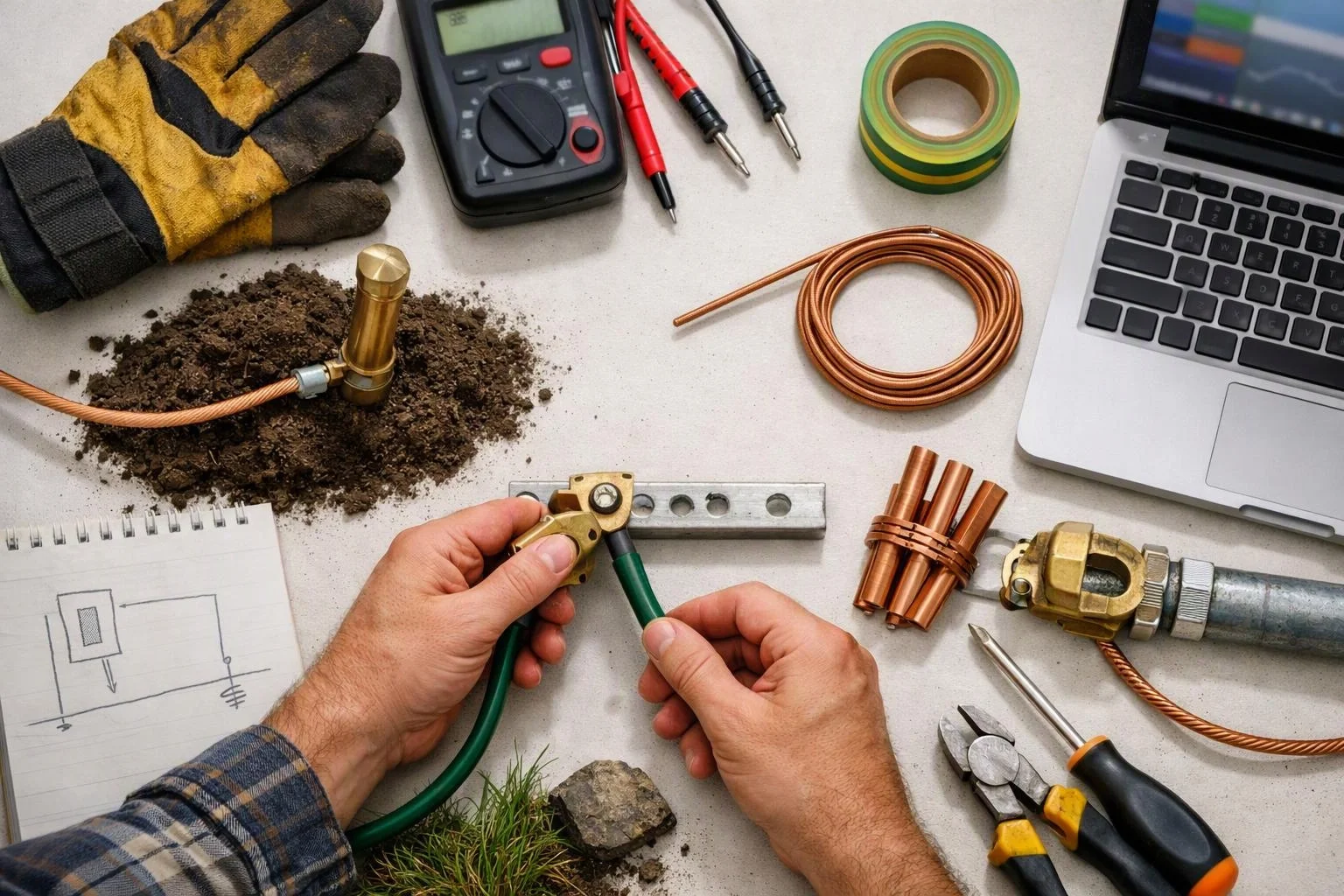
Grounding connects an electrical system to earth or to a conductive reference point through a planned path. Under normal conditions, current follows the intended circuit conductors. If a fault places current on metal equipment parts, the grounding path helps carry that current toward the source.
Related glossary terms: Bonding, Ground Fault, Neutral Wire.
A grounding system may include a grounding conductor, grounding electrode, and connections within the service equipment. The path must remain electrically continuous, and connections must stay secure and free from damaging corrosion. Bonding connects conductive metal parts so they remain at a similar electrical potential. Grounding provides a reference and a fault path, while bonding links metal parts into that path.
From the Toledo Electrician team
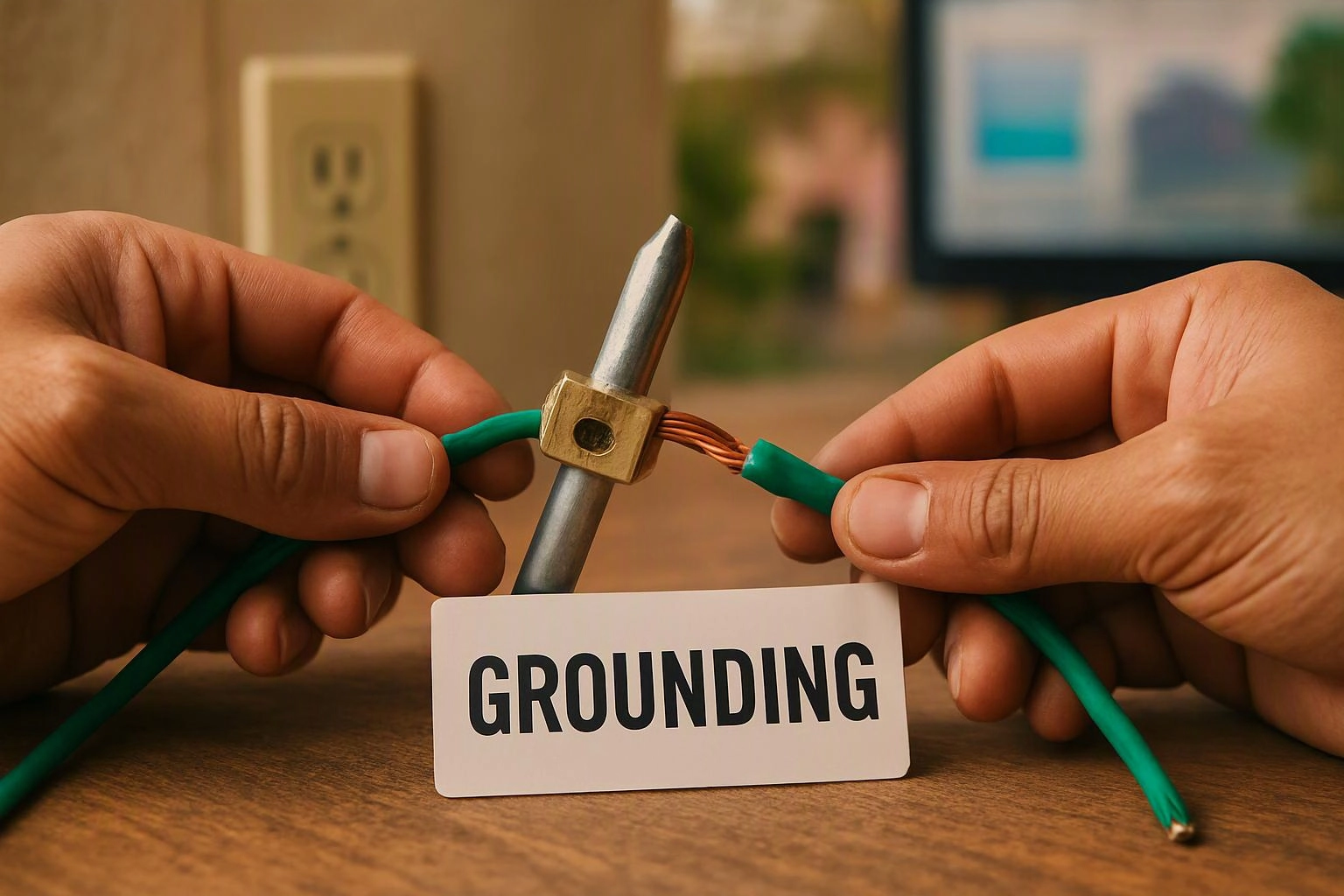
When we inspect grounding during an Electrical Safety Inspection, we trace the grounding path from receptacles and equipment back toward the service equipment. We check accessible connections, conductor continuity, and the relationship between grounding and bonding. Our team also looks for altered wiring or damaged connections that could interrupt the path.
Grounding in Practice: A Real-World Example
During an Electrical Safety Inspection, a metal-cased appliance may show an unexpected voltage because its grounding path is loose or disconnected. The inspection follows the equipment grounding conductor and related connections to identify where continuity is lost.
Related Terms
Bonding
Bonding is the intentional connection of conductive metal parts so they share a continuous electrical path…
Ground Fault
A ground fault is an unintended electrical connection between an energized conductor and a grounded surface…
Neutral Wire
A neutral wire is a grounded circuit conductor that carries current back to the electrical service…
Toledo Electrician
Have Questions About Grounding?
Contact Toledo Electrician for practical guidance on Grounding and related 24 hour electrician work in Toledo.