Skip to content
Glossary

What is Wire Gauge?

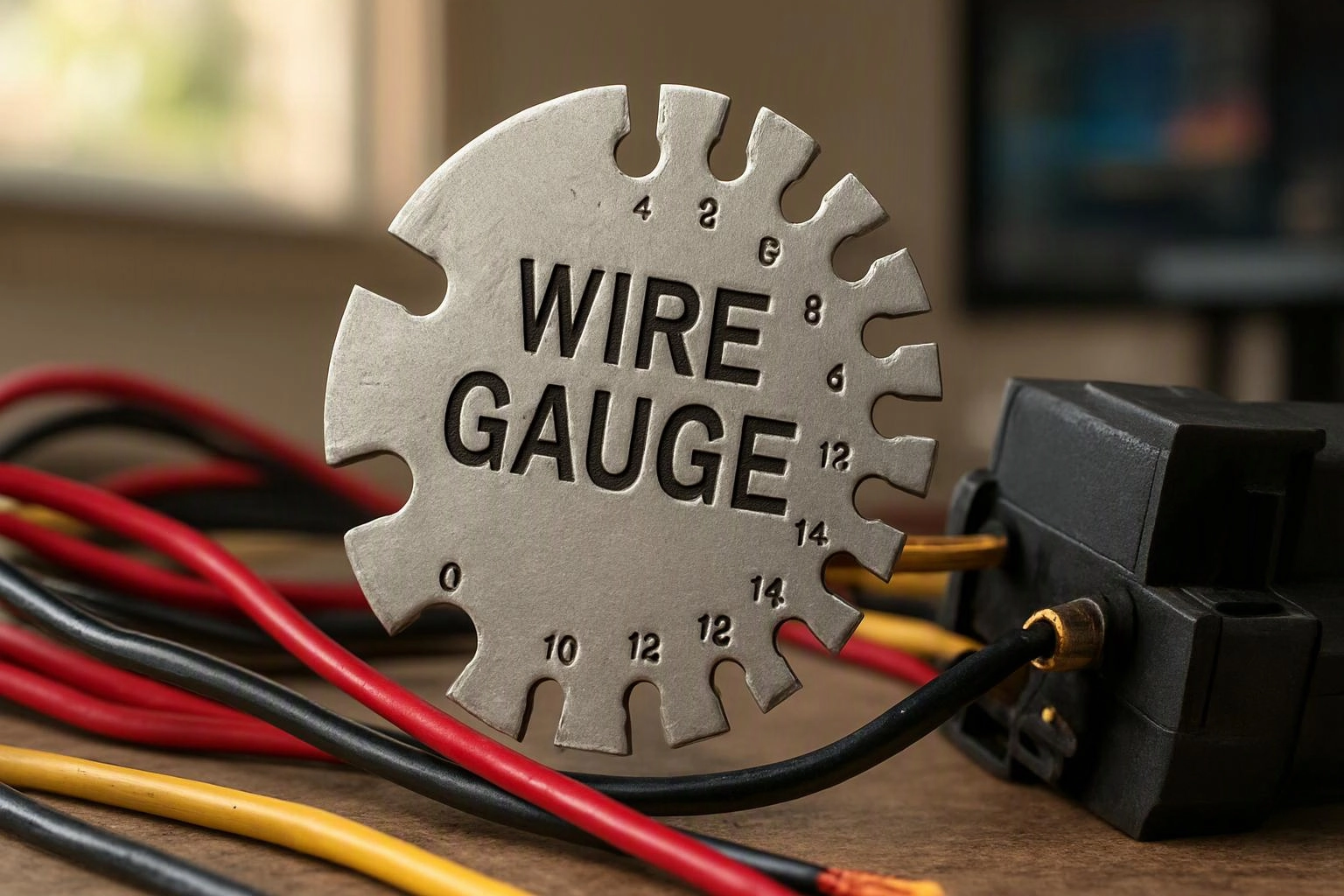
Wire Gauge is a numbering system that identifies the diameter and cross-sectional size of an electrical conductor. In the American Wire Gauge system, lower numbers indicate thicker wire, while higher numbers indicate thinner wire. The selected gauge affects ampacity, resistance, voltage drop, heat, installation methods, and safe circuit performance.

Quick Facts About Wire Gauge

Category

Electrical conductor measurement

Measured by

American Wire Gauge, or AWG

Used for

Selecting conductor size for electrical circuits

Common confusion

A lower AWG number means a thicker wire

Also called

AWG, American Wire Gauge

Often discussed with

Electrical Troubleshooting, Dedicated Circuit Installation

Key Takeaways About Wire Gauge

  • American Wire Gauge numbers run backward, so 10 AWG is thicker than 14 AWG.
  • A wire’s gauge affects current capacity, resistance, voltage drop, and heat.
  • The correct size depends on load, insulation, circuit length, temperature, and site conditions.
  • Wire gauge alone does not set ampacity. Insulation and site conditions also matter.
  • Replacing a smaller wire with a larger wire needs matching terminals, breakers, and connections.

Understanding Wire Gauge

Toledo Electrician — detail view — Understanding Wire Gauge

Wire Gauge describes the physical size of an electrical conductor. Most residential and commercial wiring in the United States uses American Wire Gauge, written as AWG. The system assigns a number to each standard size. The number moves in reverse order. A 12 AWG conductor is thicker than a 14 AWG conductor. A 10 AWG conductor is thicker than both.

Related glossary terms: Ampacity, Voltage Drop, Load Calculation.

Conductor size affects how easily electricity moves through the wire. A thicker conductor normally has lower electrical resistance. It produces less heat and loses less voltage over the same distance. Wire gauge doesn't stand alone, however. The wire’s material, insulation temperature rating, and installation location also affect safety. Circuit length and current-carrying conductors also affect the safe choice.

How Wire Gauge Works, Is Measured, or Is Used?

AWG follows a fixed geometric scale. It isn't a simple linear measurement. Each increase of three gauge numbers represents about double the conductor area. This applies in common comparisons. For example, 12 AWG copper has a larger conductor than 14 AWG copper. Larger conductors can carry more current under the same approved conditions. They offer less resistance and produce less heat.

Electricians select a gauge by matching the conductor to the circuit’s expected load. They also review installation conditions. The process includes checking.load calculationconductor material, and insulation rating. It also includes ambient temperature, conduit fill, and circuit length. A long run may need a larger conductor to limit.voltage drop. This applies even when the breaker permits a smaller size. The final selection must match the terminals, lugs, and approved connectors.

  • Common household branch-circuit conductors include 14 AWG copper on many 15-amp circuits. They also include 12 AWG copper on many 20-amp circuits.
  • These examples aren't universal rules. The National Electrical Code includes exceptions and specific requirements.
  • Aluminum conductors usually need different sizing and termination practices than copper conductors.

Why Wire Gauge Matters?

Toledo Electrician — service highlight — Why Wire Gauge Matters?

The wrong gauge can create excess heat, nuisance breaker trips, dimming lights, and equipment problems. It can also create a fire risk. A wire that's too small for its load may overheat before the circuit breaker responds. This can happen when conditions reduce its allowed ampacity. A larger-than-needed wire isn't automatically unsafe. Its terminals and connectors must accept its diameter.

Correct sizing also protects equipment performance. Excessive resistance can reduce voltage at a motor, heater, or appliance. This may cause poor operation and added stress.circuit breaker protects the conductor from excessive current. Pairing a large breaker with an undersized wire is a serious wiring error.

When Wire Gauge Matters Most?

Wire gauge becomes especially important during new circuit installation, remodeling, panel work, and damaged wire replacement. It also matters when adding long runs for detached buildings and outdoor equipment. It matters for electric vehicle chargers, heat pumps, and large appliances. In each case, the circuit load and distance must be reviewed first. Someone must review them before selecting a conductor.

Older buildings may contain wiring that doesn't match present equipment demands. It may not meet current installation requirements. A visual comparison can mislead you. Insulation thickness, conductor material, and cable type vary. A proper evaluation checks the printed cable markings and breaker size. It also checks connection ratings, circuit length, and conditions inside the panel and junction boxes.

How to Evaluate Wire Gauge?

  • Read the cable jacket or conductor marking and record the AWG size, material, and insulation type.
  • Compare the conductor size with the breaker rating and the circuit load calculation.
  • Check voltage drop on long runs, especially for motors, heaters, pumps, and electronic equipment.
  • Confirm that terminals, lugs, wire connectors, and devices are listed for the conductor size and material.
  • Review temperature, conduit fill, bundling, and local code requirements before approving the installation.

Related Concepts Compared

Wire Gauge vs. Ampacity

Ampacity is the maximum current a conductor may carry under specified conditions. Wire gauge describes physical conductor size, while ampacity also depends on insulation, temperature, installation method, and conductor material.

Wire Gauge vs. Voltage Drop

Voltage drop is the reduction in voltage that occurs as current travels through resistance. A larger wire gauge can reduce voltage drop on a long circuit, but gauge and voltage drop are not the same measurement.

Wire Gauge vs. Cable Size

Cable size may describe the conductors inside a cable, the total cable construction, or a trade label. Wire gauge normally refers to one conductor’s AWG size.

Wire Gauge vs. Wire Diameter

Wire diameter is the physical width of a conductor. Wire gauge is the numbered system used to identify that size, so the two terms describe related information in different ways.

Expert Note

Do not choose wire gauge from breaker size alone. A qualified review also checks conductor material, insulation rating, ambient temperature, bundling, conduit fill, circuit length, and the equipment terminals. Those details can change the permitted ampacity or require a larger conductor.

Common Mistakes or Myths About Wire Gauge

  • Assuming a higher AWG number means a thicker conductor.
  • Using the breaker rating as the only wire-sizing factor.
  • Mixing copper and aluminum conductors without listed connectors and approved installation methods.
  • Ignoring voltage drop on long circuits.
  • Installing a conductor that does not fit the device terminal or connector.

Wire Gauge in Practice: A Real-World Example

A 20-amp kitchen receptacle circuit commonly uses 12 AWG copper conductors. A long run to a detached workshop may need a larger conductor to control voltage drop. The installer must verify breaker compatibility, conduit conditions, and terminal ratings before completing the circuit.

Related Terms

Ampacity

Ampacity is the maximum continuous current, measured in amperes, that a conductor can carry safely under…

Voltage Drop

Voltage Drop is the reduction in electrical voltage that occurs as current travels through a wire…

Load Calculation

Load Calculation is a method for estimating the electrical demand that a building, circuit, or service…

National Electrical Code

National Electrical Code is a model safety standard for designing, installing, and inspecting electrical systems in…

Toledo Electrician

Have Questions About Wire Gauge?

Contact Toledo Electrician for practical guidance on Wire Gauge and related 24 hour electrician work in Toledo.

+1 (419) 574-6561