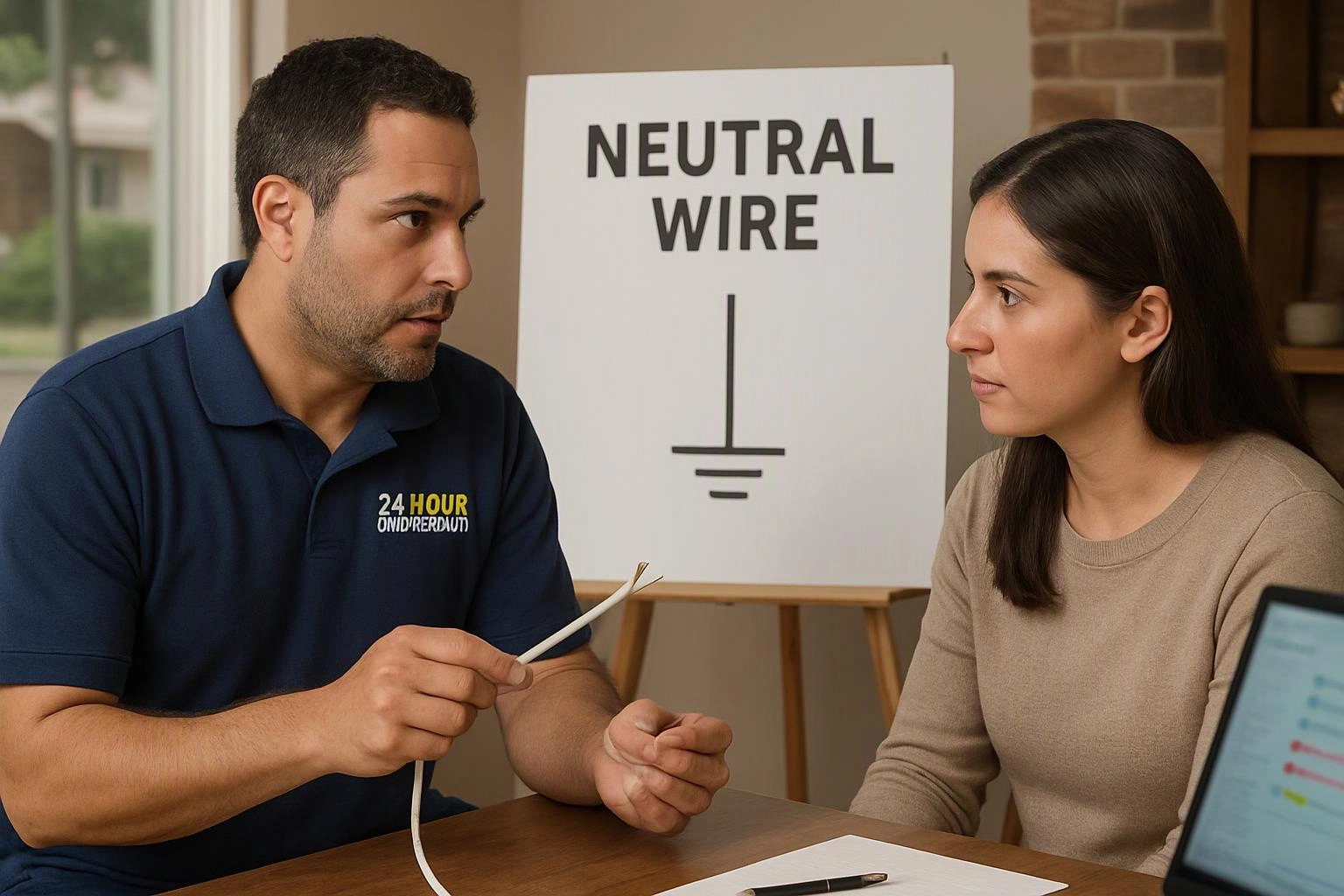
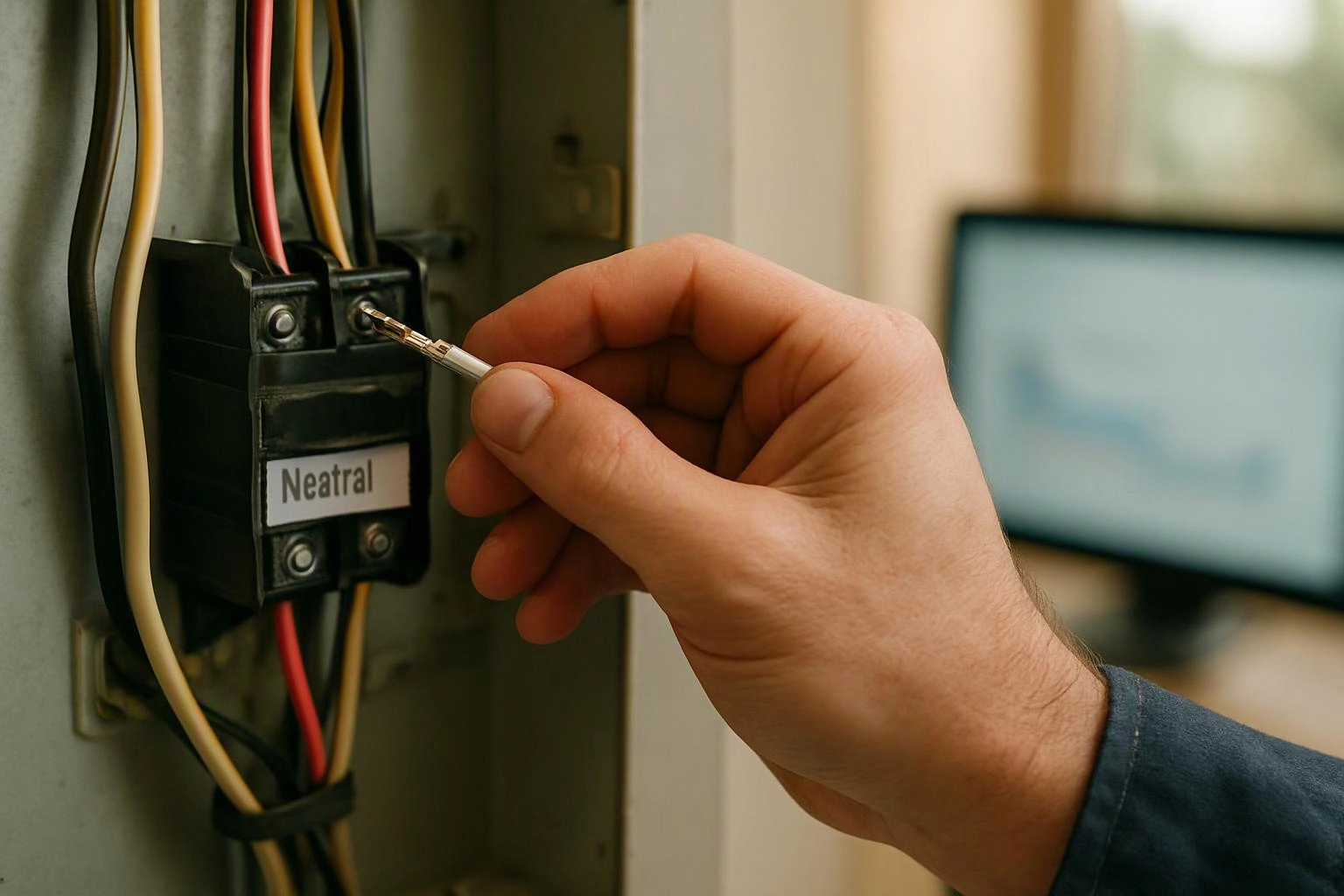
What is Neutral Wire?
Neutral Wire is a current-carrying conductor that normally completes an alternating-current circuit from a connected load back to the electrical source. It's usually identified by white or gray insulation in North American wiring. The neutral wire connects to the grounded conductor at the service equipment. But it is not a substitute for the equipment grounding conductor.
Quick Facts About Neutral Wire
Category
Electrical conductor
Used for
Returning normal circuit current
Common confusion
Neutral is not the same as ground
Typical identification
White or gray insulation
Also called
Grounded conductor, Neutral conductor
Often discussed with
Electrical Troubleshooting, Electrical Inspection
Key Takeaways About Neutral Wire
- The neutral wire normally carries current back to the source after electricity passes through a load.
- White or gray insulation commonly identifies a neutral conductor in North American wiring.
- Neutral and ground connect at the service equipment. But they serve different purposes.
- A loose neutral can create unstable voltage, flickering lights, or damaged equipment.
- Never assume a white wire is safe to touch without testing and proper deenergization.
Understanding Neutral Wire

Neutral Wire is the grounded conductor that normally carries current. It carries current from a load back to the source. In a typical 120-volt branch circuit, the neutral works with the ungrounded, or hot, conductor. Together, they complete the circuit. A lamp, receptacle, or appliance receives power through the hot wire. It sends operating current back through the neutral wire.
Related glossary terms: Electrical Grounding, Branch Circuit, National Electrical Code.
Electricians commonly identify a neutral conductor with white or gray insulation. Insulation color alone doesn't prove that a conductor is neutral or safe. The neutral connects to the grounded conductor.service equipment. The system bonds to ground there. Downstream panelboards normally keep the neutral isolated from equipment grounding paths. This prevents normal current from flowing on metal parts and grounding conductors.
How Neutral Wire Works, Is Measured, or Is Used?
In a simple 120-volt circuit, current travels from the source on the hot conductor. It passes through the connected load and returns on the neutral. The neutral voltage is close to ground potential under normal conditions. It can rise above ground when current flows through resistance. A digital multimeter can measure voltage between hot and neutral. It can also measure voltage between hot and ground. It can measure voltage between neutral and ground. A qualified person must establish safe test conditions first.
Modern homes also use neutral conductors in multiwire branch circuits. They also use them in 120/240-volt systems. Two hot conductors can share one neutral when the circuit's designed correctly. The hot conductors must be on opposite phases. The shared neutral carries only the imbalance between the two loads. A loose or incorrectly connected neutral can cause abnormal voltage across equipment. Wire size, overcurrent protection, circuit design, and terminal torque must match installation requirements.
Why Neutral Wire Matters?

A working neutral helps electrical equipment receive a stable supply voltage. A damaged connection can cause flickering lights, intermittent receptacles, buzzing, or appliances that start and stop. In a multiwire circuit, the problem can expose connected loads to wrong voltage. This voltage may differ from their intended rating. It may damage electronics or motors.
Neutral wiring also affects safety because normal current should stay on intended circuit conductors. A neutral-ground connection in the wrong location can place current.equipment grounding conductors. It can also place current on metal boxes or raceways. Those paths should carry fault current during a problem. They shouldn't carry normal operating current. Correct separation and bonding help protective devices work as designed.
When Neutral Wire Matters Most?
Neutral wire condition deserves close attention during panel replacements, rewiring, generator connections, and circuit additions. It also matters when a home has older wiring or aluminum conductors. Shared neutrals or signs of heat at a terminal also need attention. A qualified electrician should identify each conductor and confirm the circuit arrangement. The electrician should inspect terminations before changing connections.
don't treat a neutral as harmless simply because it's normally near ground potential. A neutral may carry current or become energized through a fault. It may remain connected to another source during generator or transfer-switch work. Turn off and verify all possible sources before opening a panel or junction box. Follow.National Electrical Code requirements that apply to the installation.
How to Evaluate Neutral Wire?
- Confirm that the conductor is identified correctly and is not being used as a substitute for a grounding conductor.
- Measure expected voltage between hot and neutral, then compare it with the equipment rating and circuit design.
- Inspect neutral terminals for looseness, heat damage, corrosion, or multiple conductors under an unsuitable terminal.
- Check that neutral and ground remain separated in downstream panelboards and subpanels.
- Look for flickering lights, changing appliance behavior, or unexplained voltage changes that may indicate a loose neutral.
Related Concepts Compared
Neutral Wire vs. Equipment Grounding Conductor
An equipment grounding conductor provides a low-resistance path for fault current and normally carries no operating current. A neutral wire carries normal return current.
Neutral Wire vs. Grounded Conductor
Grounded conductor is the formal electrical term commonly used for the neutral wire. The term describes its connection to ground at the service equipment.
Neutral Wire vs. Hot Wire
A hot wire carries voltage from the source toward a load. A neutral wire normally returns current from the load to the source.
Neutral Wire vs. Neutral-ground Bond
A neutral-ground bond connects the grounded conductor to the grounding system at an approved point, usually the service equipment. Extra bonds downstream can place normal current on grounding paths.
Expert Note
A neutral connection can fail while the hot conductor remains intact. In a multiwire circuit, that failure can shift voltage between connected loads, so testing only one receptacle may miss the problem.
Common Mistakes or Myths About Neutral Wire
- Treating the neutral wire as a safe-to-touch conductor.
- Connecting neutral and ground together in a downstream subpanel.
- Assuming white insulation proves the conductor is neutral.
- Using the neutral as the equipment grounding conductor without an applicable code basis.
- Ignoring flickering lights or voltage changes after panel or circuit work.
Neutral Wire in Practice: A Real-World Example
A kitchen circuit supplies a refrigerator and countertop receptacles through hot and neutral conductors. If the neutral terminal loosens, lights may flicker and appliance voltage may change as loads turn on and off. The repair requires identifying the circuit, deenergizing all sources, and correcting the termination.
Related Services
Related Terms
Electrical Grounding
Electrical Grounding is a safety system that connects electrical equipment and circuits to the earth or…
Branch Circuit
Branch Circuit is the wiring portion that carries electricity from a final overcurrent device in a…
National Electrical Code
National Electrical Code is a model safety standard for designing, installing, and inspecting electrical systems in…
Panelboard
Panelboard is an enclosed electrical distribution assembly that receives power from a service or feeder and…
Toledo Electrician
Have Questions About Neutral Wire?
Contact Toledo Electrician for practical guidance on Neutral Wire and related 24 hour electrician work in Toledo.