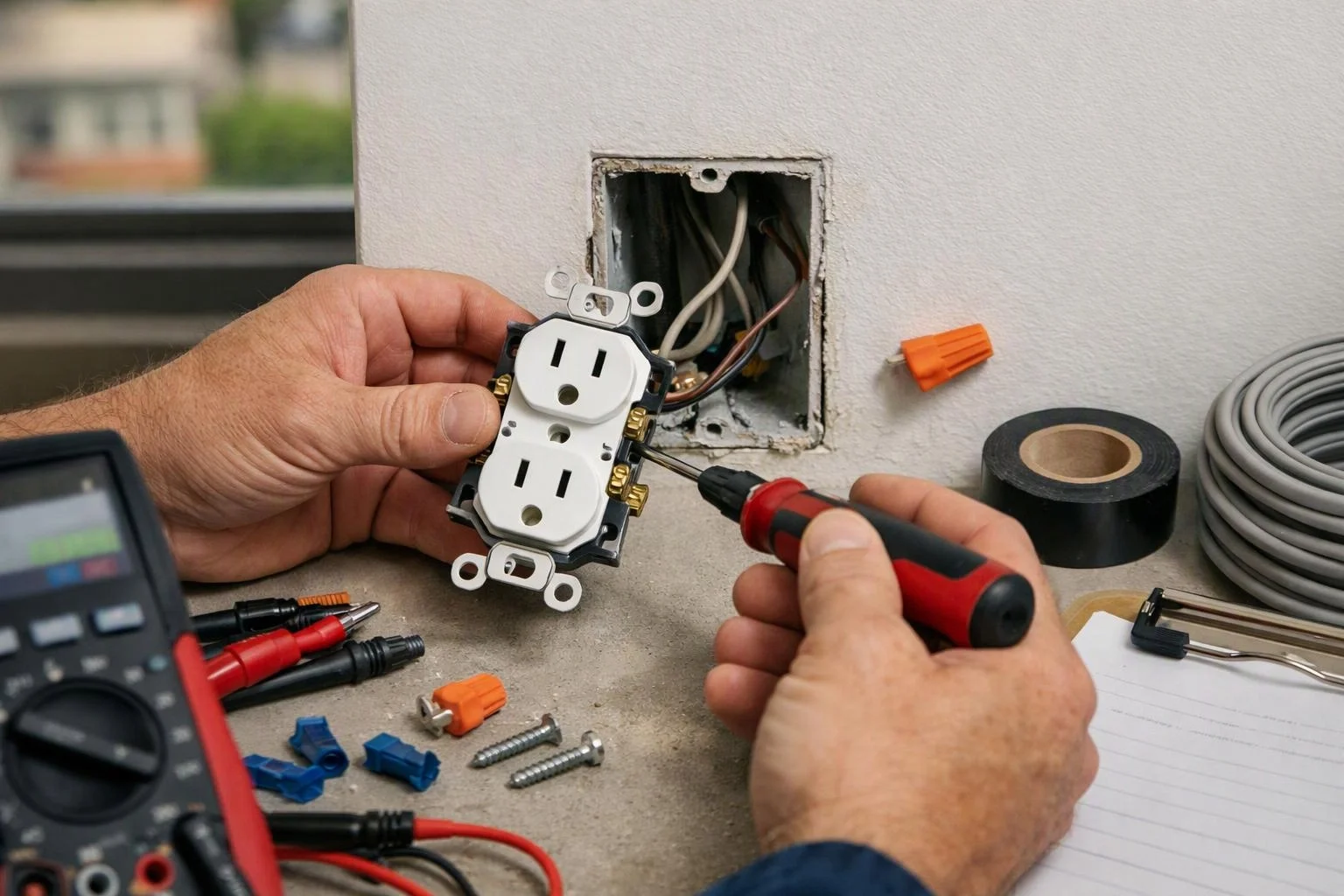
What is a Receptacle?
Receptacle is an electrical device with contact openings that accepts a plug and connects equipment to a branch circuit. A receptacle may provide power, grounding, or shock protection through features such as GFCI or AFCI protection. Common household receptacles are rated for specific voltage, amperage, wire connections, and installation locations.
Quick Facts About Receptacle
Category
Electrical wiring device
Used for
Connecting plug-in equipment to a branch circuit
Common confusion
Outlet and receptacle are related but not always identical
Relevant standard
National Electrical Code, NFPA 70
Also called
Electrical receptacle, Wall receptacle
Often discussed with
Outlet Installation, GFCI Outlet Repair
Key Takeaways About Receptacle
- A receptacle receives a plug and connects portable equipment to an electrical branch circuit.
- Receptacle ratings must match the circuit voltage, amperage, wiring, and intended load.
- GFCI receptacles help reduce shock risk in damp or wet locations.
- A receptacle may look normal while loose connections or heat damage create serious hazards.
- The term outlet is commonly used for a receptacle, although outlet has a broader technical meaning.
Understanding Receptacle

Receptaclemeans a fixed electrical wiring device that receives a plug. Its internal contacts connect plug blades to circuit conductors. These conductors carry electrical energy.branch circuit to equipment. Most residential examples have two vertical slots and a grounding opening. Designs vary by voltage, amperage, and use.
Related glossary terms: Branch Circuit, Ground-Fault Circuit Interrupter, Electrical Grounding.
People often call a receptacle an outlet. The terms overlap in everyday speech. The National Electrical Code uses outlet for a current-taking point. A receptacle identifies the contact device itself. A receptacle may be tamper-resistant, weather-resistant, locking, or isolated-ground. It may also have GFCI protection.
How Receptacle Works, Is Measured, or Is Used?
When you insert a matching plug, its blades press against metal contacts. One contact connects to the ungrounded conductor. Another connects to the neutral conductor when the circuit uses one. The grounding contact connects to the equipment grounding path. This setup supplies power and provides a safer fault-current path.
Selection depends on the circuit rating and equipment load. A standard 15-ampere receptacle commonly serves a 15-ampere branch circuit. A 20-ampere receptacle has a T-shaped neutral slot. It serves equipment that requires a 20-ampere connection. The device must match the system voltage and conductor size. It must also match box capacity, location, and protection needs. A GFCI receptacle measures current leaving and returning through the circuit. It trips when the difference reaches its protective threshold.
Installation involves turning off the circuit and checking that power is absent. You must identify each conductor and secure the wires. Then, fasten the device to an approved electrical box. The cover plate should sit flat. The receptacle shouldn't move when you insert or remove a plug. Testing can include a plug-in tester and a GFCI test button. It can also check polarity, grounding, and secure terminations.
Why Receptacle Matters?

A receptacle provides a physical connection between building wiring and everyday equipment. A loose terminal, damaged contact, or overloaded circuit can create heat. A missing ground can cause arcing, nuisance trips, or shock exposure. Signs include discoloration, buzzing, burning odor, warmth, and sparks. Plugs that fall out also signal a problem needing prompt attention.
Correct device selection affects safety and performance. A receptacle with the wrong amperage rating can confuse people about circuit capacity. A missing ground-fault circuit interrupter can expose people to shock. This applies in locations that need this protection. The receptacle, circuit breaker, wire gauge, and connected load must work together.
When Receptacle Matters Most?
Receptacles need close attention during remodeling and appliance installation. They also need attention during electrical inspections and troubleshooting. Kitchens, bathrooms, garages, basements, exterior walls, and laundry areas may need special protection. Other damp locations may also need special device types. Requirements depend on the applicable code edition. Child-accessible areas may need tamper-resistant receptacles.
Replacement becomes especially important after water exposure, impact, or overheating. Repeated tripping also makes replacement important. Before choosing a new device, check the circuit breaker rating and wire condition. Check the box space, grounding method, and equipment instructions. In Toledo homes, older wiring and winter moisture can make inspection useful. Complete this inspection before approving a replacement or added receptacle.
How to Evaluate Receptacle?
- Confirm that the receptacle voltage and amperage ratings match the circuit breaker and connected equipment.
- Check for heat marks, cracks, buzzing, loose plugs, burning odors, or visible arcing.
- Press the TEST and RESET buttons on a GFCI receptacle and verify that power responds correctly.
- Verify correct polarity, grounding, wire terminations, box support, and a secure cover plate.
- Ask whether the location requires tamper-resistant, weather-resistant, or GFCI protection.
Related Concepts Compared
Receptacle vs. Outlet
Outlet is a broader code term for a point where current is taken from a wiring system. A receptacle is one type of outlet.
Receptacle vs. GFCI Receptacle
A GFCI receptacle is a receptacle with ground-fault protection built into the device. A standard receptacle does not provide that protective function.
Receptacle vs. Plug
A plug is attached to a cord or appliance and inserts into a receptacle. The receptacle is the fixed device connected to building wiring.
Receptacle vs. Switch
A switch opens or closes a circuit to control power. A receptacle provides contact points for a plug and connected equipment.
Expert Note
A receptacle replacement is not always a simple device swap. A professional should check the circuit rating, conductor condition, grounding path, box capacity, and required protection before selecting the replacement.
Common Mistakes or Myths About Receptacle
- Replacing a 15-ampere receptacle without checking the circuit breaker and wire size.
- Assuming a receptacle is safe because it still supplies power.
- Using a standard indoor receptacle in a damp or outdoor location.
- Ignoring loose plugs, warmth, buzzing, discoloration, or a burning smell.
- Installing a GFCI receptacle without testing its line and load connections.
Receptacle in Practice: A Real-World Example
A bathroom receptacle that trips after a hair dryer runs may have GFCI protection, an overloaded circuit, or a wiring problem. Resetting the device may restore power, but repeated trips require testing rather than repeated resets.
Sources & Further Reading on Receptacle
- National Fire Protection Association, National Electrical Code
- U.S. Consumer Product Safety Commission, Electrical Safety
- National Electrical Manufacturers Association, Receptacles
Related Services
Related Terms
Branch Circuit
Branch Circuit is the wiring portion that carries electricity from a final overcurrent device in a…
Ground-Fault Circuit Interrupter
Ground-Fault Circuit Interrupter is a device that monitors electrical current and quickly disconnects power when current…
Electrical Grounding
Electrical Grounding is a safety system that connects electrical equipment and circuits to the earth or…
National Electrical Code
National Electrical Code is a model safety standard for designing, installing, and inspecting electrical systems in…
Toledo Electrician
Have Questions About Receptacle?
Contact Toledo Electrician for practical guidance on Receptacle and related 24 hour electrician work in Toledo.