Skip to content
Glossary

What is Surge Protector?

Surge Protector is a device that limits brief increases in electrical voltage and redirects excess energy away from connected equipment. A surge protector commonly uses metal oxide varistors, or MOVs, to reduce damaging voltage at an outlet, power strip, panel, or appliance connection. Surge protection reduces risk but can't prevent every electrical fault.

Quick Facts About Surge Protector

Category

Electrical protection device

Used for

Limiting transient voltage at equipment

Common confusion

A power strip is not always a surge protector

Also called

Surge suppressor, Transient voltage surge suppressor

Often discussed with

Whole-House Surge Protection, Electrical Inspection

Key Takeaways About Surge Protector

  • A surge protector limits brief spikes, but it does not fix low voltage or outages.
  • Metal oxide varistors often absorb or redirect extra electrical energy during a surge.
  • A power strip may lack surge protection, even when it looks like one.
  • Whole-house surge protection works at the electrical panel and complements point-of-use devices.
  • Surge protectors wear out after repeated or severe surges and need inspection.

Understanding Surge Protector

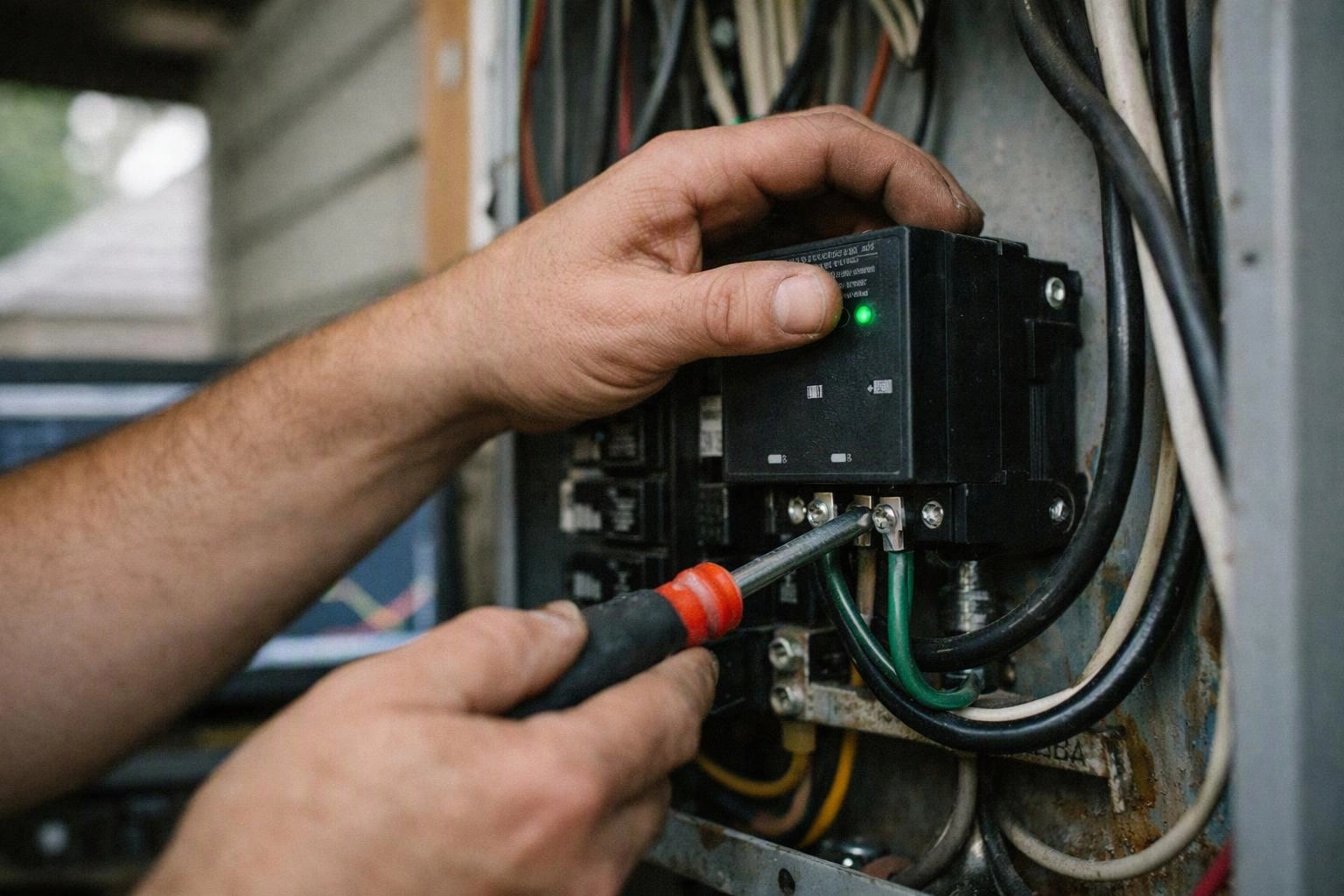
Toledo Electrician — detail view — Understanding Surge Protector

A Surge Protectorlimits a short voltage increase called a transient surge. The device directs extra energy away from connected equipment. It can also reduce the voltage that reaches the equipment. Common installation points include.receptacle, a plug-in power strip, and an electrical panel.

Related glossary terms: Electrical Grounding, Panelboard, Voltage.

Surges can come from utility switching, nearby lightning, or large motor changes. Sensitive equipment includes computers, televisions, network hardware, and modern appliances. Repeated exposure may damage this equipment. A surge protector doesn't provide backup power. It doesn't fix every voltage problem. It doesn't replace proper electrical grounding.

How Surge Protector Works, Is Measured, or Is Used?

Many plug-in units use metal oxide varistors, often called MOVs. An MOV normally carries little current. Its electrical resistance falls when voltage rises above its set limit. This change sends surge energy through the protection path. It keeps the full surge from reaching connected equipment.

Manufacturers describe protection with ratings such as clamping voltage. They also use maximum continuous operating voltage and surge current capacity. Joule ratings describe energy absorption during tests. A larger number alone doesn't prove better protection. Look for a listed product and a clear protection status indicator. Follow instructions that match the installation location.

A plug-in protector should connect to a properly grounded receptacle. Don't place it where moisture, heat, or damage can affect it. A whole-house unit connects near the service equipment. It needs the correct conductor length and overcurrent protection. It also needs grounding and bonding connections. Installation details depend on the equipment design. They also depend on the applicable National Electrical Code requirements.

Why Surge Protector Matters?

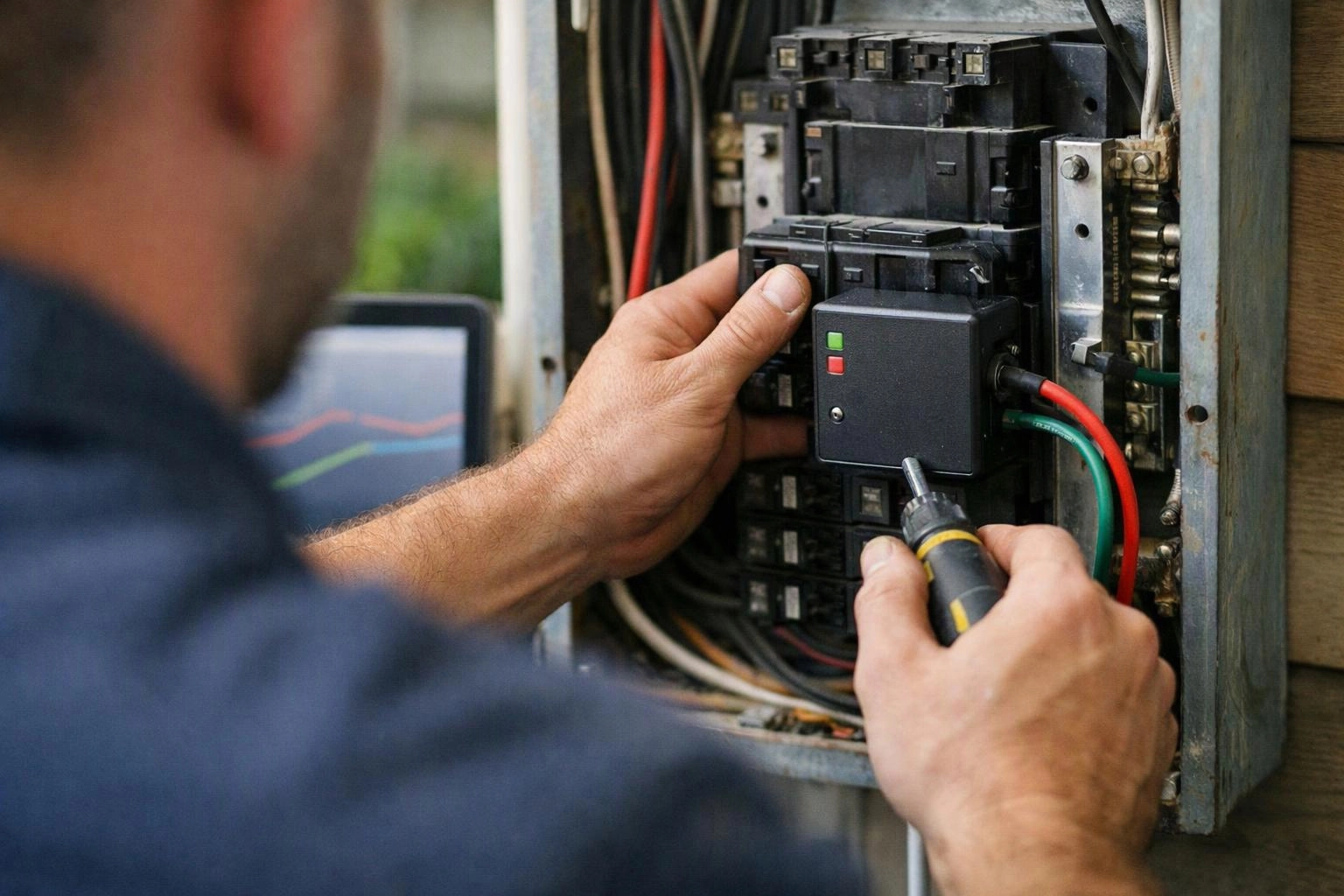
Toledo Electrician — service highlight — Why Surge Protector Matters?

Electronic equipment often contains small power supplies and control boards. These parts can react to fast voltage changes. A surge protector can reduce stress on these parts during a surge. Protection works best with a short, direct path to the grounding system. The connected load must also stay within its rating.

Protection also has limits. A surge protector can't guarantee equipment safety during a direct lightning strike. It can't prevent damage from sustained overvoltage or incorrect wiring. It can't prevent damage from an internal electrical fault. A failed indicator, heat damage, or cracked housing signals a problem. Buzzing or a burning smell also signals a problem. Disconnect the device and have it checked.

When Surge Protector Matters Most?

Surge protection deserves attention during an electrical panel replacement. It also matters during a service upgrade or high-value electronics installation. It matters in places with frequent utility switching or overhead utility lines. It also helps protect equipment that must remain reliable. A coordinated approach may pair panel protection with point-of-use protection. This can protect computers, home theater equipment, and network devices.

Choose protection based on the equipment, installation point, and wiring condition. Don't choose it based only on price or one marketing number. Verify that a recognized testing laboratory lists the product. Check that its instructions allow the planned connection. An electrician may also check.panelboard and grounding electrode system. They may check neutral connections and bonding before installing a permanent unit.

How to Evaluate Surge Protector?

  • Check for a recognized safety listing, clear manufacturer instructions, and a protection status indicator.
  • Compare clamping voltage, maximum continuous operating voltage, and surge current capacity.
  • Confirm that the receptacle has a working equipment grounding path before using a plug-in protector.
  • Inspect for heat marks, cracks, buzzing, odor, or a warning light that shows protection has failed.
  • Ask whether panel protection and point-of-use protection coordinate with the connected equipment.

Related Concepts Compared

Surge Protector vs. Power Strip

A power strip adds outlets but may provide no protection from voltage surges. A surge protector includes a protective circuit and should identify its ratings and listing.

Surge Protector vs. Whole-house Surge Protection

Whole-house surge protection mounts near the electrical panel and helps protect multiple circuits. A plug-in surge protector protects equipment connected at one location.

Surge Protector vs. Uninterruptible Power Supply

An uninterruptible power supply provides temporary battery power during an outage and often includes surge protection. A surge protector alone does not keep equipment running after power fails.

Surge Protector vs. Voltage Regulator

A voltage regulator manages longer changes in supply voltage. A surge protector responds mainly to short, high-voltage transients.

Expert Note

A joule rating should not be the only selection factor. A properly grounded installation, a suitable clamping rating, recognized safety listing, and a replaceable or visible failure indicator often matter more in real use.

Common Mistakes or Myths About Surge Protector

  • Assuming every power strip includes surge protection.
  • Using a plug-in protector with an ungrounded or miswired receptacle.
  • Choosing a device by joule rating alone.
  • Continuing to use a protector after its status light turns off.
  • Expecting surge protection to provide power during an outage.

Surge Protector in Practice: A Real-World Example

A desktop computer, modem, and monitor share a listed surge protector on a grounded receptacle. After a severe storm, its status light is off and its housing shows heat damage. Disconnect the devices and replace the protector before further use.

Related Terms

Electrical Grounding

Electrical Grounding is a safety system that connects electrical equipment and circuits to the earth or…

Panelboard

Panelboard is an enclosed electrical distribution assembly that receives power from a service or feeder and…

Voltage

Voltage is the electrical potential difference that pushes electric charge through a circuit. Measured in volts…

Receptacle

Receptacle is an electrical device with contact openings that accepts a plug and connects equipment to…

Toledo Electrician

Have Questions About Surge Protector?

Contact Toledo Electrician for practical guidance on Surge Protector and related 24 hour electrician work in Toledo.

+1 (419) 574-6561