Skip to content

Warning Signs of Dangerous or Failing Home Wiring

Dangerous electrical wiring creates visible, audible, and sensory warnings before it causes a fire, shock, or equipment damage. Common signs include burning odors, warm or discolored outlets, buzzing, sparks, frequent breaker trips, flickering lights, exposed conductors, loose connections, and mild shocks. Exposed wiring or smoke requires immediate emergency action, while older wiring, repeated faults, and widespread flickering warrant an expert electrical inspection. A qualified electrician can determine whether targeted repairs, troubleshooting, or whole-house rewiring is the safest solution. At Toledo Electrician, we help homeowners understand these warning signs and choose the right level of electrical service.

Get a Free Estimate

What Are the Warning Signs of Dangerous Electrical Wiring?

Dangerous electrical wiring often shows warning signs before a serious incident occurs. The most important indicators are burning odors, scorch marks, warm outlets, buzzing, sparks, shocks, flickering lights, repeated breaker trips, loose receptacles, and exposed conductors. These symptoms can indicate overheating, damaged insulation, overloaded circuits, or failing connections.

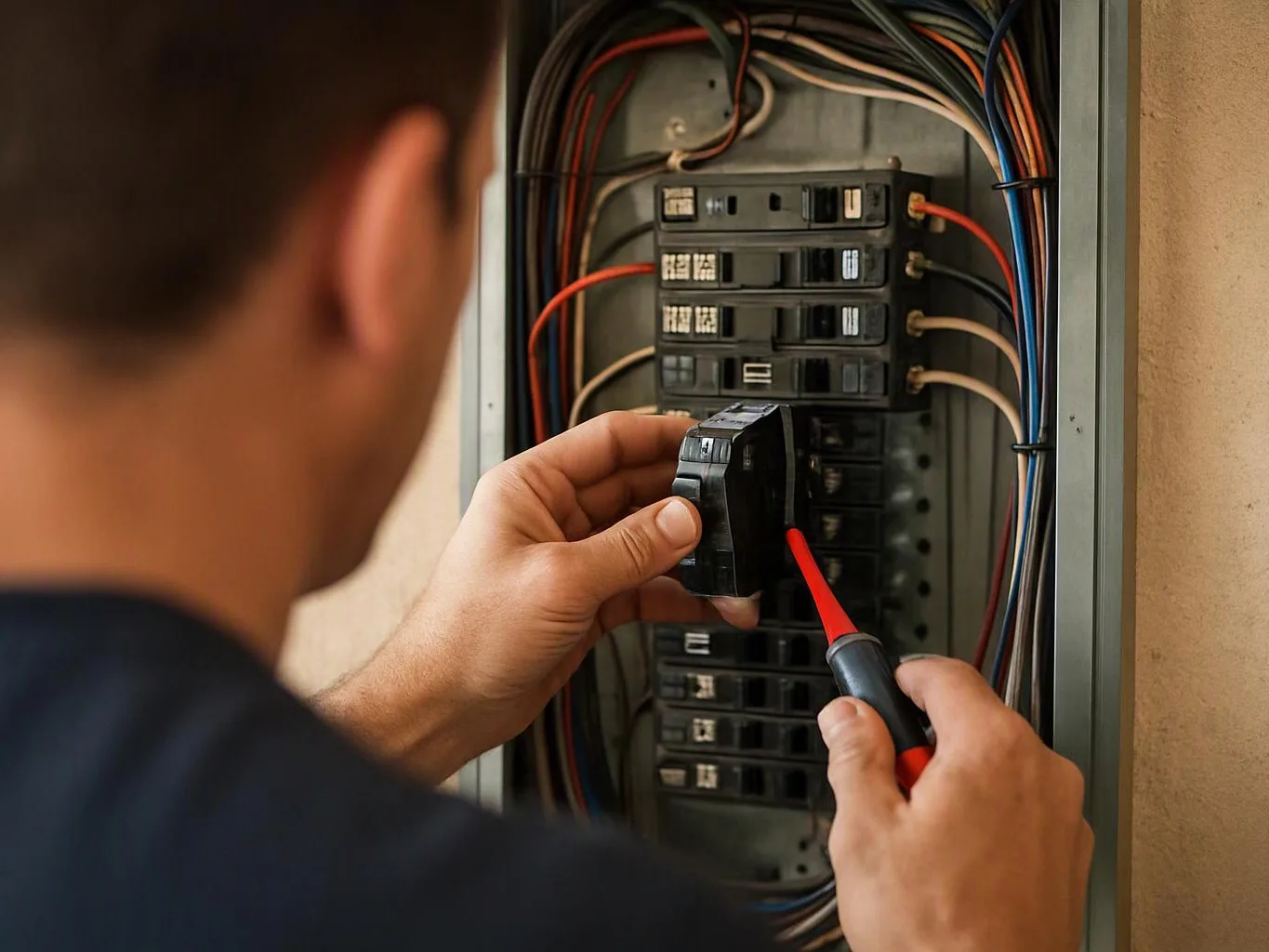
Warning signs of unsafe electrical wiring in a home

Do not treat a strange electrical symptom as a minor inconvenience. A residential electrical system includes conductors, wire insulation, connections, outlets, switches, branch circuits, and an electrical panel. A failure in one part can place stress on another part. The following signs explain the possible risk and the safest next action.

1
Burning smell: A sharp, plastic-like, or fishy odor near an outlet, switch, light, or panel can mean insulation or a connection is overheating. Turn off the affected circuit if it is safe and arrange urgent service. Smoke or flames require emergency services.
2
Warm or discolored outlets: An electrical outlet should not feel hot during normal use. Brown marks, melting, yellowing, or scorch marks may point to a loose connection, excess current, or heat inside the box. Stop using the outlet and do not cover the damage.
3
Buzzing sound: Buzzing, humming, crackling, or sizzling from an outlet, switch, fixture, or electrical panel can signal arcing or a loose connection. Switch off the circuit when safe and have the source checked by a licensed electrician.
4
Sparks:
5
A brief spark can sometimes occur when a plug is removed from a loaded device, but sparks from an outlet, switch, panel, or fixed wiring are not normal. Large sparks, repeated arcing, smoke, heat, or a burning smell increase the risk of an electrical fire.
6
Electrical shocks:
7
A tingle or mild shock from a faucet, appliance, switch plate, or outlet can indicate a grounding problem, damaged insulation, or leakage. Do not keep testing it. Unplug the appliance only if you can do so without contact with water or damaged parts.
8
Flickering lights:
9
Flickering, dimming, or pulsing may come from a loose electrical connection, failing light fixture, overloaded circuit, or voltage fluctuation. One lamp may have a local issue; several rooms may point to a larger circuit or service concern.
10
Frequent circuit breaker trips:
11
A circuit breaker trips to interrupt power during an overload or short circuit. Repeated trips can mean too many loads, a failing appliance, damaged wiring, or a problem at the panel. Resetting it over and over can hide a growing fault.
12
Exposed wires:
13
Exposed electrical conductors, missing covers, broken receptacles, and damaged insulation create direct contact.arc flash risks. Keep children and pets away, avoid touching the area, and call for urgent electrical repair.

Other clues include loose outlets, switches that feel hot, lights that dim when a high-load appliance starts, and breakers that trip only during certain activities. Household conditions matter. Children and pets can touch or pull damaged parts, water exposure can make shock more likely, and a home office or high-load appliance may add stress to an older branch circuit.

Older homes may contain several generations of work. A newer panel does not prove that every branch circuit is safe, and an old home is not automatically dangerous. Mixed-era wiring should be reviewed as a system, especially before a renovation, room addition, or installation of an electric range, heat pump, workshop tool, or vehicle charger.

Is Exposed Electrical Wiring an Emergency?

Exposed electrical conductors can be an emergency when energized wires, damaged insulation, sparks, smoke, heat, or water are present. Keep people and pets away, avoid touching or covering the wire, and shut off the circuit only if doing so is safe. Call emergency services for fire or smoke and an electrician for urgent electrical repair.

Exposed wiring is especially dangerous when the conductor is bare, the wire is hanging from a wall or ceiling, or a cable has been cut, crushed, chewed, or pulled from a box. An energized conductor can cause an electrical shock even when it appears small. Contact between wires or between a wire and metal can create an arc flash, which may produce intense heat, burns, and an electrical fire.

Move away from the area instead of investigating it. Do not touch the wire, push it behind a wall, wrap it with household tape, or place a cover over a hot or sparking component. Keep water away from the location. If you can reach the correct circuit breaker without passing the hazard or standing in water, switching it off may reduce risk. If that action is not clearly safe. Leave the home or area and wait for trained help.

Smoke, flames, popping sounds, spreading heat, or a strong burning smell require immediate evacuation and a call to emergency services. Once the fire department says the area is safe. An electrician can inspect the damage. For exposed but quiet wiring without heat or smoke. Request same-day or urgent service rather than attempting a repair yourself.

Our team can provide Electrical Troubleshooting in Toledo when a visible wiring problem needs prompt evaluation, but emergency services come first when fire or smoke is present. A 24 Hour Electrician may be appropriate for dangerous conditions that cannot safely wait until normal business hours.

When Does Old Wiring Need to Be Replaced?

Old wiring needs replacement when its insulation is brittle or damaged, circuits cannot safely support modern loads, outlets lack grounding, or recurring faults indicate deterioration. Knob-and-tube, cloth-insulated, and some aluminum wiring systems require expert evaluation rather than automatic replacement.electrical inspection identifies hazards and determines whether repairs or rewiring are appropriate.

An aging electrical system should be judged by condition, design, and use—not by age alone. Some older systems remain serviceable after careful inspection. While a newer installation can have unsafe alterations or damaged parts. Replacement becomes more likely when conductors show cracking, cloth insulation is loose or deteriorated, connections are overheated, or prior work combines incompatible components.

Knob-and-tube wiring may lack features expected in modern circuits. Such as grounding conductors and enclosed cable protection. Cloth-insulated wiring can become fragile over time. Aluminum wiring may require specific connections, devices, and repair methods. These systems should not be judged from a visual glance or repaired with a general-purpose part.

Ungrounded outlets are another important clue. A three-slot receptacle does not prove that a grounding path exists. Using adapters, removing a grounding pin, or replacing outlets without correcting the circuit can increase risk. An expert can test the circuit, identify its path, and explain options that support electrical code compliance.

Replacement may be targeted when one damaged branch circuit is the problem. It may be broader when several rooms show warm outlets, shocks, flickering, or repeated circuit breaker trips. A formal electrical inspection can document wire types, insulation condition, grounding, panel connections, and load demands before work begins.

Plan an inspection before buying an older home, starting a renovation, adding high-load appliances, or converting a room into a home office or workshop. Most basic inspections and repairs are completed within a single visit, while larger rewiring projects commonly take several workdays to a few weeks depending on access, permits, wall repairs, and the number of branch circuits involved. These are typical ranges, not a promise for every home.

We may recommend Whole-House Rewiring in Toledo when defects are widespread, but we do not assume that every older property needs complete replacement. The safest decision comes from documented testing and a plan that matches the home's actual condition and electrical load.

Can Bad Wiring Cause Flickering Lights?

Bad wiring can cause flickering lights when loose connections, damaged conductors, overloaded circuits, failing switches, or voltage fluctuations interrupt power. Flickering in one fixture may involve the lamp or connection. While flickering across multiple rooms can indicate a broader circuit or service problem. Persistent or heat-related flickering requires expert troubleshooting.

Start by noticing the pattern. If only one bulb flickers, turn off the fixture and check that the lamp is suitable and fully seated once it is cool. A failing light fixture, dimmer, switch, or local connection may be responsible. Do not open the fixture if wires are exposed or the fitting shows heat damage.

Flickering in several fixtures on one circuit may suggest an overloaded circuit or loose electrical connection. Flickering across multiple rooms, especially when a refrigerator, air conditioner, heater, or other high-load appliance starts, can point to voltage fluctuation, a service connection issue, or a panel problem. A circuit breaker may not trip for every loose or high-resistance connection, so a quiet breaker does not rule out danger.

Record when the lights flicker, which appliances are running, and whether outlets or switches feel warm. This information can help an expert trace the fault. Persistent flickering, buzzing, scorch marks, a burning smell, or visible damage should be treated as urgent rather than monitored for weeks.

Our Electrical Troubleshooting process can separate a lamp problem from a branch-circuit, panel, or service issue. Avoid using extension cords as a permanent solution. Since they may hide an overloaded circuit and add connection points.

When Is Whole-House Rewiring Necessary?

Whole-house rewiring is necessary when wiring deterioration or outdated construction affects many circuits, the system cannot support modern electrical loads, or repeated repairs cannot provide dependable safety. An electrician may recommend rewiring after an inspection finds widespread insulation damage, ungrounded circuits, unsafe connections, or incompatible components throughout the home.

Rewiring is a major project, so it should follow a clear diagnosis. The review normally considers the electrical panel, service capacity, branch circuits, wire types, grounding, connections, and the way the home is used. A small repair may be enough when one outlet or one cable has failed. A larger plan is more reasonable when the same defects appear in many rooms.

Common reasons for a full replacement include brittle insulation throughout the home, extensive knob-and-tube or problematic aluminum wiring, repeated overheating, missing grounding, overloaded circuits, and alterations that were added over time without a coordinated design. Recurring electrical faults can also show that repairs are treating symptoms instead of the underlying system condition.

Service capacity matters as well. Older homes may have an electrical panel and service that were designed for a much smaller electrical load. A renovation, electric heating, induction cooking, laundry equipment, workshop, home office, or vehicle charger can change demand. Rewiring may need to be planned with panel improvements and new branch circuits so the system works as one coordinated installation.

Access affects the project. Open walls, unfinished basements, attics, and planned remodeling can make cable routes easier. If walls remain finished, work may require careful openings and later patching. A qualified electrician should explain the expected sequence, affected rooms, temporary power needs, inspections, and any required coordination with other trades.

Whole-house rewiring in Toledo, for example, should be based on the property's wiring condition and planned electrical load, not simply its construction date. We can use an electrical inspection to separate immediate hazards from improvements that can be scheduled. Do not delay urgent repairs while comparing long-term options if there is smoke, active arcing, or exposed energized wiring.

A typical project may involve several dozen branch-circuit endpoints, but the count varies widely with home size and design. Most projects fall into a planned multi-day schedule. While complex homes with limited access can take longer. These figures are illustrative only, the inspection and site conditions determine the real scope.

What Can You Safely Check Yourself, and What Requires a Professional?

DIY electrical inspection should be limited to observing warning signs, identifying which breaker controls a circuit, and resetting a tripped breaker once when there is no heat, smoke, burning odor, or visible damage. Professional electricians should handle energized wiring, outlet replacement, electrical testing, fault tracing, panel work, and any repair involving exposed conductors.

Simple observation can help you describe a problem without putting you in the circuit. Look for discoloration, damaged covers, unusual sounds, odors, flickering, and appliances that lose power. Keep a safe distance and use a flashlight rather than opening a box or removing a cover.

Factor DIY Professional
Visible warning signs Observe odors, heat, sparks, sounds, and damage from a safe distance. Identify the source and assess the risk.
Circuit breaker Reset once only when there is no smoke, heat, odor, or visible damage. Investigate repeated trips, overloads, and short circuits.
Outlet cover Check that it is present and not cracked, hot, or discolored. Replace devices, inspect boxes, and correct connections.
Electrical testing Do not test exposed or damaged wiring. Perform voltage, continuity, grounding, load, and fault testing with proper equipment.
Panel and wiring work Do not remove the panel cover or handle energized conductors. Repair circuits, trace faults, and plan safe upgrades or rewiring.

Never work on wiring near water, after flooding, or when you are unsure which circuit is energized. Do not rely on a noncontact tester as proof that a circuit is safe. Children, pets, damp areas, and high-load appliances increase the need for caution. If a renovation is planned, have the wiring reviewed before walls are closed.

Choose a scheduled electrical inspection for older or mixed-era wiring, unexplained flickering, ungrounded outlets, or a history of repairs. Request urgent service for heat, buzzing, repeated trips, shocks, or exposed conductors. Treat smoke, flames, active arcing, and a spreading burning smell as emergency conditions.

Questions About 24 Hour Electrician

What Are the First Signs of an Electrical Fire?

Early signs can include a burning smell, warm or discolored outlets, buzzing, crackling, flickering lights, sparks, smoke, and repeated circuit breaker trips. Turn off the affected circuit only if it is safe, leave the area if smoke or fire is present, and call emergency services. Do not use water on an electrical fire.

How Do You Know if Your House Wiring Is Bad?

Warning signs include damaged insulation, exposed wires, warm outlets, scorch marks, buzzing, electrical shocks, flickering, loose devices, and frequent breaker trips. An electrical inspection is the safest way to assess hidden connections, grounding, circuit capacity, and wiring condition.

Can Old Wiring Cause a House Fire?

Old wiring can contribute to a house fire when insulation has deteriorated, connections are loose, circuits are overloaded, or wiring is altered incorrectly. Age alone does not prove a hazard. An expert review can determine whether the system needs a targeted repair, added protection, or whole-house rewiring.

How Much Does It Cost to Rewire a House?

The cost depends on the home's size, access, number of branch circuits, wire condition, panel needs, wall repairs, and local inspection requirements. A qualified electrician should inspect the property and provide a written scope before quoting the work. Avoid choosing a contractor based only on a low initial figure.

Should I Call an Electrician for Flickering Lights?

Call an electrician when flickering is persistent, affects multiple rooms, occurs with buzzing or heat, or appears when high-load appliances run. A single loose bulb may be simple, but repeated flickering can signal a loose connection, overloaded circuit, voltage fluctuation, or panel problem.

When wiring symptoms keep returning, professional evaluation is safer than repeated resets or temporary fixes. Contact our team through our electrical service request to discuss an inspection, troubleshooting visit, urgent repair, or possible rewiring plan.

Get a Free Estimate
+1 (419) 574-6561