Skip to content
Glossary

What is an Ohm?

Ohm is the SI unit of electrical resistance. One ohm describes a resistance that allows one ampere of current to flow when one volt is applied. Electricians use ohms to assess wires, heating elements, motors, outlets, and other components.

Sources reviewed: Bureau International des Poids et Mesures, The International System of Units

Quick Facts About Ohm

Category

SI unit of electrical resistance

Formula

R = V ÷ I

Measured by

Ohmmeter or digital multimeter

Common confusion

Ohms measure resistance, not current or voltage

Also called

Ω, Unit of resistance

Often discussed with

Electrical Troubleshooting, Electrical Inspection

Key Takeaways About Ohm

  • An ohm measures electrical resistance, which limits the flow of current.
  • The symbol for ohm is Ω, the Greek letter omega.
  • Ohm’s Law connects resistance, voltage, and current through V = I × R.
  • Higher resistance usually allows less current at the same voltage.
  • A multimeter measures resistance when power is disconnected from the circuit.

Understanding Ohm

Toledo Electrician — detail view — Understanding Ohm

Ohm is the standard unit used to measure electrical resistance. Resistance shows how much material or device opposes electric charge movement. The unit carries the name.Georg Simon Ohm, a German physicist. His work linked voltage, current, and resistance.

Related glossary terms: Ohm's Law, Voltage, Amperage.

One ohm exists when a potential difference of one volt occurs. It produces a current of one ampere through a component. Electricians write the unit with the symbol Ω, the Greek letter omega. A resistor marked 10 Ω opposes current more than one marked 2 Ω. This happens under the same electrical conditions.

How Ohm Works, Is Measured, or Is Used?

The main relationship is called Ohm’s Law, written as V = I × R. In this formula, V means voltage. I means current in amperes. R means resistance in ohms. You can find resistance by dividing voltage by current. The formula is R = V ÷ I.

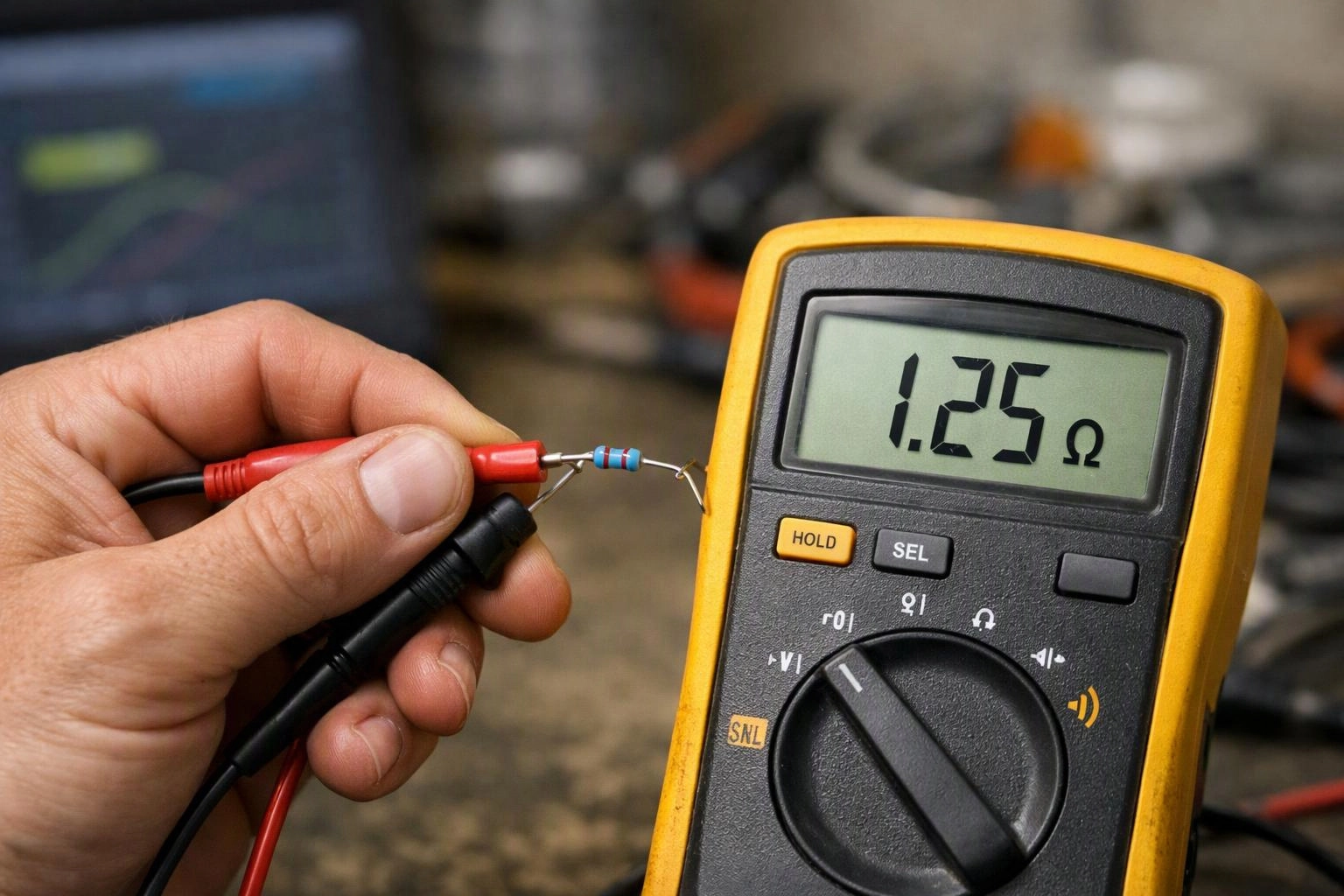
A digital multimeter measures resistance by sending a small test current through the item. It reads the resulting voltage. Turn off power before measuring resistance. Isolate the component when possible. A reading close to zero may show a continuous path. An open or very high reading may show a broken wire, failed fuse, or disconnected component.

Resistance changes with the material, length, thickness, and temperature of a conductor. A longer wire generally has more resistance than a shorter wire. Both wires must use the same material. Copper wire has low resistance. Heating elements and purpose-built resistors have much higher resistance.

Why Ohm Matters?

How Ohm applies to 24 Hour Electrician services in Toledo, United States—practical illustration

Resistance affects current flow, heat production, voltage loss, and equipment performance. High resistance in a connection can restrict current. It can also create a voltage drop. Low resistance can cause trouble where resistance should exist. Excessive current can damage equipment or trip a circuit breaker.

Electricians use resistance readings during electrical troubleshooting. They compare a circuit with its expected condition. A motor winding, heating element, fuse, or wire may show a clear resistance pattern. This pattern should appear when the part works correctly. A useful reading must match the component design. A number alone doesn't prove that a circuit's safe or works.

When Ohm Matters Most?

Ohms matter during continuity testing, equipment diagnosis, and conductor path checks. Resistance testing can help locate an open wire, shorted component, or poor connection. The circuit must be de-energized first. An electrician then places a meter in resistance mode. Live voltage can damage the meter and create a shock hazard.

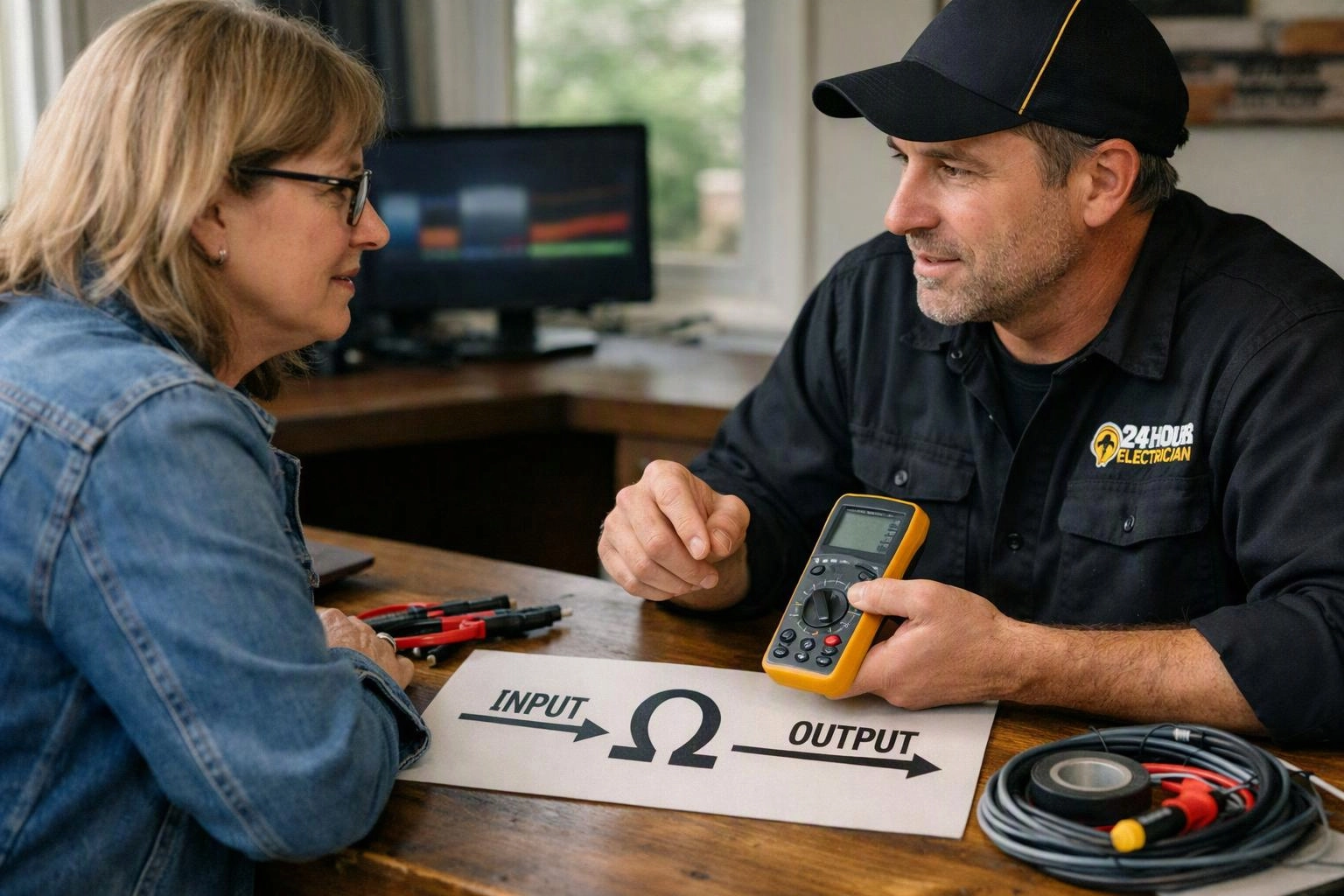
Resistance also matters when selecting wire gauge, calculating voltage drop, and checking heat-producing loads. Long runs and undersized conductors can add enough resistance to affect motors, lighting, or appliances. During a service call, an electrician may compare measured ohms with maker data. They may also check circuit math and electrical rules before choosing a repair.

How to Evaluate Ohm?

  • Confirm that the meter displays Ω or a resistance range before taking a reading.
  • Disconnect power and discharge stored energy before testing resistance.
  • Compare the measured value with manufacturer specifications or the component rating.
  • Check for an open circuit, which often appears as OL or a very high reading.
  • Inspect for loose, corroded, or overheated connections that can add unwanted resistance.

Related Concepts Compared

Ohm vs. Voltage

Voltage is the electrical pressure that drives current. Ohms measure the resistance that limits that current.

Ohm vs. Amperage

Amperage measures the amount of current flowing through a circuit. Ohms measure opposition to that flow.

Ohm vs. Ohm’s Law

Ohm is a unit of resistance. Ohm’s Law is the formula that relates resistance to voltage and current.

Ohm vs. Continuity

Continuity describes whether an unbroken conductive path exists. An ohm reading helps test that path, but continuity and a specific resistance value are not identical.

Expert Note

A resistance reading only has meaning in context. Temperature, parallel paths, connected electronics, and test lead resistance can change the result. For accurate troubleshooting, isolate the component and compare the reading with its design data.

Common Mistakes or Myths About Ohm

  • Treating ohms as a measure of voltage or current.
  • Measuring resistance on an energized circuit.
  • Assuming a near-zero reading always proves that a circuit is safe.
  • Leaving connected electronics in the circuit during a resistance test.
  • Ignoring the manufacturer’s expected resistance range.

Ohm in Practice: A Real-World Example

A technician disconnects a circuit and measures a heating element with a digital multimeter. The meter shows a stable resistance within the manufacturer’s stated range, so the element is not open. A reading of OL would suggest a broken internal path.

Sources & Further Reading on Ohm

  • Bureau International des Poids et Mesures, The International System of Units

Related Terms

Ohm's Law

Ohm's Law is the relationship between voltage, current, and resistance in an electrical circuit. The formula…

Voltage

Voltage is the electrical potential difference that pushes electric charge through a circuit. Measured in volts…

Amperage

Amperage is the amount of electric current flowing through a circuit at a given moment. Measured…

Voltage Drop

Voltage Drop is the reduction in electrical voltage that occurs as current travels through a wire…

Toledo Electrician

Have Questions About Ohm?

Contact Toledo Electrician for practical guidance on Ohm and related 24 hour electrician work in Toledo.

+1 (419) 574-6561