EV Charger Repair: Warning Signs and Service Considerations
EV charger repair may be needed when charging stops, becomes inconsistent, shows fault messages, produces unusual heat or sounds, or causes a breaker to trip. Toledo Electrician checks the charger, circuit, connections, and electrical safety conditions to identify the repair needed.
Get a Free EstimateWhich Signs Suggest an EV Charger Needs Repair?
An EV charger may need repair when charging fails, becomes inconsistent, displays a fault, trips the circuit breaker, overheats, smells burnt, or shows physical damage.
These signs can involve the EV charging station, the electric vehicle, or the dedicated circuit. We inspect the complete charging setup before identifying the repair.
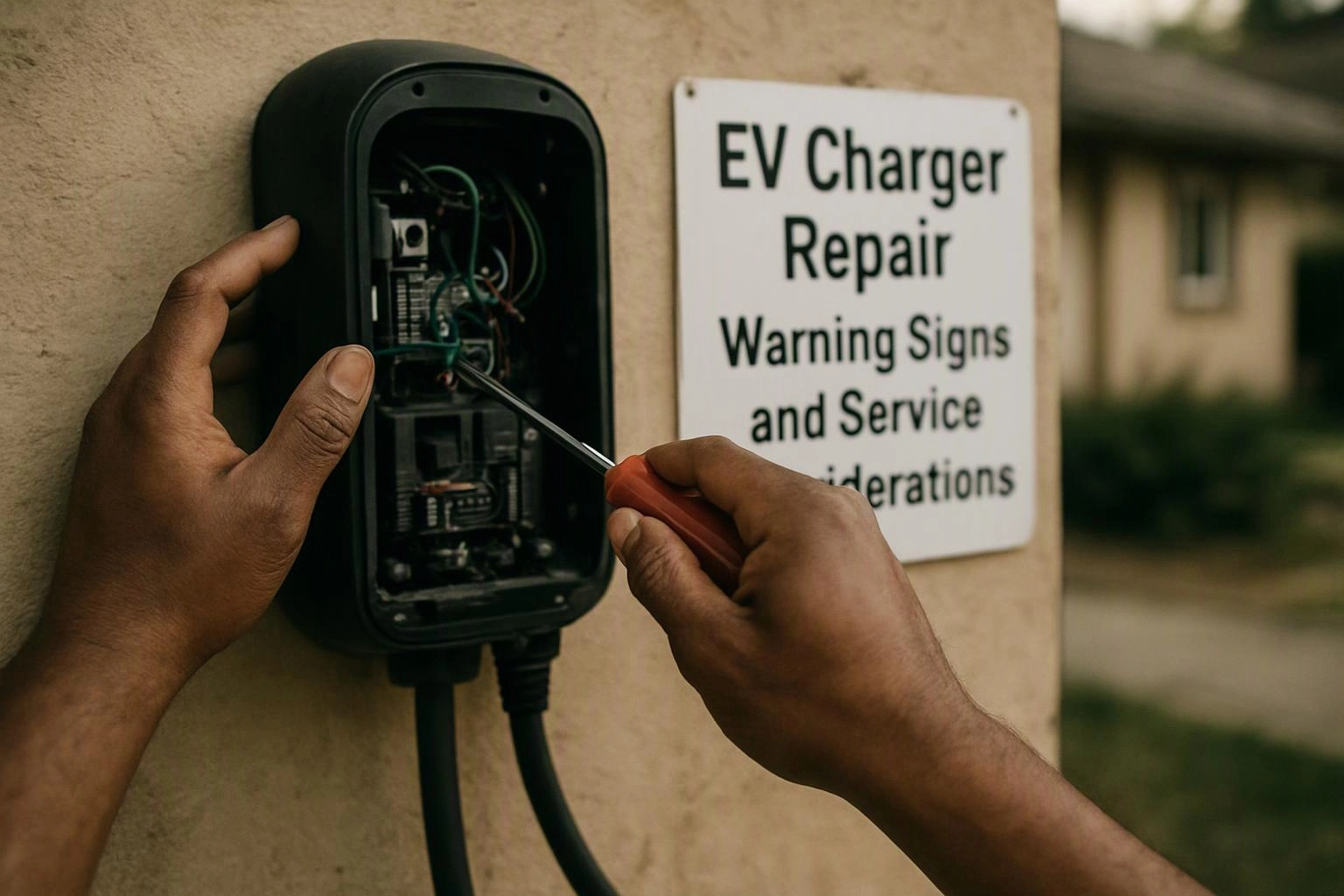
What Do Common EV Charger Problems Mean?
EV charger symptoms can come from the charger, cable, vehicle connection, or electrical circuit, so the visible warning does not identify the failed part by itself.
A charging cable may have internal damage, while a charging connector may not be fully seated or may have contaminated contacts. We inspect the cable and connector before deciding whether the charger or vehicle connection needs attention.
The control pilot helps coordinate charging between the equipment and the vehicle. A control pilot issue, ground fault, loose connection, or poor electrical connection can interrupt charging.
Vehicle compatibility can also affect charging behavior. We separate vehicle-side concerns from charger-side faults through inspection and diagnostic testing.
What Causes an EV Charger to Stop Working?
Common EV charger causes include loose or damaged wiring, an overloaded or unsuitable circuit, moisture or weather exposure, and failed internal components.
Our team checks the charging equipment and its electrical supply because several causes can produce the same symptom.
What Can You Safely Check Before Requesting EV Charger Repair?
You can safely check the vehicle settings, connector seating, charger display, and accessible circuit breaker without opening the charger or electrical panel.
These checks help identify simple user-side conditions while protecting you from exposed electrical parts. Stop using the equipment if you see damage, heat, smoke, water, or sparks.
How Do We Diagnose an EV Charger Repair?
We diagnose EV charger faults by inspecting the equipment and connections, testing the circuit, checking grounding and electrical conditions, and separating charger problems from vehicle-side problems.
Our EV charger inspection starts with the charger, charging cable, connector, visible wiring, and electrical panel connections. We then review the dedicated circuit and protective devices for signs of damage or improper operation.
Voltage testing helps us identify whether the charger receives the expected electrical supply. We also check grounding, look for a ground fault, and perform a load assessment to understand how the circuit behaves during charging.
Fault diagnosis may lead to a wiring repair, a replacement component, a circuit change, or repair of the charging equipment. We explain the finding before recommending work.
When Is EV Charger Repair Unsafe to Delay?
EV charger repair should not be delayed when the equipment shows smoke, sparking, a burning odor, excessive heat, water intrusion, or repeated breaker trips.
Turn off charging when it can be done safely and keep people away from damaged equipment. We inspect the charger and circuit to identify the electrical hazard before charging resumes.
A hot outlet, melted plastic, exposed wiring, or moisture inside the equipment can increase the risk of shock, fire, or equipment damage. Do not remove covers or attempt internal repairs.
How Can You Help Prevent EV Charger Problems?
you can help prevent EV charger problems by protecting the cable and connector, keeping connections dry and clean, avoiding cable damage, following the equipment instructions, and addressing electrical warning signs early.
Routine attention does not replace an electrical inspection when the charger shows a fault or unsafe condition. Our crew can assess the charging equipment and its electrical supply when safe charging becomes uncertain.
What Does an EV Charger Repair Quote Include?
An EV charger repair quote depends on the failed component, circuit condition, wiring access, required parts, and whether the equipment or electrical supply needs repair; Toledo Electrician provides Free Estimates Available for the work.
An EV charger repair estimate can describe the diagnostic inspection, replacement parts, wiring repair, circuit changes, and labor scope. We review what the equipment needs and explain whether the fault is in the charger, cable, connector, vehicle connection, or circuit.
The condition of the electrical panel and the available circuit capacity can change the recommended work. We use our inspection findings to prepare a clear scope for the repair.
When Should You Request EV Charger Repair?
You should request EV charger repair when basic user checks do not restore safe charging or when the charger shows heat, damage, fault warnings, or electrical symptoms.
An EV charging interruption can result from the vehicle, charging cable, connector, charger, or dedicated circuit. We inspect the full system so the recommended EV Charger Repair addresses the actual cause.
Request an inspection promptly when charging stops repeatedly, a breaker trips, or the equipment shows a burning smell, sparking, water intrusion, or a loose connection. Safe charging depends on both functioning equipment and sound electrical conditions.
Questions About EV Charger Repair
Can a tripped breaker damage an EV charger?
Yes, a tripped breaker can indicate an electrical condition that may affect an EV charger, although the breaker trip does not prove that the charger is damaged. Toledo Electrician checks the charger, circuit, wiring, and load conditions to identify the cause.
Why does my EV charger work intermittently?
Intermittent charging can result from a loose connection, damaged cable, connector issue, vehicle compatibility concern, ground fault, or unstable electrical supply. We use inspection and diagnostic testing to separate these possible causes.
Should I stop using an EV charger that smells hot?
Yes, stop using an EV charger that smells hot or produces a burning smell, and keep away from equipment that shows smoke, melting, or sparking. We inspect the charger and electrical circuit before safe charging resumes.
Can an EV charger fault be caused by the vehicle?
Yes, an EV charger fault can be caused by the vehicle, its charging settings, or the vehicle connection. We compare the charger symptoms with the circuit and equipment condition to identify whether the problem is vehicle-side or charger-side.
What should I do if an EV charger gets wet?
Stop using an EV charger that has water intrusion, disconnect it only when doing so is safe, and avoid touching wet electrical parts. We inspect the equipment, connector, wiring, and protective devices before charging is used again.
Request an EV Charger Repair inspection when charging is unreliable or the equipment shows an electrical warning. We can review the charger, dedicated circuit, wiring, grounding, and vehicle connection, then explain the repair scope.
Contact Toledo Electrician