Outlet Repair and New Outlet Planning: Safety and Options
Outlet repair is needed when an outlet feels hot, looks damaged, fits plugs loosely, sparks, smells unusual, or stops working; Toledo Electrician checks the cause and helps plan safer GFCI, USB, or dedicated-circuit options.
Get a Free EstimateWhich Signs Mean an Outlet May Need Repair?
An electrical outlet may need repair when it is hot, damaged, loose, sparking, discolored, unusually odorous, or unreliable. A wall outlet can show a problem through heat, burn marks, a cracked receptacle, a loose plug fit, or intermittent power.
A plug that falls out can point to worn internal contacts. Sparks, a burning smell, or repeated breaker trips can point to a more serious issue. We inspect the outlet and connected wiring to identify the cause before recommending outlet repair or replacement.
What Should You Do When an Outlet Shows a Safety Warning?
Electrical safety starts with stopping use of an outlet that shows heat, smoke, arcing, burning, or physical damage. Toledo Electrician can inspect the outlet after you keep people away from the warning signs.
Power isolation reduces the chance of continued damage, but it does not identify the fault. Our team checks the outlet, circuit, and surrounding wiring before restoring safe service.
What We Check Before Recommending Outlet Repair
Outlet repair begins with checking the outlet wiring, electrical box, grounding, polarity, circuit connections, circuit breaker, and connected load. These checks show whether the receptacle is the source of the problem or whether the fault continues elsewhere on the circuit.
We inspect terminal connections for looseness and examine the electrical box for damage or poor support. We also check grounding and polarity because a receptacle can appear normal while the circuit has a wiring fault.
Our team considers the circuit load before recommending an outlet replacement. A new receptacle cannot correct an overloaded circuit or wiring that is not suitable for the intended use.
For a direct service option, our Outlet Repair work can address unsafe receptacles after we identify the underlying issue.
When Do Outlet Repair and New Outlet Planning Belong Together?
Outlet repair and new outlet planning belong together when the existing receptacle problem also reveals a change in how the space needs power. We review the present condition and the intended use before selecting an installation path.
Combining related work can help us plan the correct wiring, protection, and outlet placement as one project scope. We still inspect each existing circuit before deciding whether services should be completed together.
How Do Outlet Repair and New Outlet Planning Work Together?
Outlet repair and new outlet planning work together through electrical diagnosis, existing-wiring review, circuit-capacity checks, and outlet-placement decisions. Our team uses the diagnosis to define the project scope before selecting materials or installation methods.
We sequence the work so repair needs are addressed before new installation choices are finalized. This approach keeps the plan tied to the actual circuit conditions instead of treating every outlet as a simple replacement.
When Should You Consider GFCI Outlet Installation?
GFCI outlet installation is worth considering where electrical receptacles may be exposed to moisture or where ground-fault protection is appropriate for the circuit. Wet areas can include locations near sinks, bathrooms, kitchens, outdoor outlets, and other sources of moisture exposure.
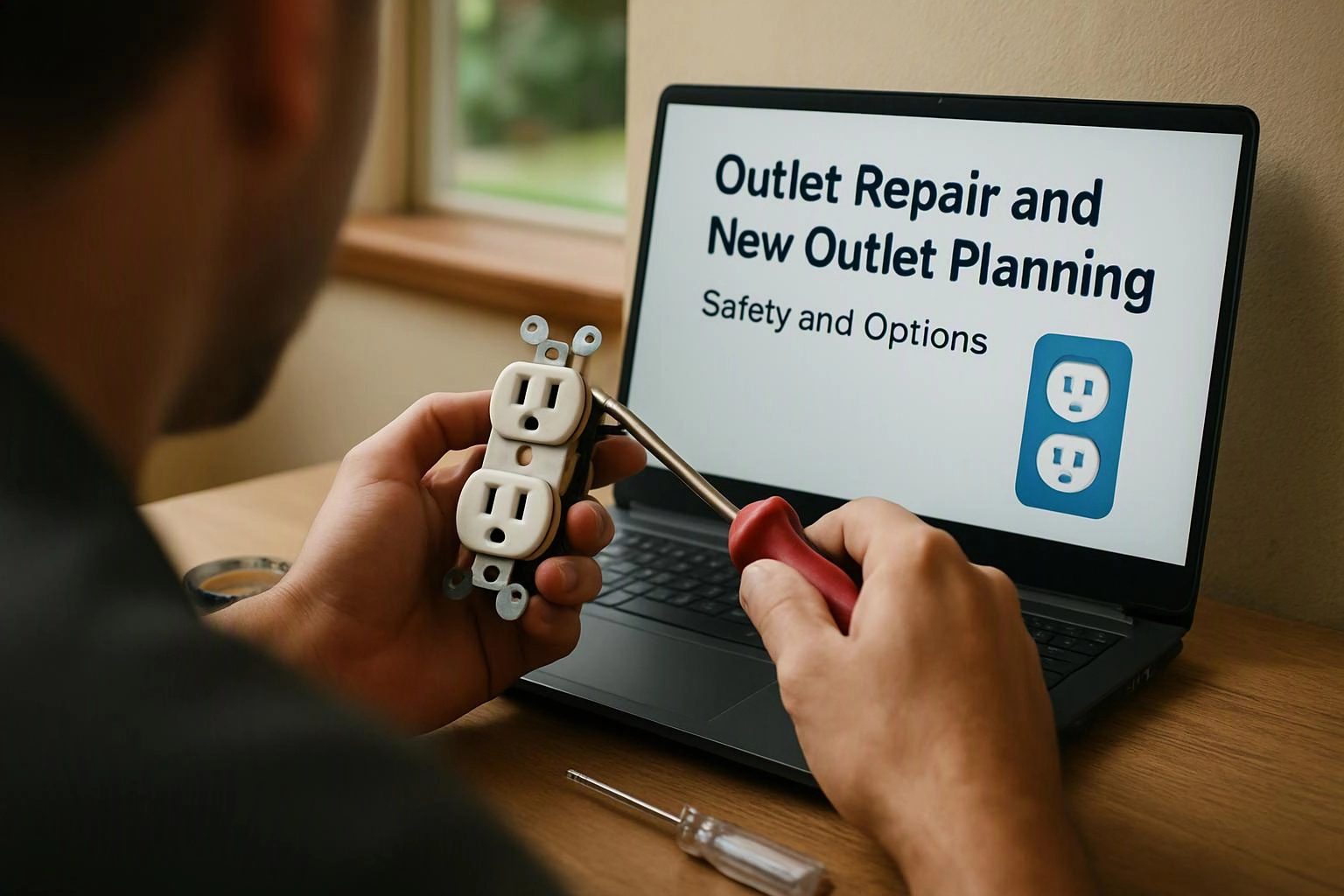
A GFCI outlet monitors the circuit for an imbalance and can interrupt power when ground-fault conditions are detected. We check the circuit, grounding, outlet location, and existing protection before installing or replacing a GFCI device.
The reset button lets you restore a tripped device after the cause has been addressed. If the GFCI will not reset, trips repeatedly, or shows damage, we inspect the receptacle and circuit instead of treating the reset as a complete fix.
How Should You Plan a USB Outlet Installation?
USB outlet installation should begin with the devices you charge, the outlet location, the existing box, and the circuit conditions. The right choice depends on whether your devices use USB-A, USB-C, or another charging arrangement.
We check whether the outlet box has enough room for the selected USB outlet and whether the circuit can support the intended electrical load. Our team also reviews outlet placement so charging access does not create cord strain or block nearby receptacles.
USB outlets can support convenient device charging, but they still need correct wiring and grounding. We verify the connections and test the installed outlet as part of the work.
When Should You Consider a Dedicated Circuit Installation?
Dedicated circuit installation is worth considering when a high-demand appliance or equipment load needs its own circuit to reduce competition with other outlets. This option can help when an appliance outlet shares power with devices that cause an overloaded circuit.
We review the appliance requirements, circuit capacity, circuit breaker, electrical panel, and proposed appliance outlet location. Our team then determines whether the existing panel and wiring path can support the planned circuit.
A dedicated circuit does not replace a damaged receptacle by itself. We repair unsafe outlet conditions and plan the new circuit together when both issues affect the same appliance or area.
What Changes the Scope of an Outlet Project?
The scope of an outlet project depends on the existing outlet condition, wiring access, box suitability, circuit capacity, protection needs, and selected outlet type. We use these factors to decide whether the work involves repair, replacement, added protection, or new circuit wiring.
| Project factor | What we evaluate |
|---|---|
| Outlet condition | Heat, damage, loose contacts, discoloration, and signs of arcing. |
| Wiring access | How easily the existing circuit wiring and electrical box can be reached. |
| Circuit capacity | The connected load and whether the circuit can support the planned outlet use. |
| Protection needs | Whether GFCI protection is appropriate for the location and circuit. |
| Outlet selection | Whether the project calls for a standard duplex outlet, GFCI outlet, USB outlet, or dedicated appliance outlet. |
| Outlet location | How placement supports safe use, appliance access, and device charging. |
Each factor can change the materials, wiring tasks, and testing included in the project. We explain the recommended scope after reviewing the actual outlet and circuit conditions.
How We Prepare an Outlet Repair or Installation Quote
Toledo Electrician prepares an outlet repair or installation quote after an electrical inspection and a review of the requested outcome. Our team connects the repair recommendation to the outlet selection and installation plan.
Our quote is based on the conditions we can verify and the option you choose. You can use the contact form to request an estimate from Toledo Electrician.
Which Outlet Service Fits Your Electrical Need?
Outlet repair fits a damaged, loose, hot, sparking, or unreliable receptacle after we identify the cause. GFCI outlet installation fits locations where moisture exposure or ground-fault protection affects the electrical plan.
USB outlet installation fits selected charging locations when the box and circuit support the device. Dedicated circuit installation fits a high-demand appliance or equipment load that needs separate circuit capacity.
We can inspect the existing conditions and explain which service matches the safety concern and planned use. The right choice depends on the outlet, wiring, circuit, and location as a connected system.
Questions About Outlet Repair and New Outlet Planning
Can a loose outlet be repaired?
Yes, a loose outlet can often be repaired after Toledo Electrician checks the receptacle, electrical box, mounting, and wiring. We replace damaged parts and correct unsafe connections when repair alone will not provide a secure result.
Why does an outlet stop working when the breaker has not tripped?
An outlet can stop working because of a loose connection, an upstream GFCI device, damaged wiring, or a failed receptacle even when the circuit breaker appears on. We trace the circuit and test the outlet to locate the interruption.
Are USB outlets safe for everyday device charging?
Yes, USB outlets can support everyday device charging when the selected outlet, box, wiring, grounding, and circuit are suitable. We check the installation conditions and test the outlet after connecting it.
Can a GFCI outlet protect other outlets on the same circuit?
Yes, a GFCI outlet can protect downstream outlets when the circuit is wired and identified for that arrangement. We inspect the circuit and confirm the protected connections before recommending the installation.
What should I do if an outlet is warm to the touch?
A warm outlet should not be used until the cause is checked. Stop using the receptacle, isolate power only when safe, and contact Toledo Electrician for an inspection of the outlet, wiring, connections, and connected load.
Outlet safety depends on the condition of the receptacle, wiring, box, circuit, and intended use. Contact us to discuss outlet repair, GFCI protection, USB charging, or a dedicated circuit installation.