
What Is a Wire Nut?
A wire nut is an insulated twist-on connector that joins compatible electrical conductors inside an electrical box or enclosure. The connector grips the wires through internal threads or a spring insert, creating a firm electrical path. Wire nuts come in different sizes and materials to match the conductors and connection.
Quick Facts About Wire Nut
Category
Wire connector
Used for
Joining electrical conductors
Common confusion
Mistaken for electrical tape
Also called
Wire Connector, Twist-on wire connector
Often discussed with
Electrical Code Correction, Electrical Troubleshooting
Key Takeaways About Wire Nut
- Its internal grip holds conductors together.
- The connector must match the wire connection.
- A wire nut is not the same as electrical tape.
How Wire Nut Works
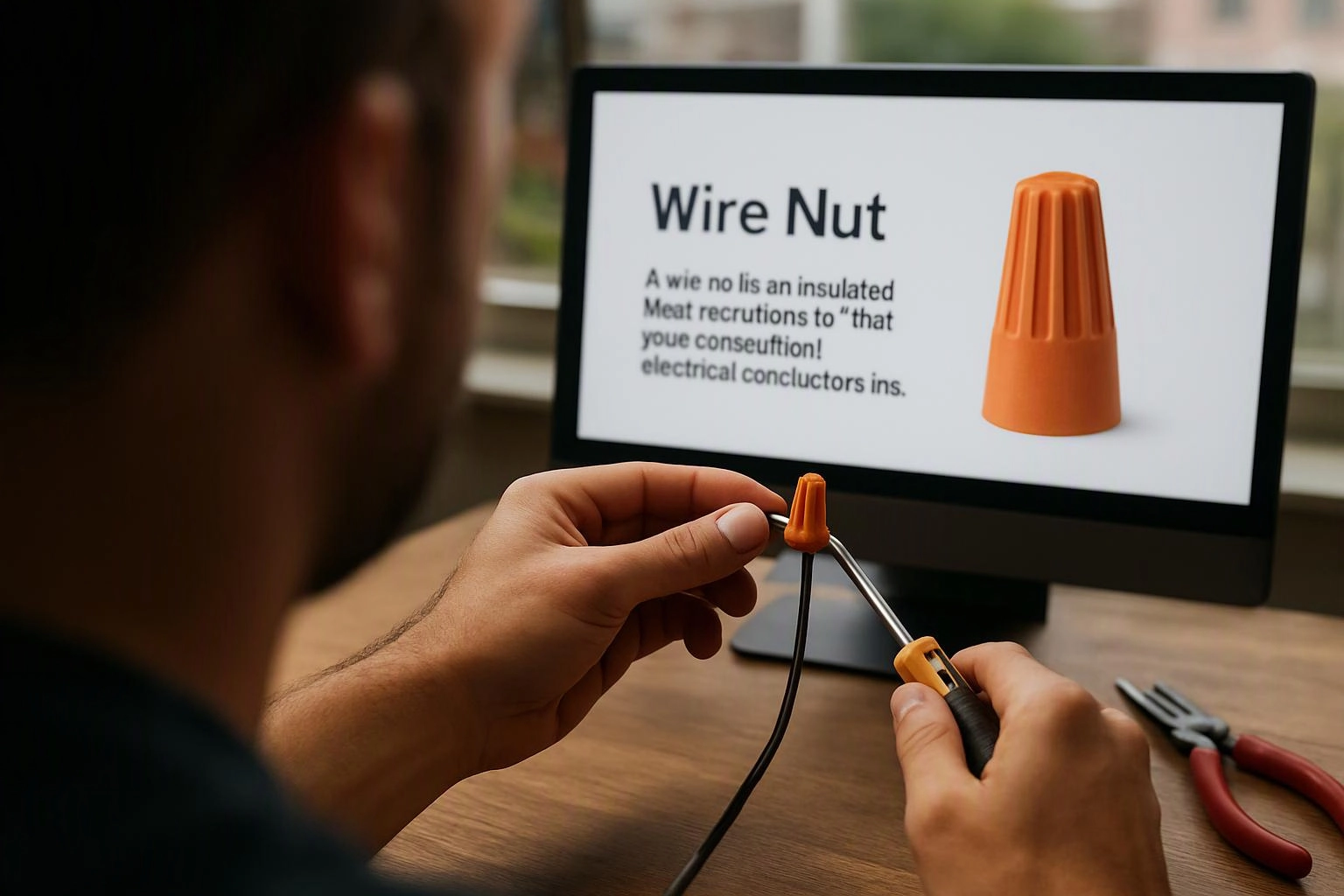
A wire nut works by twisting over prepared conductors and gripping them inside its threaded shell. The internal spring or thread pressure keeps the conductors in contact, while the insulated cap covers the exposed metal. The connection stays inside an approved enclosure, such as a junction box.
Related glossary terms: Junction Box, Copper Wire, Wire Gauge.
Wire nuts are selected according to the conductor material, wire size, and number of wires being joined. A compatible connector should fully cover the connection and remain secure after installation. Different colors often help identify connector size, but color alone does not determine compatibility.
Practical Use
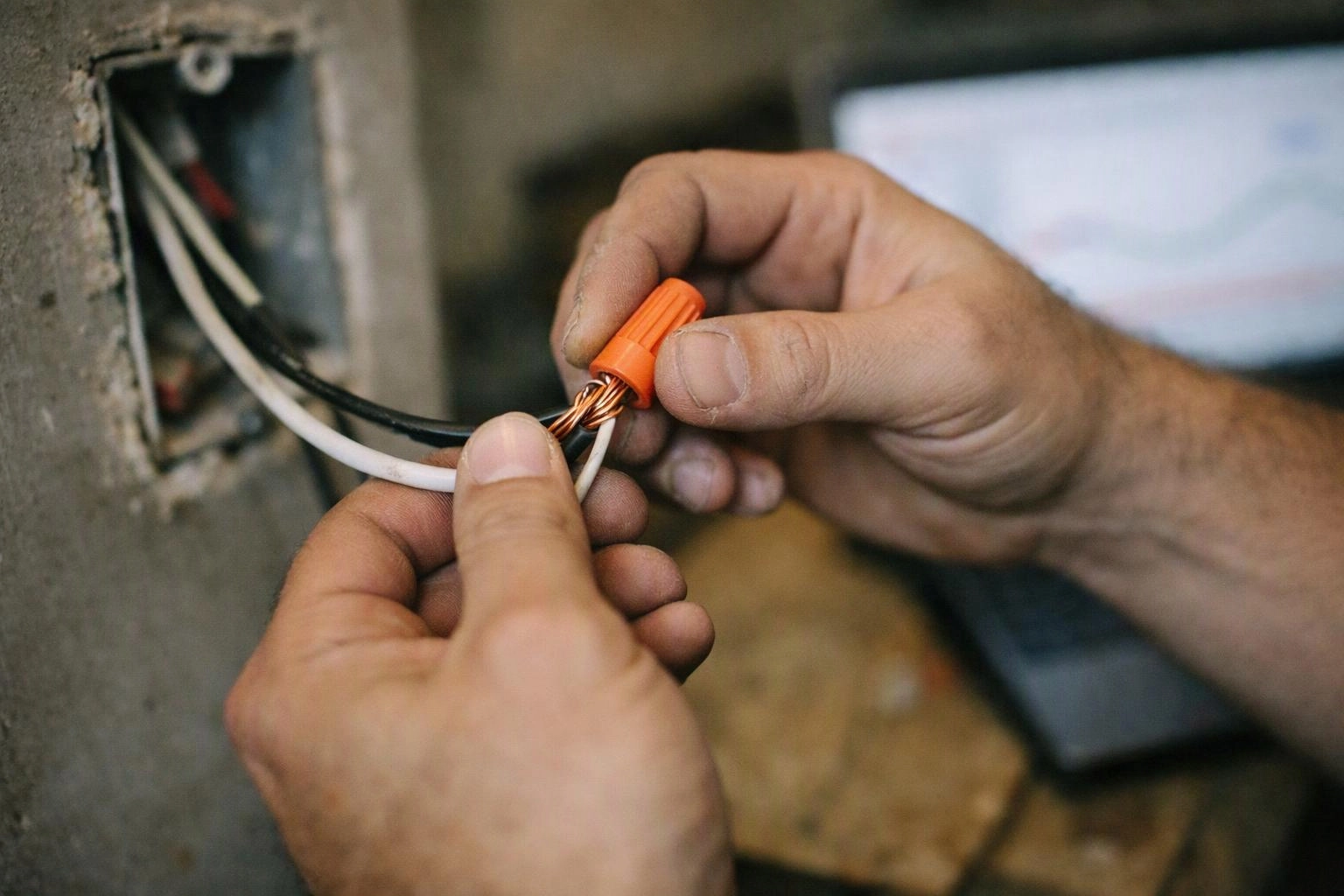
Wire nuts commonly connect branch-circuit conductors, fixture wires, and pigtails. The electrician prepares the wire ends, aligns the conductors, twists on the connector, and checks that no bare conductor extends beyond the cap. A loose connection, damaged cap, or mismatched connector can require correction.
From the Toledo Electrician team
When we inspect a wire nut, we check the conductor alignment, the connector fit, and the amount of exposed copper. We also look for heat damage, corrosion, loose connections, and signs that incompatible conductors share one connector. During Electrical Code Correction work, we correct the connection and verify that the enclosure protects it.
Wire Nut in Practice: A Real-World Example
An older junction box may contain a loose wire nut joining a light fixture lead to the circuit conductors. For an Electrical Code Correction, the electrician checks the conductors, replaces the unsuitable connector, and confirms that the splice sits properly inside the box.
Related Terms
Junction Box
A Junction Box is an enclosed electrical container that protects and organizes wire connections where conductors…
Copper Wire
Copper Wire is a conductive electrical material used to carry current through circuits. Copper’s low electrical…
Wire Gauge
Wire Gauge is a sizing system that describes a conductor’s diameter and its ability to carry…
Neutral Wire
A neutral wire is a grounded circuit conductor that carries current back to the electrical service…
Toledo Electrician
Have Questions About Wire Nut?
Contact Toledo Electrician for practical guidance on Wire Nut and related 24 hour electrician work in Toledo.